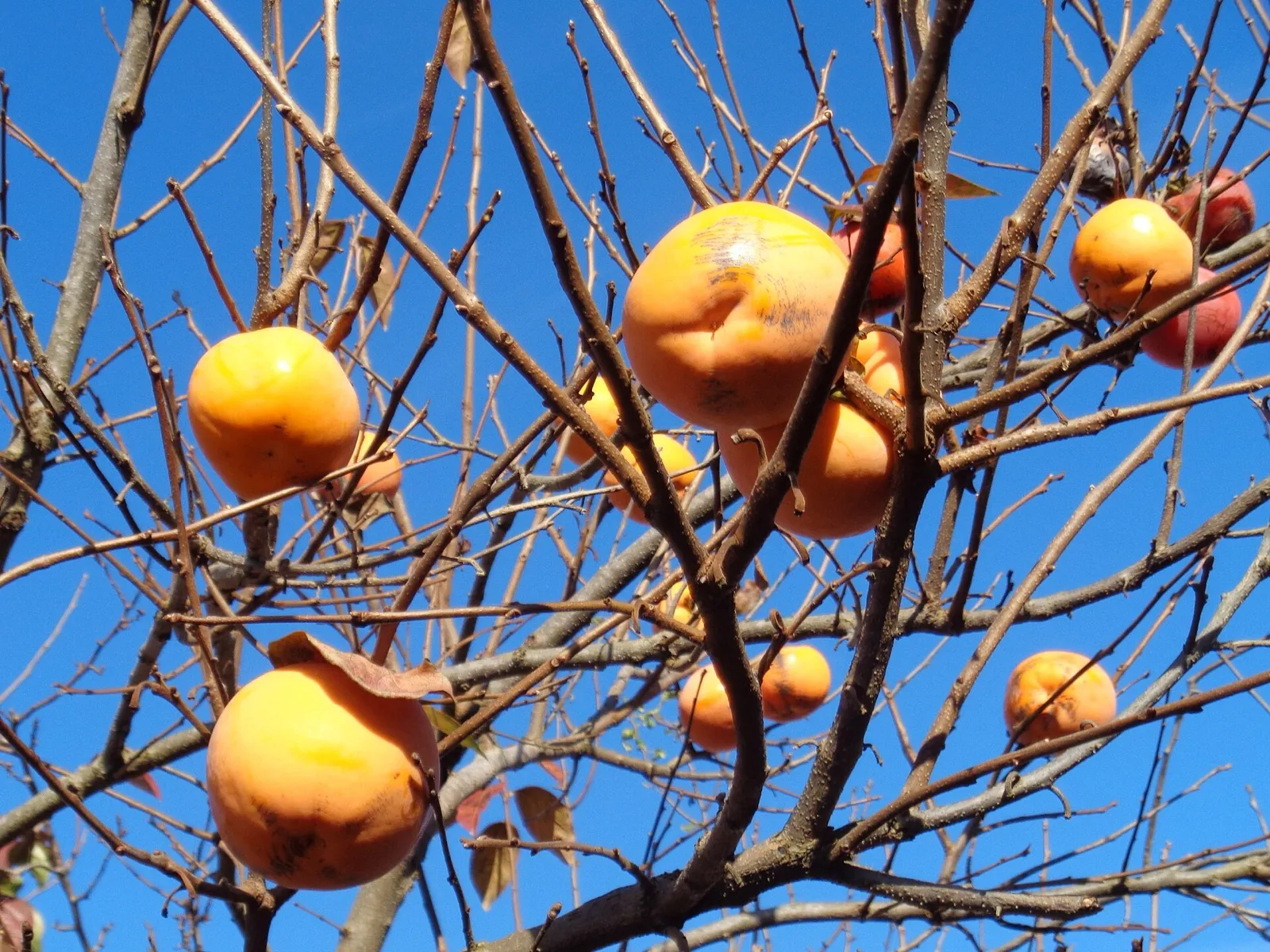
Persimmon
Diospyros kaki
Also known as: Kaki, Japanese persimmon
La Ribera's autumn fruit tree: it loses its leaves in winter and fills its branches with orange fruit. It needs sun, summer watering and an airy canopy.
- Type
- Fruit tree
- Where
- Outdoor
- Light
- Sun
- Water
- Plenty of water
- Cold
- Withstands cold in winter, but autumn and spring frosts damage fruit and shoots
Where to plant it
In full sun and with room to grow, because it needs plenty of light and air in the canopy. It prefers deep soils that drain well and contain organic matter. Its wood is brittle and the wind rubs and marks the fruit, so look for a sheltered spot.
Watering
In spring it needs less water than an orange tree, but in summer a lot more. While the newly set fruitlets are dropping naturally, don’t overwater; after that, increase the watering. Drip is best, split into several sessions a day in midsummer.
Pruning
It’s usually trained into an open vase shape, with three or four main branches. Pruning is done in winter, when it has no leaves: remove the water shoots and branches that aren’t useful, and thin out and renew the fruiting branches so the light gets in.
Feeding
Mediterranean soils tend to be low in organic matter, so when planting mix well-rotted manure into the soil. After that, feed every year according to the age of the tree. A soil test before planting helps you get the feeding right.
Harvest
It’s picked from late September until December or early January, depending on the colour of the fruit. Cut the stalk with secateurs so the fruit keeps its calyx. The Rojo Brillante variety is astringent (it leaves a furry feeling in the mouth) until it’s fully ripe; once ripe, it’s sweet.
In our climate
The Rojo Brillante variety originated right next door, in the Ribera del Xúquer, and is very well adapted to the area. If your soil is very chalky or your irrigation water contains a lot of salts, the rootstock it’s grafted onto matters: ask us before planting.
Common problems
Persimmon leaf spot
Mycosphaerella nawae
How to spot it
In late August dry spots appear on the leaves, surrounded by a greenish halo, and the whole leaf turns yellow. In September and October the tree loses its leaves early, and the fruit ripens and drops sooner than normal.
What to do
It's a fungus that spends the winter in fallen leaves and infects the tree in spring, although it doesn't show until late summer. Rake up the fallen leaves and bury them or take them to be composted, and avoid flood irrigation, which wets the whole ground: drip is better. If your tree had it the year before, ask us about an approved treatment.
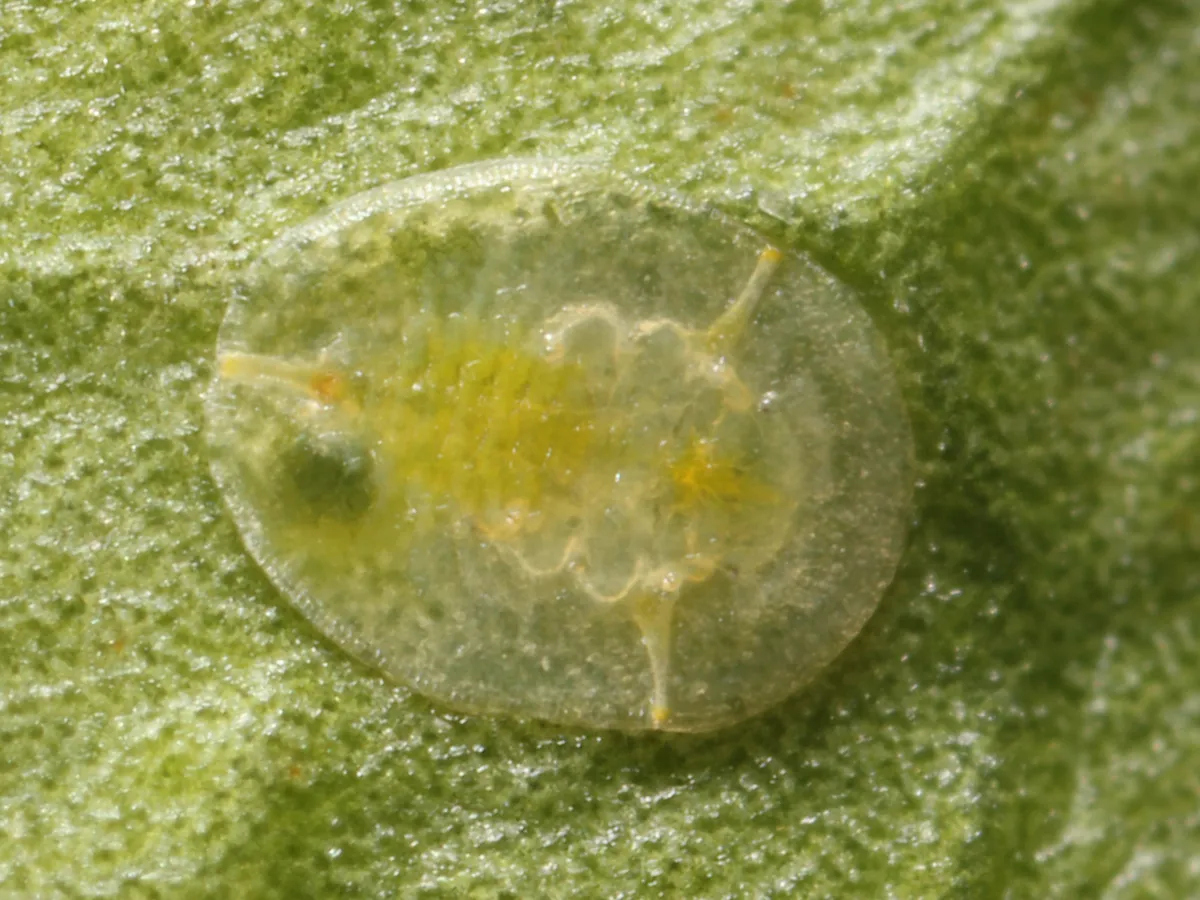
Citrus whitefly and sooty mould
Dialeurodes citri
How to spot it
Small white flies on the underside of the leaves. Their larvae, flat and transparent, release a sticky honeydew on which a black powder (sooty mould) grows, dirtying leaves and fruit.
What to do
It likes humidity and crowded trees with poor ventilation, especially in the lower part of the canopy. It spends the winter on citrus and other nearby plants, and returns to the persimmon in spring. An airy canopy keeps it in check, and it has natural enemies that are worth protecting. If the infestation is heavy, ask us.