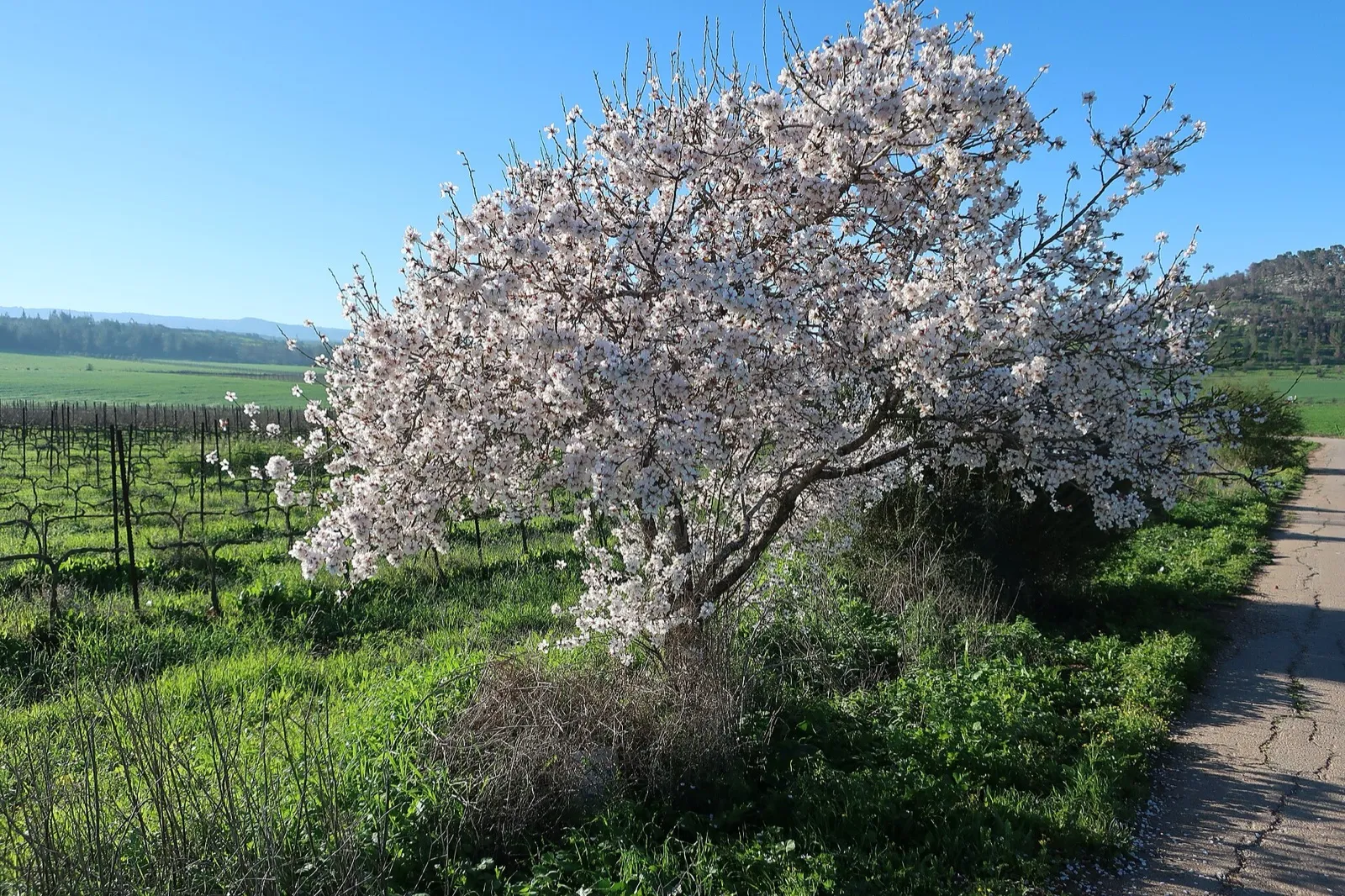
Almond tree
Prunus dulcis
Also known as: Almond
One of the first fruit trees to flower, in late winter. It copes with drought and poor soils, but not with waterlogging or frost while in flower.
- Type
- Fruit tree
- Where
- Outdoor
- Light
- Sun
- Water
- Little water
- Cold
- Very cold-hardy in winter, but frost while it's in full flower ruins the harvest
Where to plant it
In full sun and in loose soil that drains well: it’s very sensitive to waterlogging, which suffocates the roots. Many varieties can’t pollinate themselves and need another variety nearby, plus bees; if you only have room for one, choose a self-fertile variety.
Watering
It’s traditionally grown without irrigation, and the vast majority of almond trees in Spain grow without watering. Even so, it responds very well to moderate watering if it’s given at the right time. When you plant it, give it a good watering to help it establish.
Pruning
It’s trained into an open vase shape, ideally with three main branches. In the first few years it’s pruned twice: once while in leaf, in May or June, when the new shoots reach 30 to 50 centimetres, and once in winter, between November and February, while the tree is dormant.
Feeding
This depends a lot on the soil and the age of the tree, so there’s no general recipe. What’s worth doing is not overdoing the nitrogen: too much vigour attracts aphids.
Harvest
Almonds are harvested in late summer. The traditional way is to beat the branches with a pole and collect the almonds on blankets or nets spread under the canopy. Then the outer husk is removed and they’re left to dry well before storing.
In our climate
It flowers very early, in late winter, so a late frost can wipe out the harvest. If it often freezes in your area in February or March, choose a late-flowering variety.
Common problems
Xylella fastidiosa
Xylella fastidiosa
How to spot it
Leaves and shoots that scorch and dry out, and a general decline of the tree, which produces fewer almonds. The fruit stays hanging on the tree. It's easily mistaken for lack of water due to drought.
What to do
It's a quarantine bacterium that blocks the vessels that carry the sap up the tree. In the Valencian Community there's a demarcated area covering municipalities in Alicante and Valencia, and the almond is the most affected species. If you suspect your tree has it, it's essential to notify the Generalitat's Plant Health services straight away.
Red leaf blotch
Polystigma ochraceum
How to spot it
Spots on the leaves, light green at first and then brownish yellow. In summer, with heat and little moisture in the soil, the tree can lose a good part of its leaves, and the harvest suffers.
What to do
It's a fungus. Pick up and remove affected leaves that fall to the ground: that way there'll be less infection the following year. Some varieties are more susceptible than others. If it appears every year, ask us about an approved treatment.
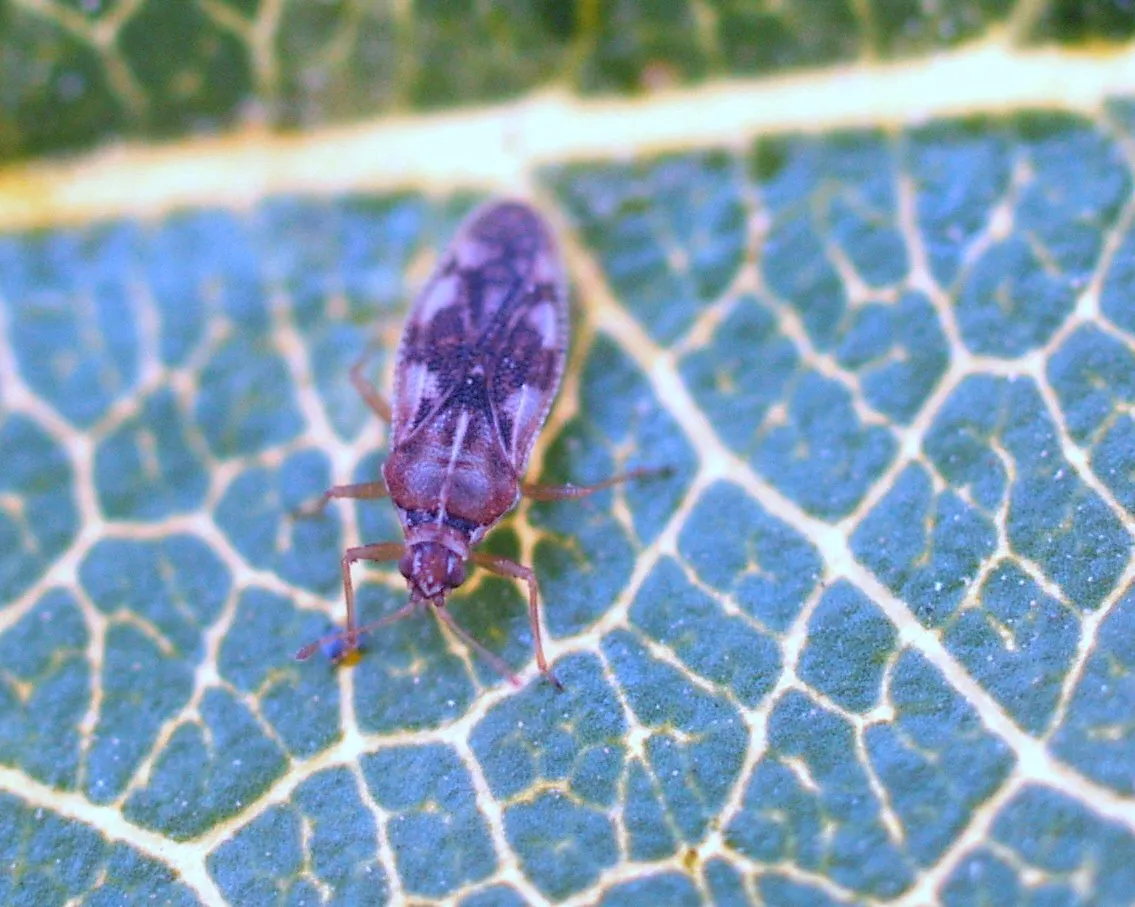
Almond lace bug
Monosteira unicostata
How to spot it
Pale speckling on the upper side of the leaves and tiny black dots (its droppings) on the underside. The leaf weakens and, if the attack is heavy, it falls.
What to do
It's a small sap-sucking insect. The adults spend the winter hidden in the bark of the trunk and lay their eggs on the underside of the leaves. Check the leaves in spring and summer and, if you see a lot of them, ask us.