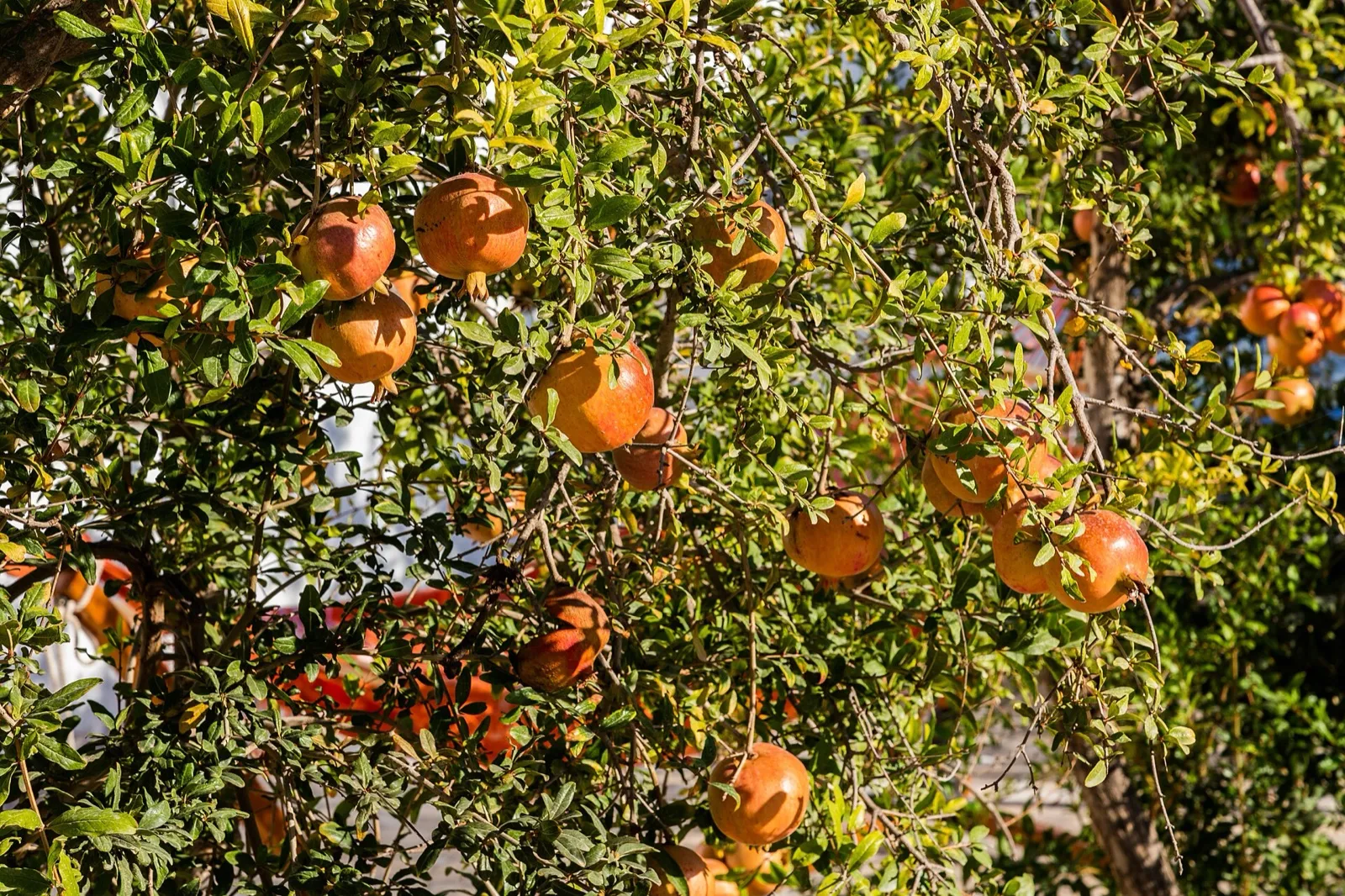
Pomegranate tree
Punica granatum
Also known as: Pomegranate
Mediterranean fruit tree with red flowers and autumn pomegranates. It suits chalky, slightly salty soils and needs summer watering so the fruit doesn't split.
- Type
- Fruit tree
- Where
- Outdoor
- Light
- Sun
- Water
- Moderate water
- Cold
- Grown in areas with mild winters
Where to plant it
In full sun. It adapts well to chalky soils with some salt, like those in the south of Alicante, where it’s a traditional crop.
Watering
Its need for water rises through the summer and peaks in July; in spring and late autumn it needs a lot less. Nowadays it’s almost always drip-irrigated. Regular watering while the fruit is growing helps it set well and split less.
Pruning
It’s trained into an open vase shape, from two or three main branches. After that, prune it once a year: remove old wood that no longer fruits, suckers coming from the base, crossing branches and those growing towards the inside of the canopy.
Feeding
It’s better to look after the soil than to feed a lot: add organic matter to keep the soil alive and fertile, and avoid too much fertiliser.
Harvest
Mollar pomegranates ripen in early October, a week earlier or later depending on the year. Cut them with secateurs, without pulling them off, and handle them carefully because the skin marks with knocks and rubbing.
In our climate
The Mollar de Elche pomegranate is a variety from just down the road, selected over decades by farmers in the south of Alicante. If your pomegranates split, check the watering, which helps reduce it, and keep an eye out for fruit borers, because their wounds make it easier for the fruit to split open.
Common problems
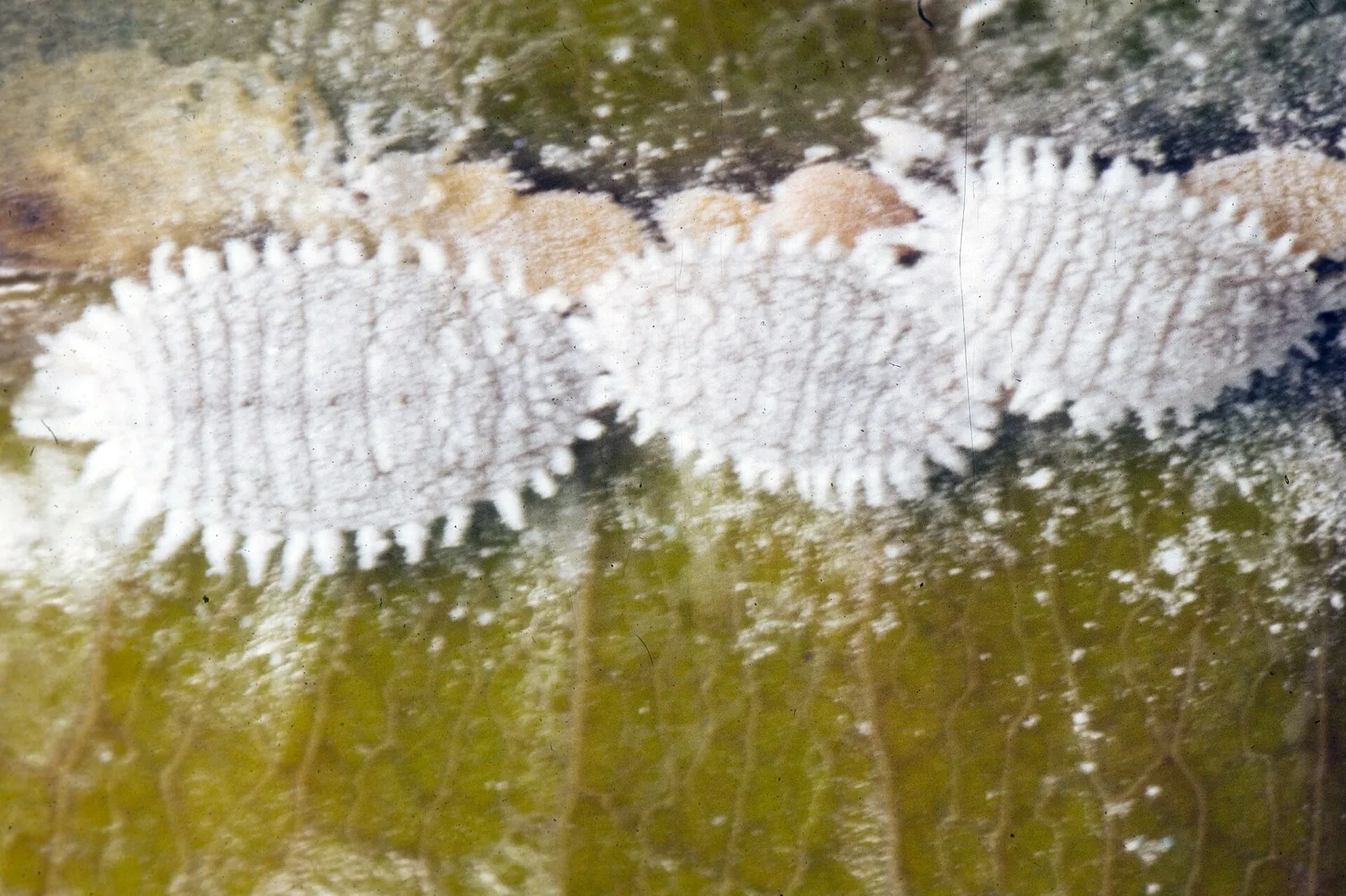
Citrus mealybug
Planococcus citri
How to spot it
Small clusters of white, cottony insects in the calyx (the crown) of the pomegranate and between fruits that touch. They release honeydew, on which a black powder (sooty mould) grows, and they leave yellowish marks on the skin of the fruit.
What to do
In winter it shelters in the roots, under the bark and in the soil, and in late May it starts climbing up the suckers at the base. Remove the suckers and check the crown of the fruit from summer onwards. Its honeydew attracts fruit borers, so it's worth stopping it early. If the infestation is heavy, ask us.
Aphids
Aphis punicae, Aphis gossypii
How to spot it
Colonies of small insects on the tender shoots. The leaves curl, the shoots stop growing, and flowers and newly set fruit may drop. They also release honeydew, which becomes covered in sooty mould.
What to do
Keep an eye on the new shoots in spring. They have natural enemies, such as ladybirds, which are worth protecting. If the colonies are large, ask us about an approved treatment.
Pomegranate fruit borers
Apomyelois ceratoniae, Cryptoblabes gnidiella
How to spot it
Holes and gnawed patches on the pomegranate, almost always at the crown or where two fruits touch. Rot gets in through these wounds and the fruit splits more easily.
What to do
The moths lay their eggs where there's honeydew or wounds, so controlling the mealybug helps a lot. If there's a lot of damage every year, ask us.