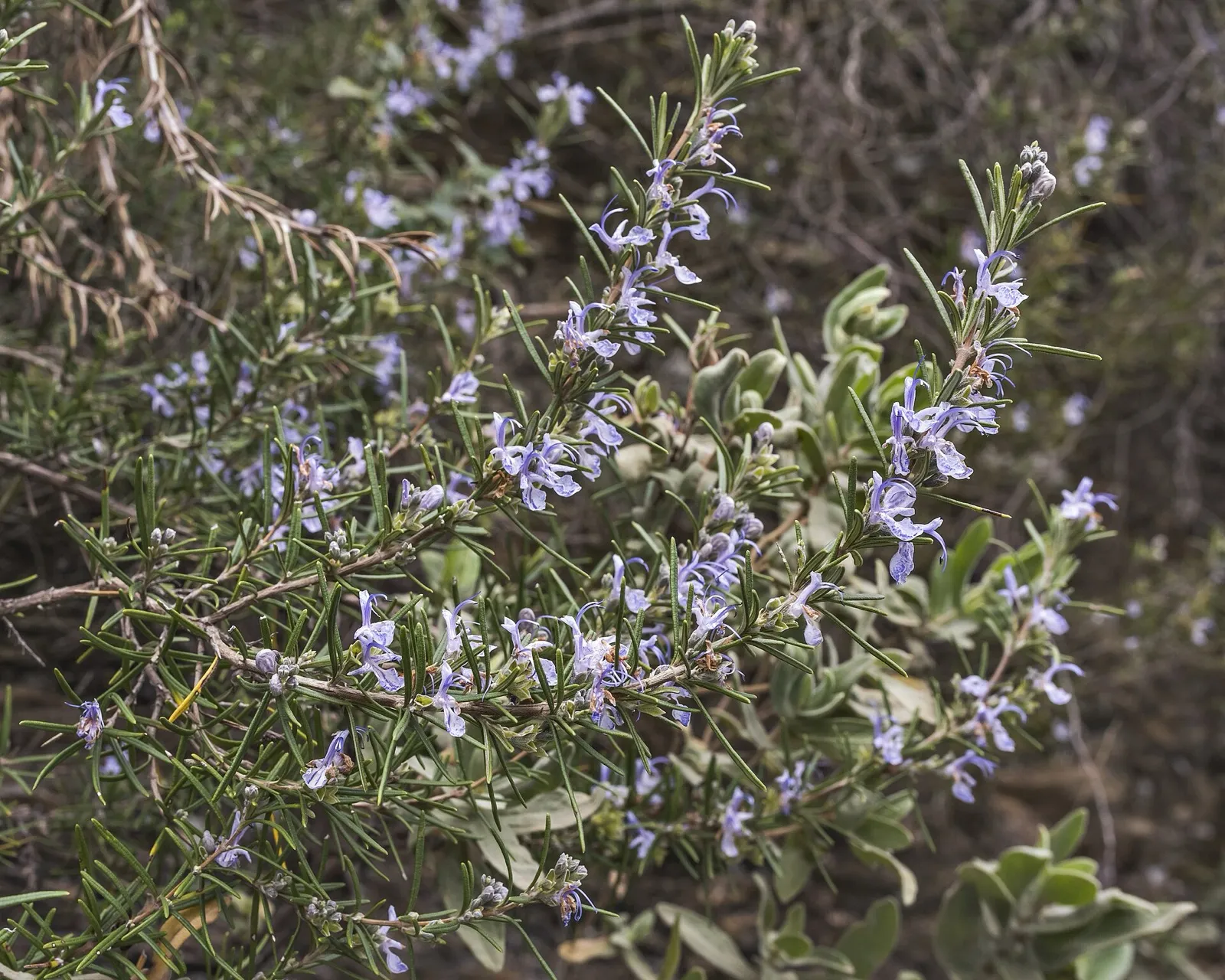
Rosemary
Salvia rosmarinus
Also known as: Rosmarinus officinalis (former name)
Aromatic Mediterranean shrub that lives on very little water. It's good for cooking and for low hedges, and it's a great plant for bees.
- Type
- Herb
- Where
- Outdoor
- Light
- Sun
- Water
- Little water
- Cold
- Withstands moderate frost; hard frosts can damage it
Where to plant it
In full sun, with at least six hours of direct sun, and in light soil with good drainage. It tolerates poor soils and likes chalky ones. What it can’t stand is wet roots, especially in winter: in clay soil, plant it in a raised bed or in a pot. Leave about 50 cm between plants.
Watering
In the first year, water regularly in summer so it takes root. After that, planted in the ground, it doesn’t usually need watering. In a pot the compost dries out quickly, so water during dry spells, but never leave the soil waterlogged.
Pruning
A light trim once a year, after flowering, keeps it compact and producing new shoots. Don’t cut into old wood. Upright varieties take an annual trim well as a low hedge. If an old plant has gone bare at the bottom, hard pruning doesn’t usually bring it back: it’s better to replace it with a plant grown from a cutting.
Feeding
In the ground it doesn’t need feeding and grows well even in poor soils. If it has been in the same pot for more than a year, a little granular fertiliser in late spring is enough.
In our climate
It’s a Mediterranean plant and suits low-water gardens. It suffers most when the cold arrives with the soil soaked; in a pot, during rainy winters, put it next to a wall where it doesn’t get so much rain. It’s easy to propagate from cuttings. If you’d like a low rosemary hedge, we can plant it and take care of its maintenance.
Common problems
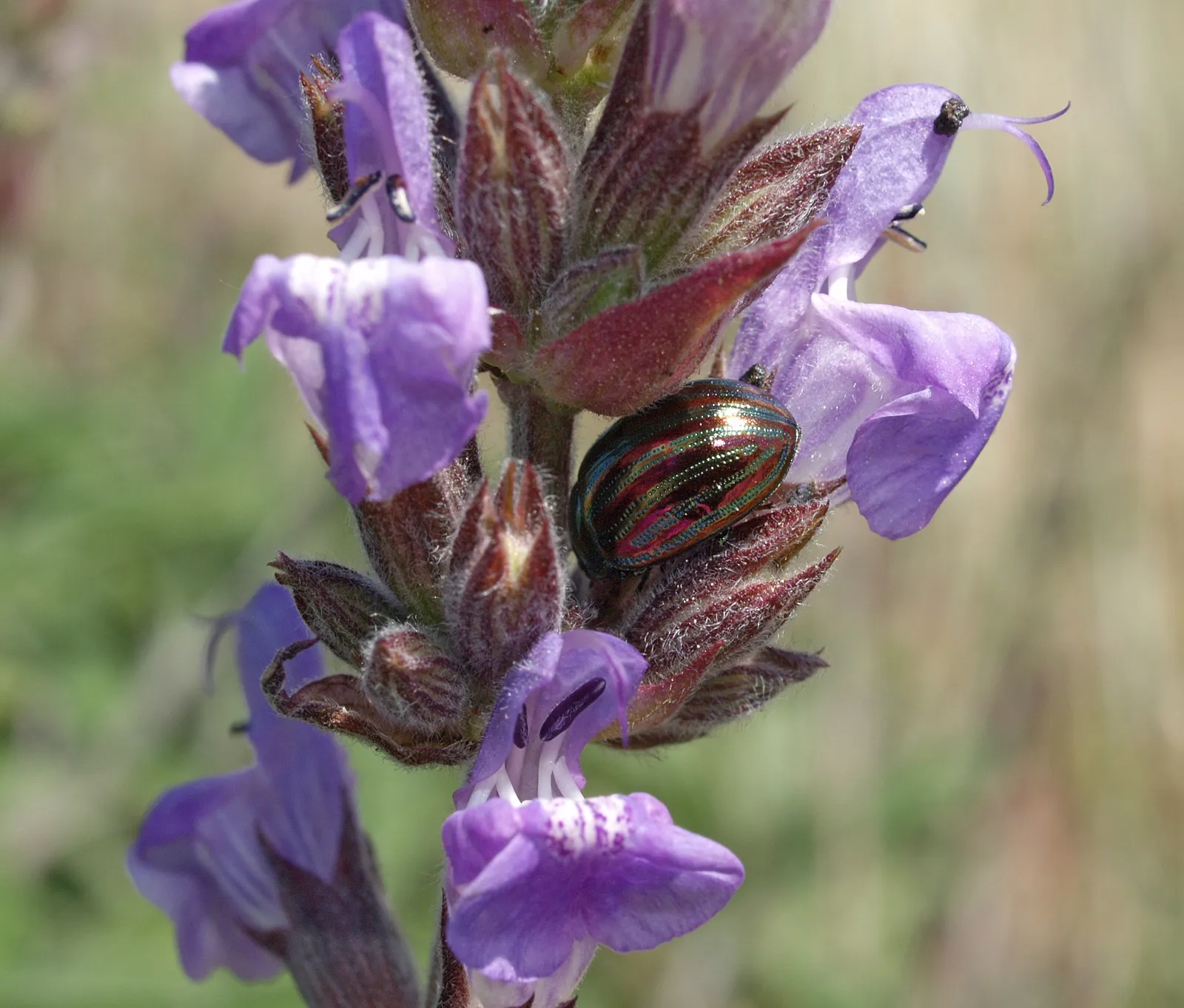
Rosemary beetle
Chrysolina americana
How to spot it
Shiny beetles about 6 to 7 mm long, with metallic green and purple stripes, and greyish larvae. Adults and larvae eat the leaves, sometimes the flowers too, and leave dry, greyish-brown tips.
What to do
A healthy plant usually copes with it without any trouble, so treatment is hardly ever needed. If there are a lot, shake the branches over a sheet of newspaper and remove them. Birds and other predators also help to keep it under control.