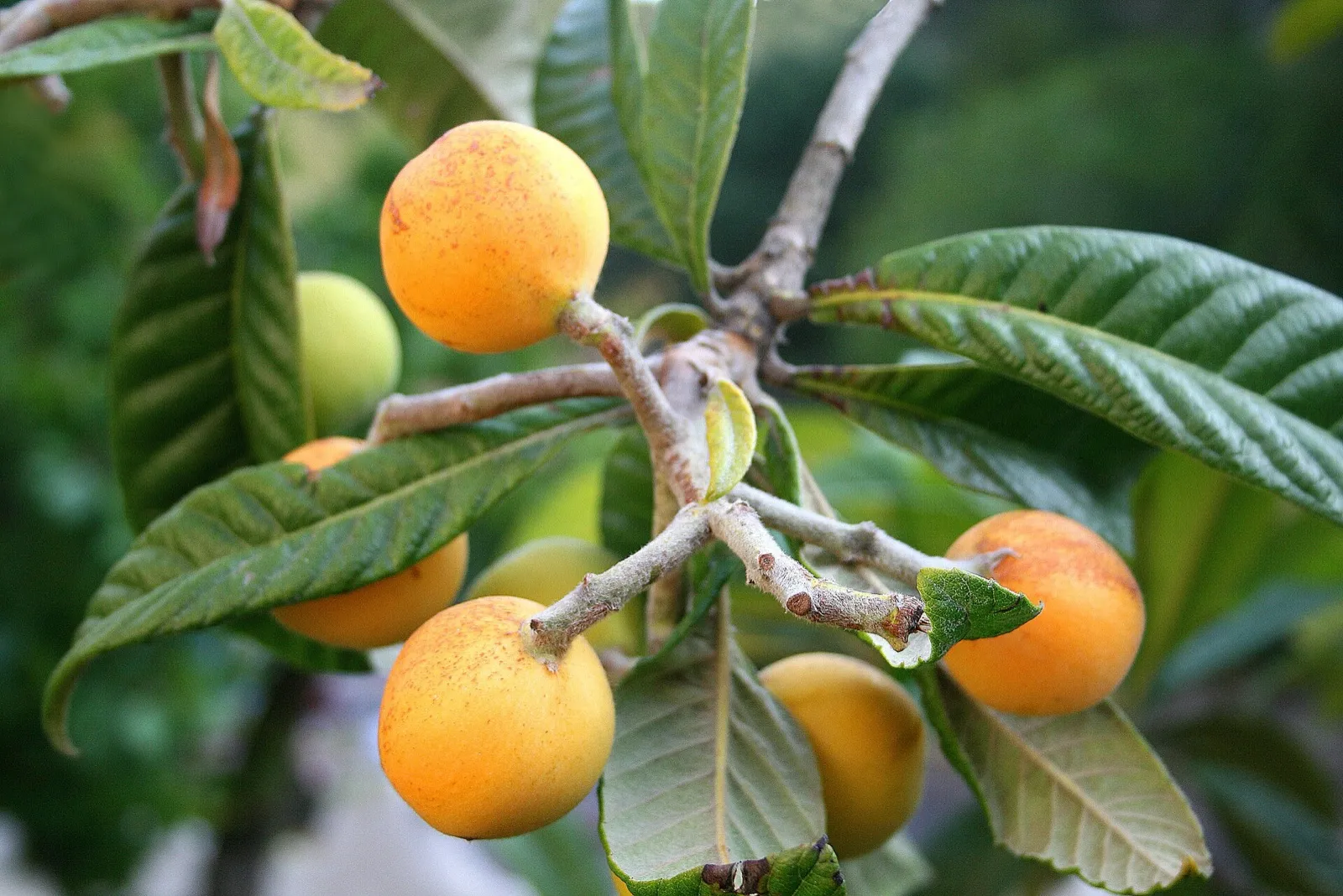
Loquat
Eriobotrya japonica
Also known as: Japanese medlar, Japanese plum
It flowers in autumn, sets fruit in winter and is harvested in spring. It needs sun, mild winters and pruning in summer, not winter.
- Type
- Fruit tree
- Where
- Outdoor
- Light
- Sun
- Water
- Moderate water
- Cold
- Prefers mild winters: it flowers in autumn and sets fruit in midwinter
Where to plant it
In a sunny spot where winters are mild, because it flowers in autumn and the fruit grows during the cold months. Frost during flowering and fruit set can ruin the harvest.
Watering
It needs water mainly during flowering and while the fruit is growing: if it goes short then, the harvest suffers. After the harvest, in June and July, the loquat copes well with a big cut in watering: that way you slow down branch growth and bring forward the next flowering, and you save water in the worst of the summer.
Pruning
It’s pruned in summer, not in winter like other fruit trees: straight after the harvest, in June, or after the summer pause, in September. Aim for a manageable tree with light reaching the inside, and remove old branches so young ones grow.
It also flowers heavily every year. If you want bigger loquats, thin the fruit: in January, once the fruit has set, leave four or five fruits per cluster and remove the rest, keeping the biggest ones.
Harvest
It’s picked between April and mid-June, depending on the colour of the fruit. Cut it with its little stalk and store it in a ventilated, dry, shady place, because the skin spoils in the sun.
In our climate
In Callosa d’En Sarrià (Alicante) the loquat is the main crop thanks to a microclimate that stays mild all year. At home, plant it in the sunniest spot you have that’s sheltered from the cold.
Common problems
Loquat scab
Fusicladium eriobotryae
How to spot it
Round green or brownish spots on both sides of the leaves and on the fruit. Over time they grow and turn olive-coloured, with a velvety look.
What to do
It's one of the most important diseases of the loquat. It attacks mainly just after the first autumn rains, when the fruit is starting to form, and spends the winter in fallen leaves on the ground: pick them up. If it comes back every year, ask us about an approved treatment.
Purple spot
How to spot it
The skin of the fruit darkens in purple patches as it finishes ripening. It isn't a pest, but a problem with the fruit itself.
What to do
It appears when the fruit goes through imbalances while it's growing: cold nights at the end of ripening, too much fruit thinning or direct sun on the fruit. Don't overdo the thinning: leaving a bit more fruit helps reduce it.