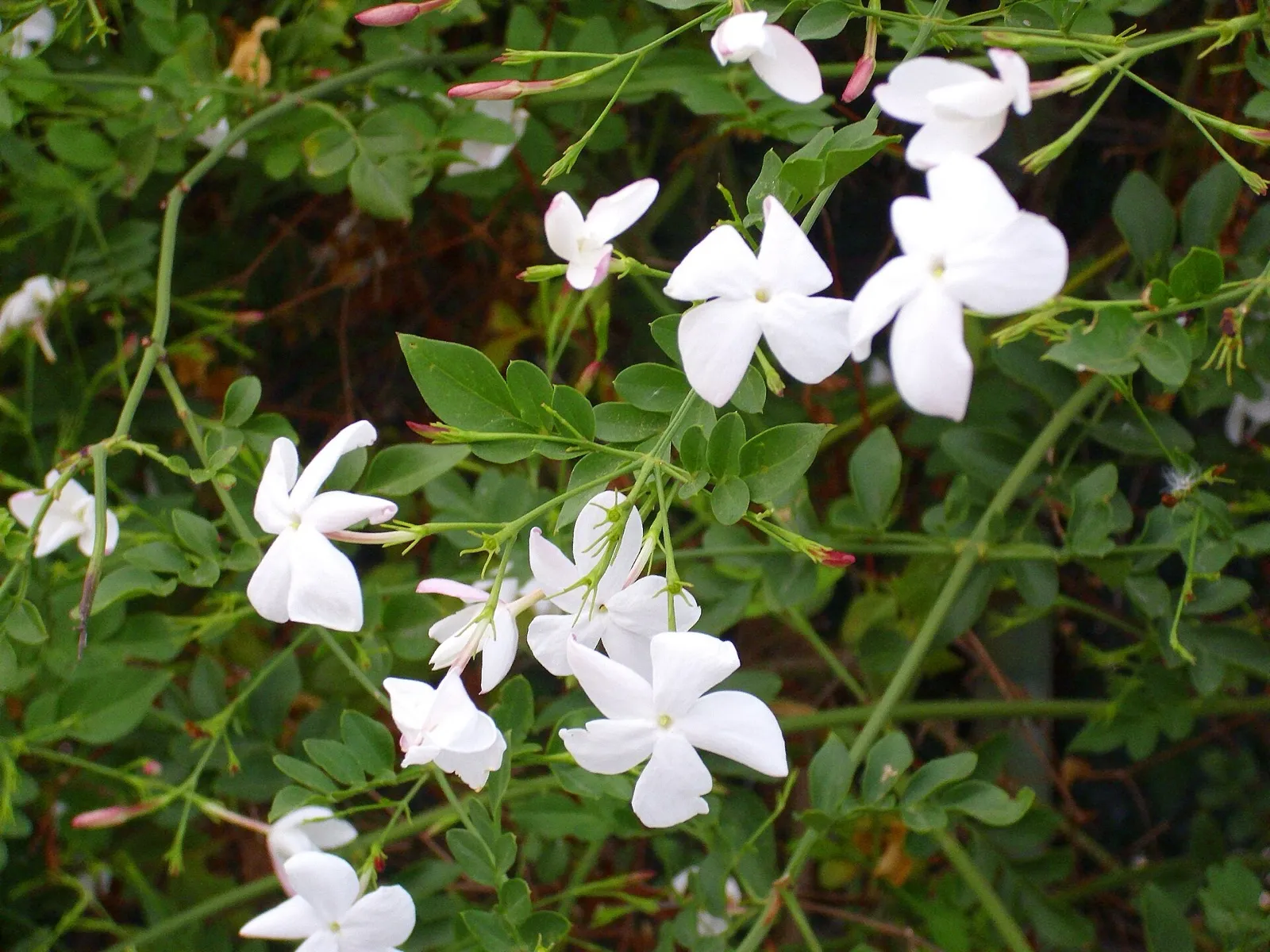
Jasmine
Jasminum officinale
Also known as: Common jasmine, White jasmine
Climber with very fragrant white flowers, from late spring to late autumn. It does well on pergolas, trellises and walls.
- Type
- Climber
- Where
- Outdoor
- Light
- Sun · Part shade
- Water
- Moderate water
- Cold
- Withstands cold, but appreciates a sheltered spot
Where to plant it
In sun or part shade, in a warm, sheltered spot. It adapts to many soils, including chalky ones, although the ideal is fertile, cool soil with good drainage. It’s a vigorous climber: give it a sturdy support, such as a wall, a pergola or a trellis. It can also live in a large pot with a stake.
Watering
In the first year, water regularly until it takes root. After that, regular but not heavy watering: roughly once a week or once a fortnight, depending on whether it’s in the ground or in a pot. In a pot it needs regular watering throughout the growing season.
Pruning
Straight after flowering, cut the stems that have flowered back to a strong side shoot lower down, and thin out weak, damaged or tangled stems. In winter, clear out dry, broken or diseased wood and suckers from the base. If it has outgrown its space, you can cut it back to about 60 cm from the ground, but it will take two or three years to flower again. Before pruning, check there are no nests.
Feeding
Planted in the ground it doesn’t need feeding: a layer of well-rotted compost in autumn over the root area is enough, leaving a few centimetres clear around the stems. In a pot, a potassium-rich liquid feed helps it flower.
In our climate
Cold combined with winter damp is what can harm it most, so choose a sheltered spot, for example next to a wall. If you’d like to cover a pergola or a trellis with jasmine, we can design it and take care of the pruning.
Common problems
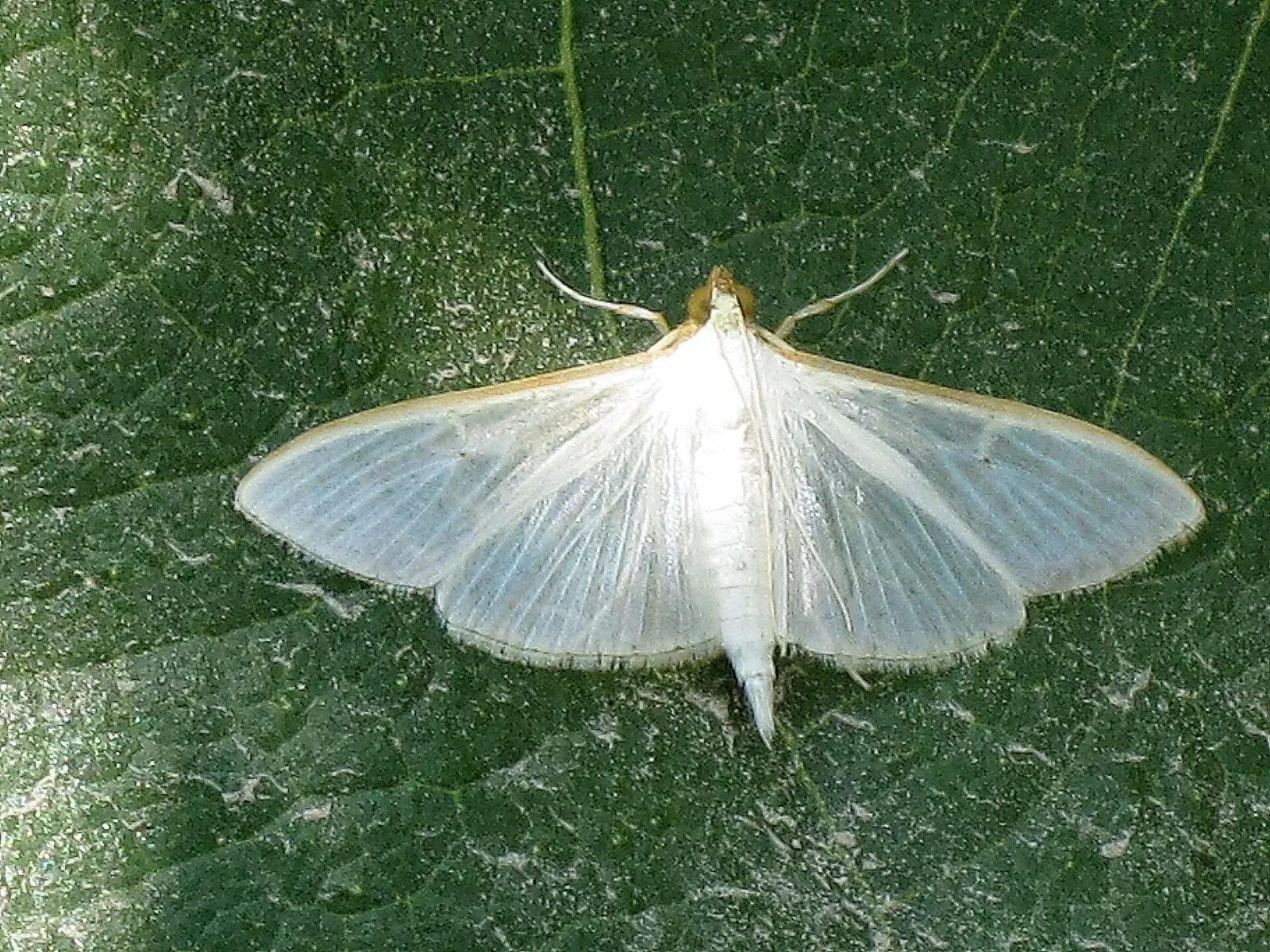
Jasmine moth
Palpita vitrealis (= Palpita unionalis)
How to spot it
Caterpillars of this moth, which bind the tender leaves together with silk threads and eat them. It can have up to four generations a year, from spring to autumn.
What to do
If it comes back every year, the time to act is the first generation, in spring: ask us about an approved treatment.