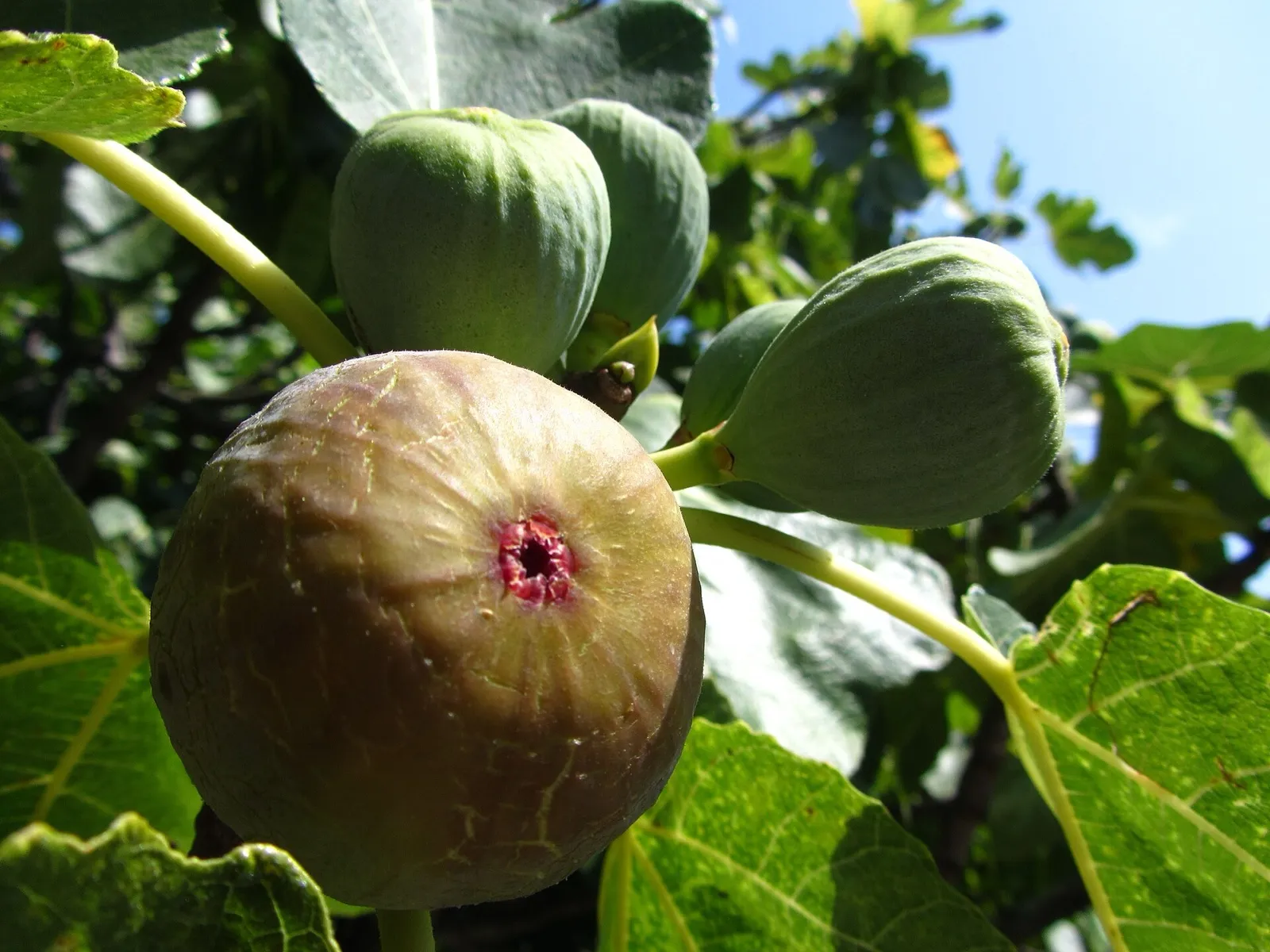
Fig tree
Ficus carica
Also known as: Common fig
Hardy dry-farmed fruit tree that copes with drought, chalk and brackish water. Some varieties give two crops: brebas in early summer and figs later.
- Type
- Fruit tree
- Where
- Outdoor
- Light
- Sun
- Water
- Little water
- Cold
- The tree withstands frost, but hard frosts spoil the fruit
Where to plant it
In a sunny spot. It likes mild winters and dry, hot summers, and it makes do with poor, stony or chalky soils, although it grows more in loose soils that drain well. What it can’t stand is waterlogging. Its roots are strong and go deep in search of water, so don’t plant it next to wells or buried tanks; from a wall, half a metre is enough.
Watering
It’s a dry-farmed fruit tree, and without watering it gives the sweetest figs. If you water it, do so in moderation. Lack of water shows mainly at two moments: in spring, when the brebas are growing, and in summer, before the figs ripen. Too much water gives watery fruit that rots, and the roots rot easily.
Pruning
Light, in winter (December or January): remove dry branches and suckers and not much else. A hard prune only makes it put out overly vigorous branches. Bear in mind that if you hardly prune you’ll get more brebas, but fewer figs in autumn.
Feeding
It needs very little. When planting, a little compost at the bottom of the hole, covered with soil so it doesn’t touch the roots. Avoid too much nitrogen: it makes the fruit worse and makes it crack more.
Harvest
Breba-bearing fig trees give brebas (the early crop) in June and July, and then figs from August into autumn. Those that aren’t breba-bearing only give figs, in August and September.
In our climate
It’s very well adapted to the south of the Valencian Community, where it has been grown since ancient times. The best time to plant it is at the end of winter, when there are no more frosts, because the young plant is more delicate than the adult tree.
Common problems
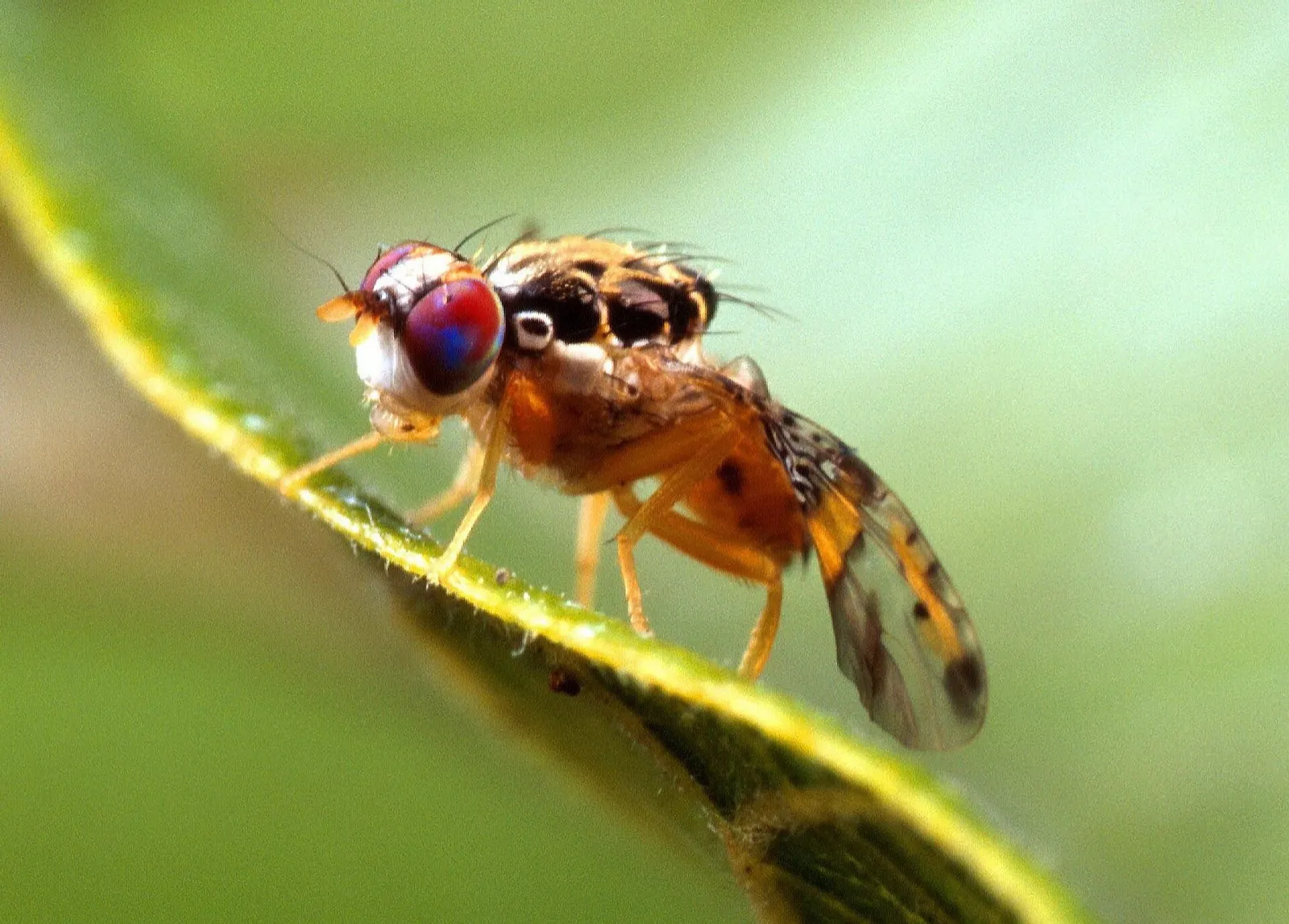
Mediterranean fruit fly
Ceratitis capitata
How to spot it
Brebas and figs with rotten flesh and small white maggots inside that keep wriggling. If the attack is heavy, the fruit drops to the ground.
What to do
In our area it's probably the most important pest of the fig tree. Pick up fallen fruit to break its cycle, because the larvae go into the soil to turn into flies. Traps help you tell when there are more flies about. Ask us about an approved treatment if you lose fruit every year.
Fig fly
Lonchaea aristella
How to spot it
It only attacks figs, never brebas. The fig stops growing, becomes blotched with reddish-purple patches and has larvae inside similar to those of the fruit fly, though thinner. The adult is a small, very black fly.
What to do
It lays its eggs a month to a month and a half before the fig ripens. Baited fly traps are useful for monitoring it. If the infestation is heavy, ask us.
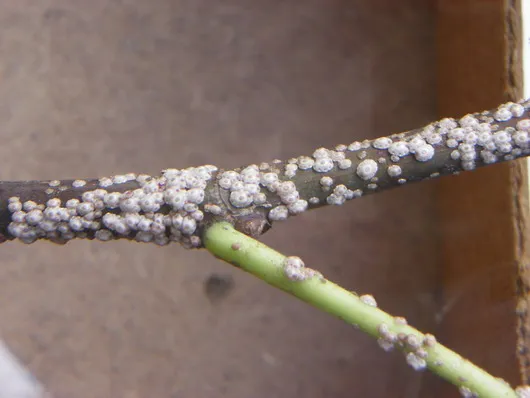
Fig wax scale
Ceroplastes rusci
How to spot it
Small domed lumps of greyish wax stuck to branches, leaves and even the figs. The leaves become covered in a black powder (sooty mould) that grows on the honeydew they release.
What to do
It weakens the tree, and a weak fig tree is exposed to the fig bark beetle (Hypoborus ficus). It has many natural enemies that are worth protecting. The newly hatched young are its weak point: if treatment is needed, it's done when they emerge, in April or May and again around July. Ask us.