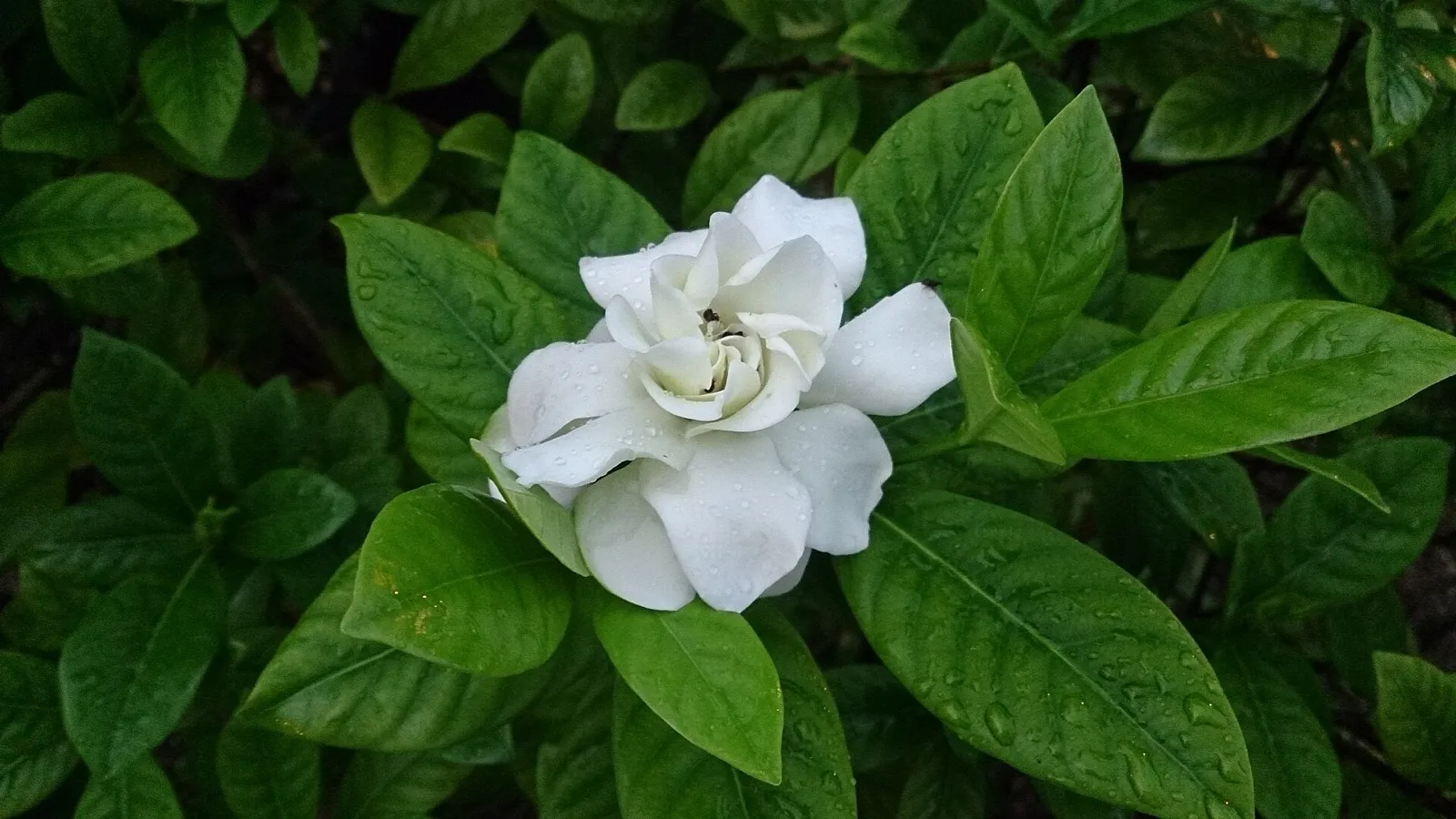
Gardenia
Gardenia jasminoides
Also known as: Cape jasmine
Shrub with glossy leaves and very fragrant white flowers. It needs acidic soil, part shade and regular watering; in chalky soil it turns yellow.
- Type
- Shrub
- Where
- Outdoor
- Light
- Part shade
- Water
- Moderate water
- Cold
- Shelter it from severe cold and wind
Where to plant it
In part shade, ideally with morning sun and afternoon shade. It needs acidic soil that’s moist but drains well: before planting, mix the soil with compost or other organic matter. It has shallow roots and doesn’t like them being disturbed, so don’t plant it next to the roots of a tree. Near concrete paving or the foundations of the house, the soil may be too chalky for it.
Watering
In summer, if it doesn’t rain, water once a week. Drip irrigation is best, as it doesn’t wet the leaves or the flowers. A layer of bark or compost mulch around the base helps keep the soil moist.
Pruning
Prune it when the summer flowering is over: remove branches that are getting out of hand and spent flowers.
Feeding
A little in spring, with an acidifying fertiliser for acid-loving plants, and again about six weeks later. Don’t feed it in autumn: it puts out tender shoots that the cold can damage.
In our climate
What gardenias struggle with most is chalky soil: if that’s what your garden has, you’ll notice it in the yellow leaves, and it’s a good idea to correct the soil before planting it or to keep it in a pot with an acidic compost. In summer, strong heat and dry air can make it drop its buds. If you’re thinking of a corner with gardenias, we can help you with the design and the watering.
Common problems
Iron chlorosis
How to spot it
The new leaves turn yellow, but the veins stay green.
What to do
Gardenia needs acidic soil. When the soil is chalky, it can't make use of the iron even if it's there. Keep lime away from the plant, including what can leach out of the mortar of a nearby wall or paving. In the long run the best thing is to correct the soil; if that isn't possible, use an iron deficiency corrector and a fertiliser for acid-loving plants. Ask us if you're not sure.
Whitefly and sooty mould
How to spot it
Small white insects on the undersides of the leaves. The plant grows less, the leaves turn yellow and may drop, and they become covered in a sticky honeydew on which sooty mould, a black mould, grows.
What to do
It's one of the most common problems with gardenias, and it mainly attacks stressed plants. Sooty mould doesn't infect the leaf: it disappears if you control the insect. If the infestation is heavy, ask us about an approved treatment.
Bud drop
How to spot it
The buds drop just before they open.
What to do
It isn't a disease, but a sign of stress. Check the watering (both too much and too little water), the drainage and the light, and look for pests. Strong heat and dry air also cause it.