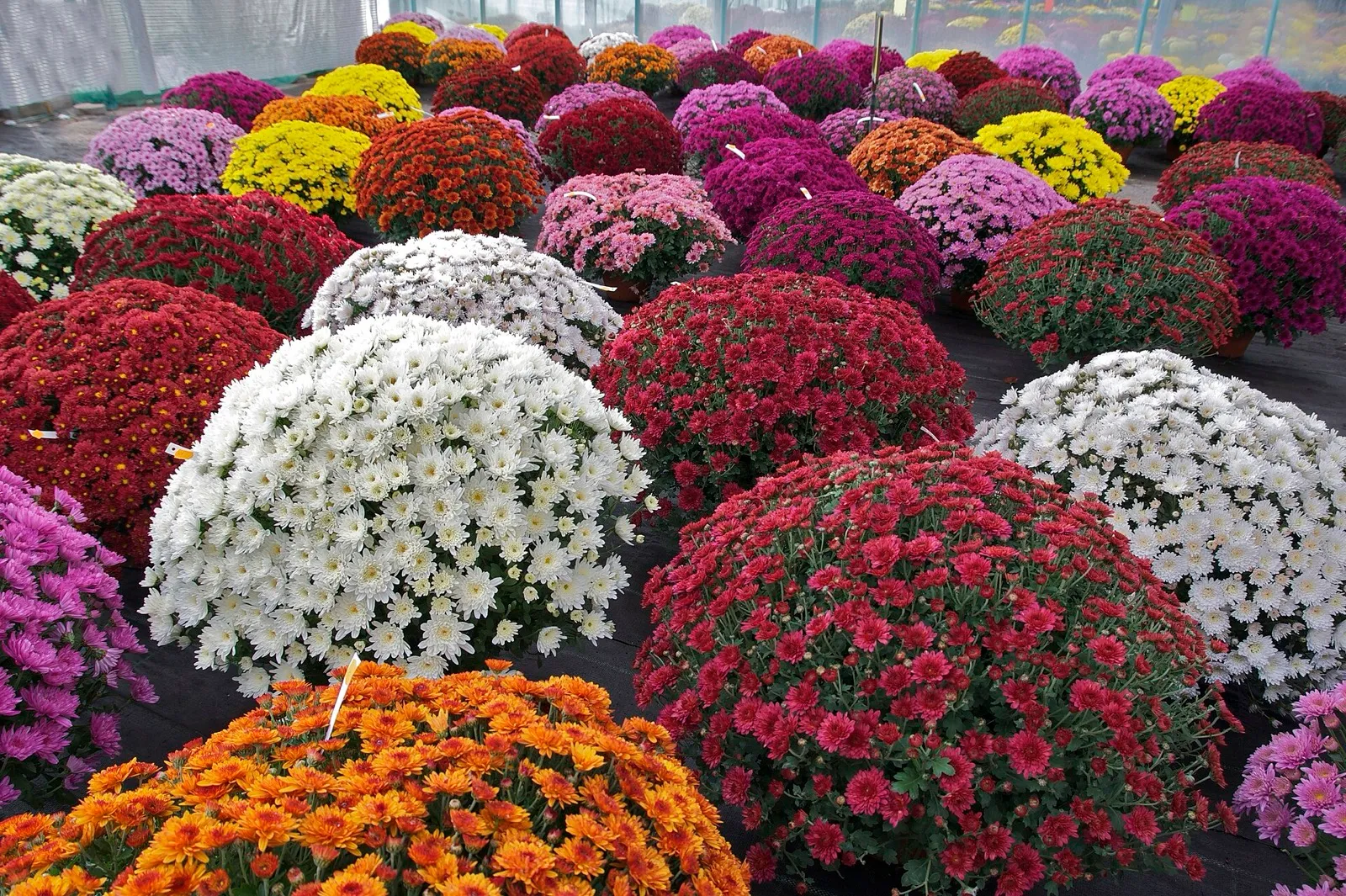
Chrysanthemum
Chrysanthemum × morifolium
The All Saints' Day flower. It flowers in autumn and is perennial: after the holiday you can plant it and it will flower again the following year.
- Type
- Seasonal flower
- Where
- Indoor and outdoor
- Light
- Sun · Part shade
- Water
- Moderate water
- Cold
- Withstands cold, but best protected from frost
Where to put it
It likes sun, in a warm, sheltered spot, with fertile soil that drains well. If you’re going to keep it in a pot all year, make it at least 30 cm wide.
Watering
Don’t let the soil dry out completely, but don’t waterlog it either: the roots suffer from too much water. In a pot it dries out sooner, so check it often.
Pruning
When it finishes flowering, in late autumn, cut the whole plant down to just above the ground. In spring it will sprout again. In early summer, when the shoots are about 20 cm long, pinch out the tips so the plant branches, and keep pinching out the side shoots until midsummer. That way you’ll have more flowers in autumn.
Feeding
In the garden, a layer of compost or well-rotted manure around the plant is usually enough. In a pot, a liquid fertiliser following the instructions on the pack, and when it starts to flower, one rich in potassium.
Caution
Chrysanthemum is toxic to dogs and cats if they nibble it. Put it where they can’t reach it.
In our climate
Where winters are mild it can stay planted in the garden from one year to the next: cover the base with a mulch and protect it from too much winter rain. Although it’s considered hardy, it’s a good idea to protect it from frost.
Common problems
Aphids
How to spot it
Colonies of small insects on the tender shoots. The leaves curl or become misshapen, the plant grows less and a sticky honeydew appears, on which a black fungus (sooty mould) grows.
What to do
Check the plant often. If there are only a few colonies, you can squash them with your fingers. Leave ladybirds and other natural enemies of aphids alone. If the infestation is heavy, ask us.
Powdery mildew
How to spot it
Patches of white powder on the leaves and flowers, which gradually spread. The affected parts may stay small or become misshapen.
What to do
It appears more on plants that go thirsty from time to time and in places without ventilation. Water regularly, without wetting the leaves, don't overdo the fertiliser and leave space for air to circulate. Cut off affected parts early.