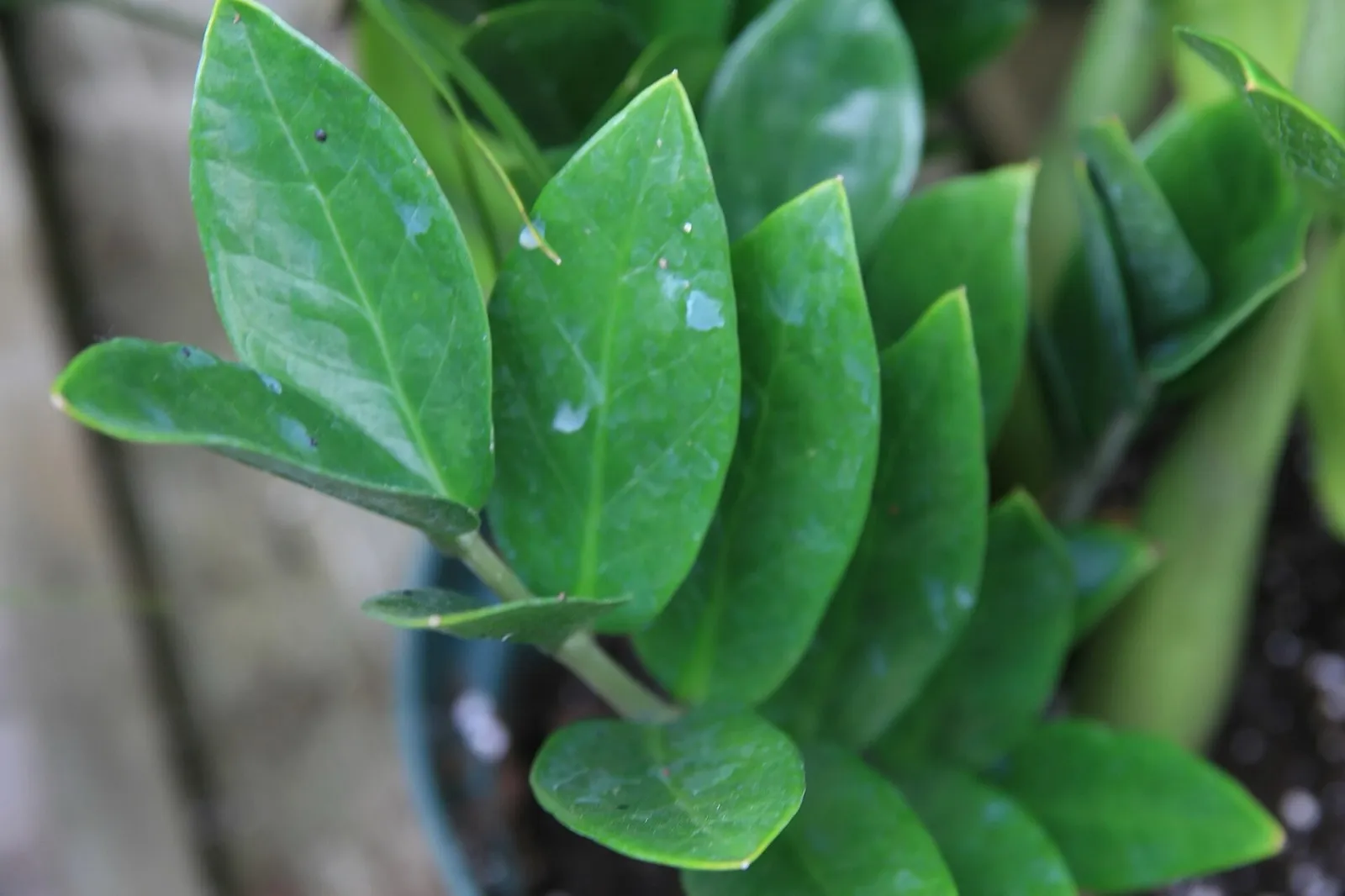
ZZ plant
Zamioculcas zamiifolia
Also known as: Zamioculcas
Slow-growing plant with glossy leaves that copes with low light and plenty of drought. It does well in homes and offices, as long as you don't overwater it.
- Type
- Houseplant
- Where
- Indoor
- Light
- Part shade · Shade
- Water
- Little water
- Cold
- Doesn't tolerate frost
Where to put it
It copes with very little light, so it works in corners where other plants don’t thrive, although it grows better with plenty of indirect light. Direct sun scorches the leaves and turns them brown. Use a houseplant compost that drains well.
Watering
Very little. Let the soil dry out completely between waterings. As a guide, about twice a month in summer and once a month in winter, when it grows less. If it goes very thirsty it sheds some of its leaves and holds out until the next watering thanks to the swollen base of its stems.
Care
It grows slowly, even in good conditions, so be patient. In low light it doesn’t flower.
Feeding
Very little: a liquid houseplant fertiliser, at a low dose, once or twice a year.
Caution
It’s toxic if eaten, for people and for dogs and cats: eating quite a few leaves can cause vomiting and diarrhoea. It doesn’t irritate the skin when touched.
At home
It’s very common in offices and homes because it copes with low light and needs little care. It prefers warmth: below about 10 °C it stops growing and the leaves can get damaged. If you put it outside in summer, bring it in when nights drop below about 15 °C.
Common problems
Root rot
How to spot it
It appears if the soil is compacted, drains poorly and stays wet for a long time: the roots rot.
What to do
Use a compost that drains well, let it dry out between waterings and never leave the pot with water in the saucer.
Scale insects
How to spot it
Small, scale-like bumps stuck to stems and leaves.
What to do
Check the plant now and then. If the infestation is heavy, ask us about an approved treatment.