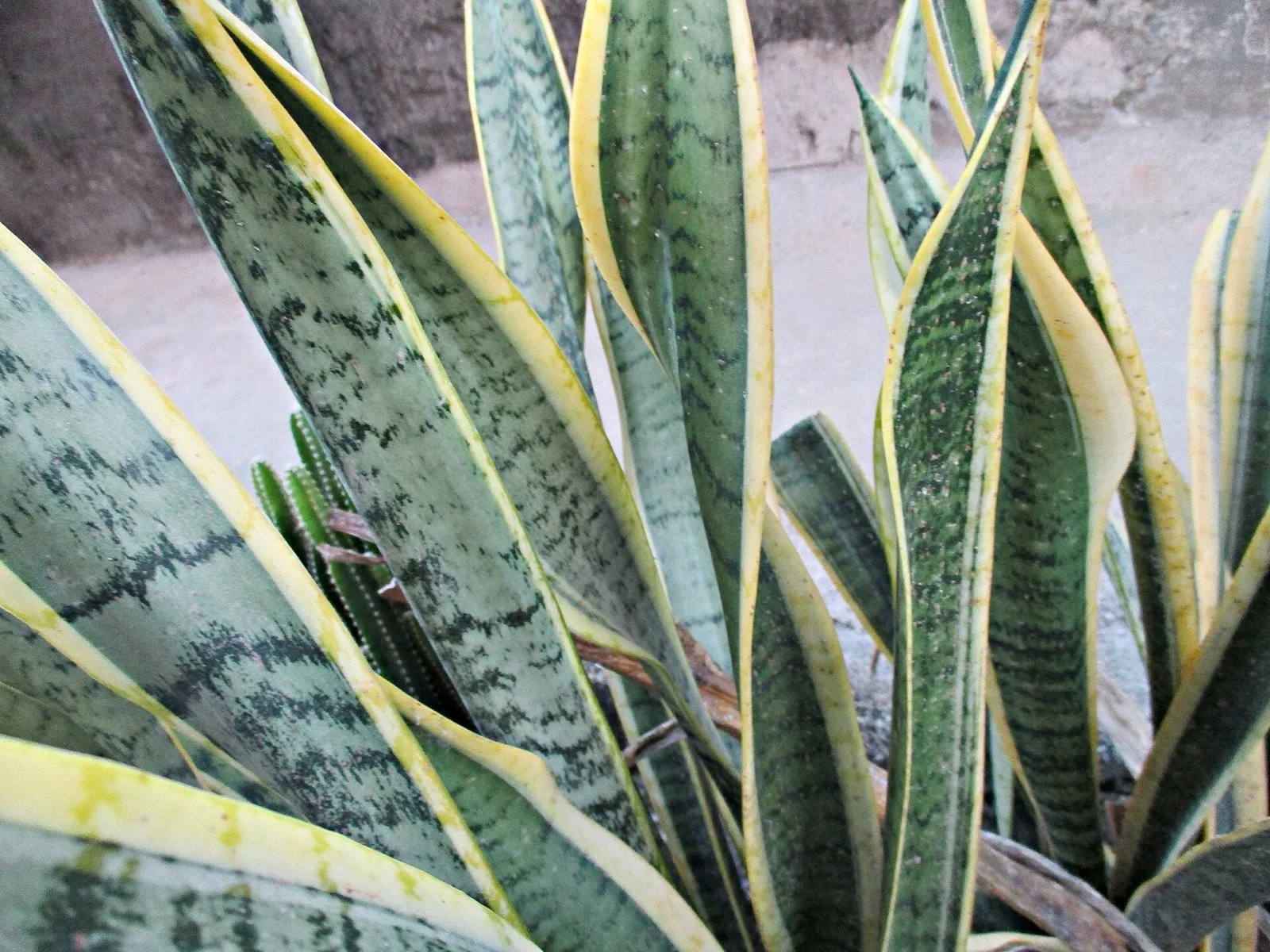
Snake plant
Dracaena trifasciata
Also known as: Sansevieria, Sansevieria trifasciata (former name), Mother-in-law's tongue
Plant with fleshy, upright, striped leaves. It copes with low light, dry air and the odd forgotten watering, but not with too much water.
- Type
- Houseplant
- Where
- Indoor and outdoor
- Light
- Sun · Part shade · Shade
- Water
- Little water
- Cold
- Doesn't withstand frost
Where to put it
It adapts to almost any corner. The ideal is a bright spot with some shade, but it copes with low light: in shade the leaves grow taller, and in sun it stays more compact. In summer, avoid midday sun, which scorches the leaves. Use a cactus compost that drains well and a pot with drainage holes, only slightly bigger than the previous one.
Watering
Little. Water only when the soil is dry (check with your finger), onto the soil and without wetting the centre of the rosette. Empty any water left in the saucer. In winter it hardly needs any water.
Care
It doesn’t need pruning: just remove damaged leaves, cutting them off at the base. Each time you water, turn the pot a quarter turn so it doesn’t lean towards the light. In spring you can separate the offsets that grow around it and pot them up separately.
Feeding
A liquid houseplant or cactus fertiliser once a month, from April to September.
Caution
It’s poisonous if eaten: in dogs and cats it can cause nausea, vomiting and diarrhoea. The sap irritates the skin, so wear gloves when cutting leaves. Keep it out of reach of children and animals.
At home
It’s happy at normal household temperatures, ideally between 15 and 24 °C, away from cold draughts and radiators. It likes dry air: don’t mist it or put it in a steamy bathroom. In summer it can go outside, in sun or part shade, getting it used to it gradually, but bring it in well before any frost arrives.
Common problems
Overwatering and root rot
How to spot it
It's its most common problem. The roots rot and the whole plant starts to lean over.
What to do
Water only when the soil is completely dry, hardly at all in winter, and don't leave water in the saucer. Use a pot with drainage holes and a cactus compost.
Mealybug
How to spot it
Insects covered in a white, cotton-like wax, hidden between the leaves at the base of the plant.
What to do
Check the base of the leaves now and then. If the infestation is heavy, ask us about an approved treatment.
Red spider mite
How to spot it
Very small mites on the leaves. They usually only cause problems in hot, dry conditions.
What to do
If you see them, ask us.