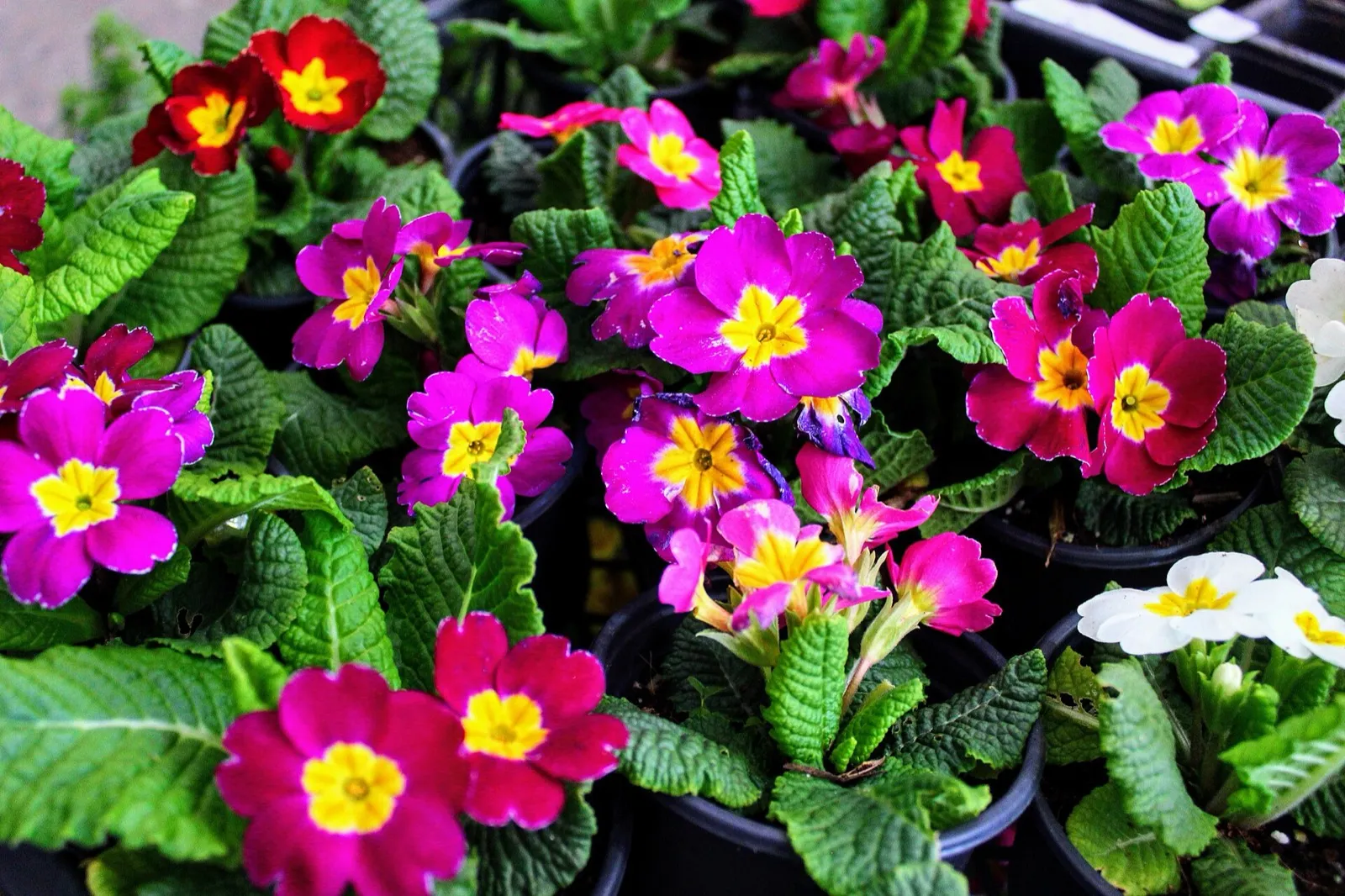
Primrose
Primula vulgaris (Primula acaulis)
Also known as: Primula
Low-growing plant with flowers in many colours to brighten up pots and borders in winter and spring. It likes cool weather and suffers in the heat.
- Type
- Seasonal flower
- Where
- Outdoor
- Light
- Sun · Part shade
- Water
- Moderate water
- Cold
- Withstands cold well; it's heat that doesn't suit it
Where to plant it
While it’s still hot, it’s better in part shade and out of the strong afternoon sun: too much sun turns its leaves yellow and slows its growth. When the cooler weather arrives, give it all the light you can, because with good light it flowers better. It likes soil rich in organic matter that stays moist but drains well.
Watering
Keep the soil evenly moist, but without waterlogging it. It’s sensitive to too much water: as well as bringing fungi such as grey mould, it can make the leaves turn yellow.
Feeding
Feed regularly throughout the season, including the cold months, so the leaves don’t turn yellow. Don’t overdo the nitrogen: it produces long, soft leaves that are more vulnerable to fungi and cold. When it starts forming flower buds it needs more potassium, so at that point a potassium-rich fertiliser suits it.
Care
If the new leaves turn yellow, it may be iron chlorosis: the plant can’t get the iron it needs. In primroses it usually appears because of too much moisture or too much sun, so check the watering and where you have it first.
In our climate
It’s a cool-season plant: it forms its flowers in the cool weather and stops when the heat sets in. That’s why in La Costera the usual thing is to enjoy it in winter and spring, and for it to fade as summer arrives. Treat it as a seasonal plant to brighten up the cold months.
Common problems
Grey mould
Botrytis cinerea
How to spot it
Brown spots on leaves and flowers that become covered in a felt-like grey mould. A soft, watery rot may appear at the base of the stem.
What to do
It's a fungus that takes advantage of excess moisture. Don't leave standing water, don't crowd the pots too close together so air can circulate, and don't overdo the nitrogen fertiliser. If it keeps happening, ask us.
Snails and slugs
How to spot it
Large chunks eaten out of leaves and flowers, and shiny slime trails on the plant.
What to do
Check the leaves and flowers and remove any you find. If there are lots of them, ask us about an approved treatment.