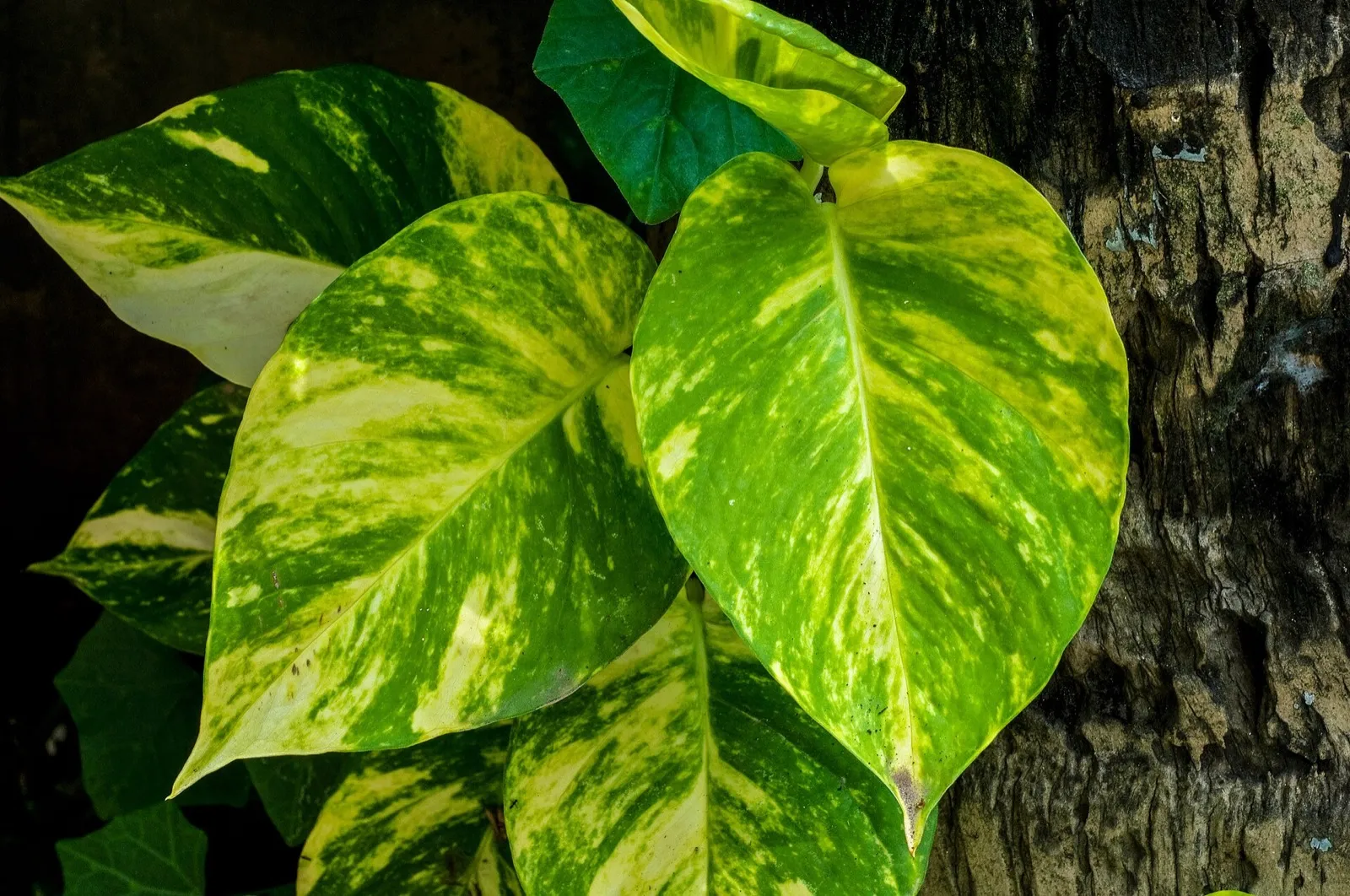
Pothos
Epipremnum aureum
Also known as: Devil's ivy, Golden pothos, Scindapsus aureus (old name)
Trailing or climbing plant with heart-shaped leaves. It's easy to look after indoors: it needs light without direct sun and little water.
- Type
- Houseplant
- Where
- Indoor
- Light
- Part shade · Shade
- Water
- Moderate water
- Cold
- It doesn't like cold or cold draughts
Where to put it
With plenty of light but no direct sun, because summer sun scorches the leaves. It copes with low light for quite a long time, although it then grows less and the leaves lose their yellow markings. You can let it trail down from a shelf or train it up a moss or coir pole.
Watering
Water only when the soil is almost dry: check with your finger first. Don’t leave water in the saucer. In winter, even less. If it’s growing up a moss pole, keep the pole moist so the stems can cling on with their aerial roots.
Care
If the stems get very long or the plant looks sparse, cut them just above a leaf: it sprouts again from there and becomes bushier. The pieces you cut root easily in a glass of water. When the roots fill the pot, repot it in spring into one only slightly bigger.
Feeding
A liquid houseplant fertiliser once a month, from April to October.
Caution
It’s toxic if eaten, for people and for dogs and cats: it irritates the mouth and can cause drooling, vomiting and difficulty swallowing. The sap can also irritate the skin, so wear gloves when pruning it and keep it out of reach of children and animals.
At home
An east- or west-facing window suits it, or a south-facing one with a thin curtain. It prefers 18 to 30 °C, away from cold draughts and radiators. It doesn’t need high humidity, so it adapts to almost any room. If your tap water is hard, try to water it with rainwater or filtered water whenever you can.
Common problems
Overwatering and root rot
How to spot it
If the soil is always wet or the pot sits in water, the roots rot. The edges of the leaves may turn black.
What to do
Water only when the top layer of soil is dry and empty the saucer after watering, especially in winter.
Mealybugs and scale insects
How to spot it
Small insects stuck to stems and leaves: some covered in a white, cotton-like wax (mealybug), and others that look like scales.
What to do
Check the plant now and then, especially the undersides of the leaves and where they join the stem. If the infestation is heavy, ask us about an approved treatment.