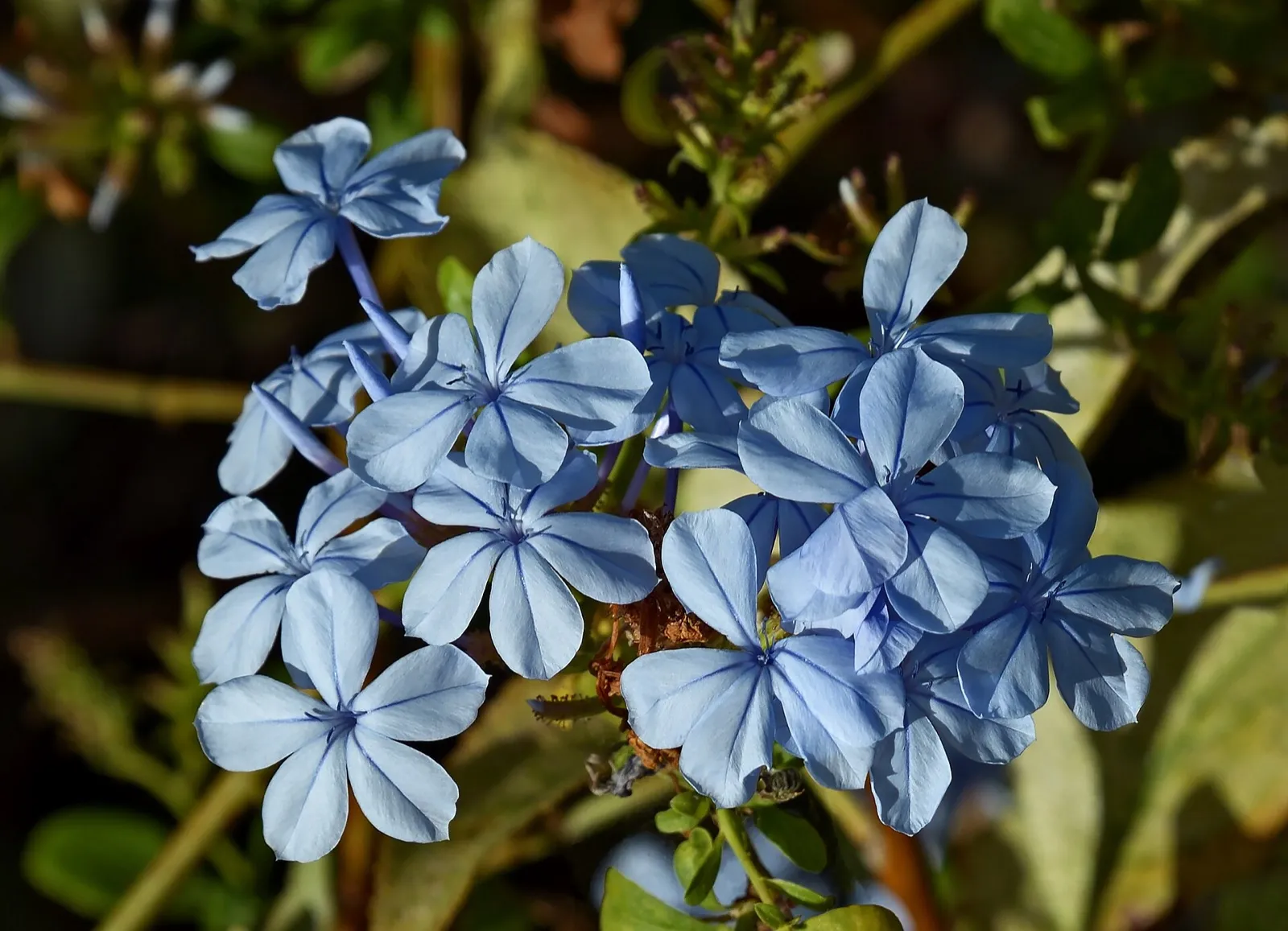
Plumbago
Plumbago auriculata
Also known as: Cape leadwort, Blue plumbago
Shrub with long branches and sky-blue flowers for much of the year. It works as an informal hedge, to cover banks or trained as a climber.
- Type
- Shrub
- Where
- Outdoor
- Light
- Sun · Part shade
- Water
- Moderate water
- Cold
- Doesn't withstand hard frost; if the shoots get scorched, it regrows
Where to plant it
In sun, which is where it flowers most; it tolerates part shade, but with fewer flowers. It likes light soil with good drainage, although it adapts to many types of soil. In very chalky soils the leaves may turn yellow from lack of iron or magnesium. You can use it as a shrub with arching branches, as an informal hedge, to cover a bank or tied to a support as a climber.
Watering
Generous watering in summer and sparse in winter. Once established it copes fairly well with drought.
Pruning
Every year, on mature plants, cut back the side shoots that have already flowered, leaving two or three buds on each. Branches that grow out of place can be removed at any time of year. If you clip it as a hedge, bear in mind that each trim loses you a good part of the flowers.
Feeding
Once or twice during the growing season, so it keeps growing and flowering. In a pot, liquid feed every 10 days. If the leaves turn yellow, it may be short of iron or magnesium: ask us what to give it.
In our climate
If it freezes in your area some winters and the young shoots turn black, don’t pull it out: if its roots are well established, it regrows when the good weather returns. If you’d like a hedge or to cover a bank with plumbago, we can design and plant it.
Common problems
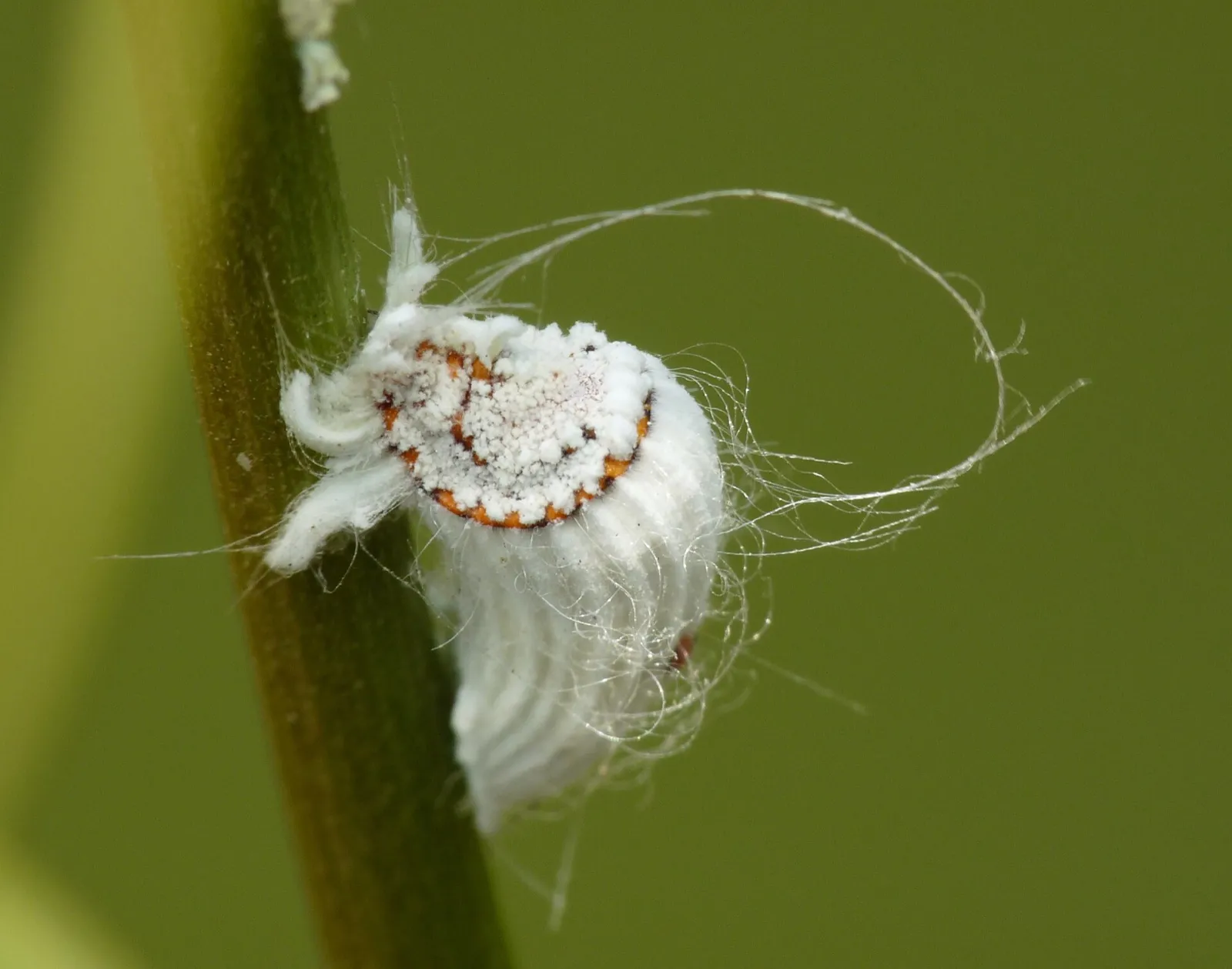
Cottony cushion scale
Icerya purchasi
How to spot it
Whitish, fairly large scale insects, with an elongated, ridged, cottony egg sac. They cluster on branches and stems, weaken the plant by sucking the sap and release honeydew on which sooty mould grows.
What to do
Its natural enemy, the ladybird Rodolia cardinalis (red and black, 4 to 5 mm), usually keeps it under control: look for it before doing anything and avoid treatments that could kill it. Prune to open up the inside of the bush and don't let ants climb up. If the infestation is still heavy, ask us.