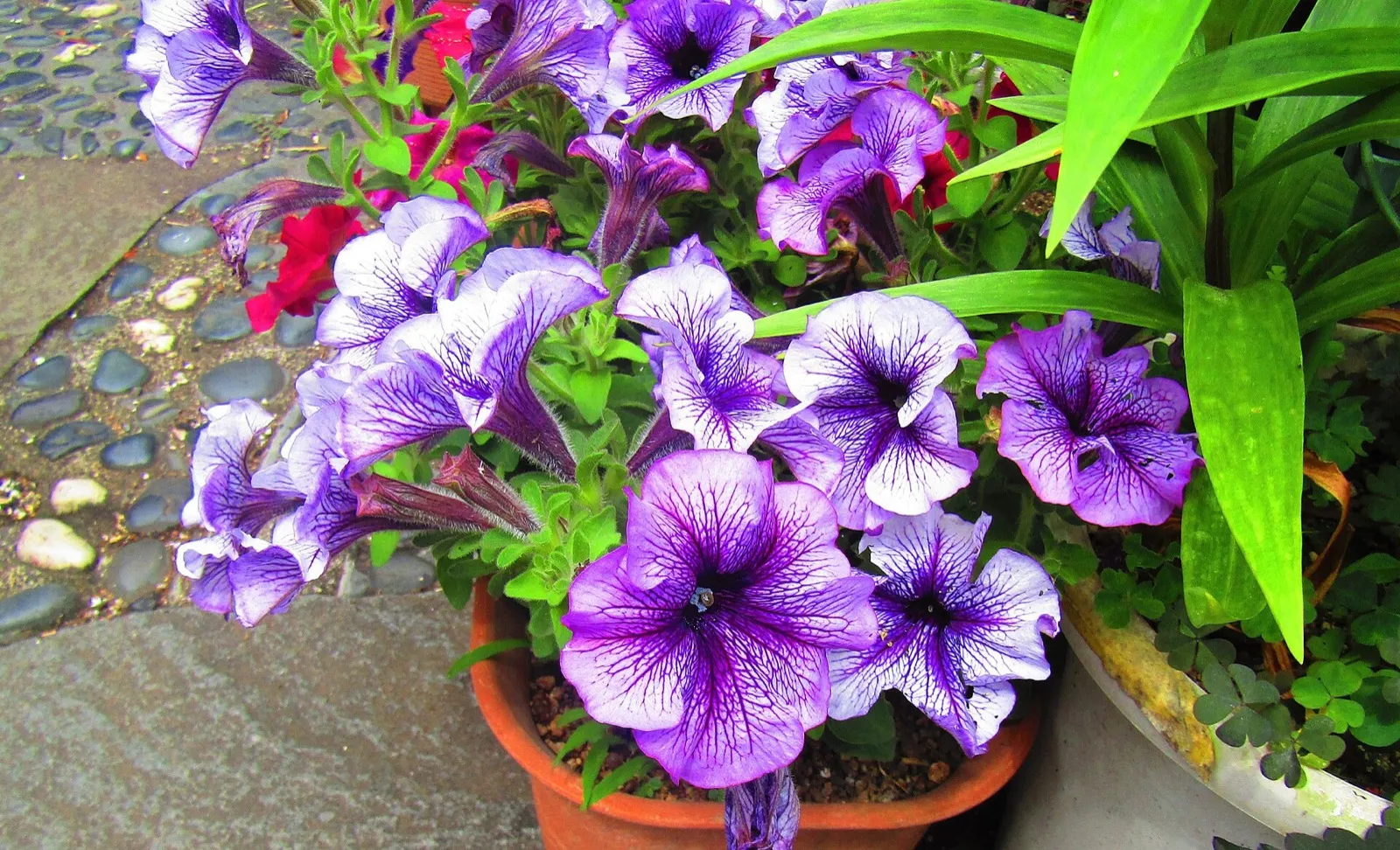
Petunia
Petunia × atkinsiana (Petunia × hybrida)
Seasonal plant for pots, window boxes and hanging baskets. It flowers from late spring to autumn if you remove spent flowers and feed it.
- Type
- Seasonal flower
- Where
- Outdoor
- Light
- Sun
- Water
- Moderate water
- Cold
- Doesn't withstand frost
Where to plant it
In full sun. In shade it grows leggy and produces few flowers. It needs light soil that drains well and isn’t too rich; if water pools in your garden, it’s better in a pot or a raised bed. Shelter it from drying winds.
Watering
Deep, infrequent waterings are better than lots of short ones, which keep the roots near the surface. Water at soil level, without wetting the leaves and flowers: that way it gets fewer diseases. And never leave it waterlogged, because too much water brings root rot.
Pruning
Remove spent flowers so it keeps flowering, especially on large-flowered and double-flowered varieties; many small-flowered ones clean themselves. If it gets straggly with few flowers, cut the stems back by about half, without leaving it bare of leaves, and give it a liquid fertiliser so it sprouts again.
Feeding
A balanced fertiliser once a month during the season. With regular feeding and its spent flowers removed, it flowers from late spring until well into autumn.
In our climate
Surfinia is a series of trailing petunias. It’s so widespread that many people call any petunia a surfinia, even when it isn’t one. It’s ideal for hanging baskets and window boxes, because its stems trail down and flower at the tips. If your petunias struggle or turn yellow in the height of summer, try calibrachoa, a smaller-flowered relative that copes better with hot summers and suffers less from chlorosis. And in winter, watch out for frost: it doesn’t survive it.
Common problems
Black root rot
Thielaviopsis basicola
How to spot it
At first the leaves turn yellow, as if the plant were short of iron. If it keeps progressing, the plant weakens and the damage may be irreversible.
What to do
It's a root fungus that thrives in waterlogged conditions. Keep an eye on the watering so the soil doesn't stay soaked and use a compost that drains well. If you're not sure, ask us.
Aphids
How to spot it
Small insects clustered on the tender shoots and buds, sucking the plant's sap.
What to do
Check the plant often, especially the new shoots, to catch them early. If the infestation is heavy, ask us about an approved treatment.