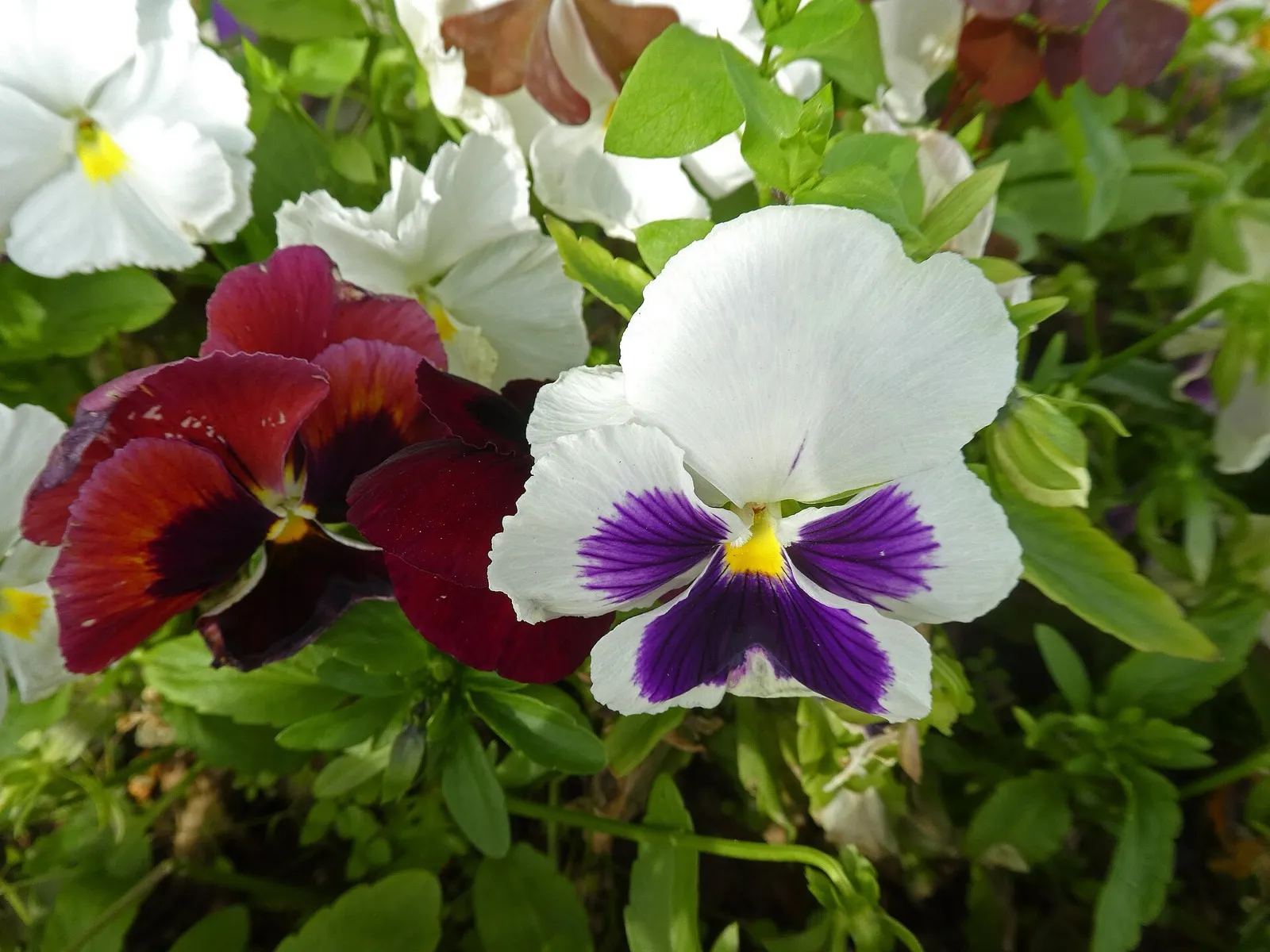
Pansy
Viola × wittrockiana
Cool-season flower for pots and borders. It's planted in autumn, flowers in winter and spring, and gives out in the heat.
- Type
- Seasonal flower
- Where
- Outdoor
- Light
- Sun · Part shade
- Water
- Moderate water
- Cold
- Withstands winter cold
Where to plant it
In full sun during the cool months. With too much shade it grows leggy, with weak stems and fewer flowers. It needs soil that drains well; in a pot, avoid composts that hold a lot of water, because with the winter rains the soil gets soaked and the roots rot.
Watering
Let the soil dry out a little between waterings and water at soil level, without wetting the leaves or flowers: too much water brings fungi. If a hard frost is forecast, water it well beforehand, because the moisture helps it cope with the cold.
Care
Remove spent flowers regularly, as that way it keeps flowering. If the plant starts to look tired, cut it back by about a third so it sprouts again.
Feeding
It’s a hungry plant: a liquid fertiliser every two or three weeks during the season.
In our climate
In warm climates it’s planted in autumn and fills pots and borders with colour through winter and spring. In the heat it stops flowering and gives out, so the usual thing is to treat it as a seasonal plant and replace it when summer arrives. In the hardest cold it flowers less.
Common problems
Grey mould
Botrytis cinerea
How to spot it
Fuzzy grey mould on flowers and stems, which go soft and rot. When you touch the affected flowers, a fine grey powder comes off.
What to do
Keep the leaves and flowers as dry as possible, remove spent flowers promptly and don't crowd the plants, so air can circulate.
Aphids
How to spot it
Sticky honeydew on the leaves, misshapen new shoots and sometimes a black fungus (sooty mould) on the leaves.
What to do
Check the new shoots often and leave ladybirds and lacewings alone, as they eat them. If the infestation is heavy, ask us.
Slugs and snails
How to spot it
Large, irregular holes in leaves and flowers, and shiny slime trails.
What to do
Clear away dry leaves and debris around the plants, where they hide in the damp, and look for them at night with a torch to pick them off by hand.