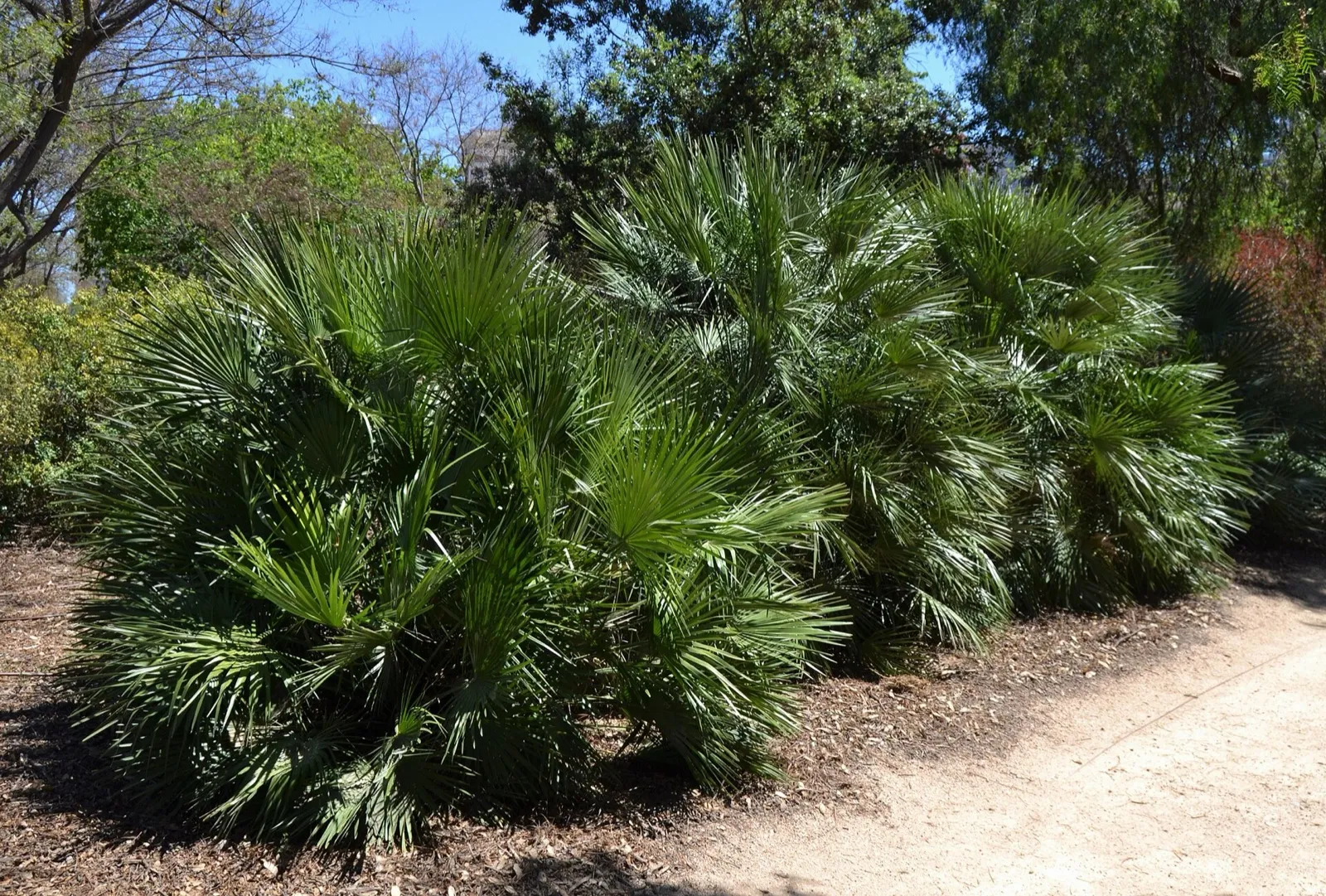
Dwarf fan palm
Chamaerops humilis
Also known as: European fan palm, Mediterranean fan palm
The only palm native to the Iberian Peninsula. It grows slowly, copes with drought and chalky soils, and does well in rock gardens and hedges.
- Type
- Palm
- Where
- Outdoor
- Light
- Sun
- Water
- Little water
- Cold
- Tolerates some cold
Where to plant it
In full sun, in permeable soil. It tolerates chalky and slightly salty soils well, as well as being close to the sea, but not waterlogging. In the wild it lives in open, dry places, on hillsides near the coast. The leaf stalks have spines, so give it room away from paths.
Watering
It needs little water and resists drought. What does harm it is too much water in soil that doesn’t drain.
Pruning
A maintenance prune at the end of winter is enough: remove damaged leaves, dry flowers and any new shoots you don’t want. Remember that pruning wounds make it easier for the red palm weevil to get in.
In our climate
It’s a plant of our landscape: it grows naturally in the provinces of Valencia, Alicante and Castellón, and it regrows even after a fire. It grows slowly, but it’s very long-lived.
Common problems
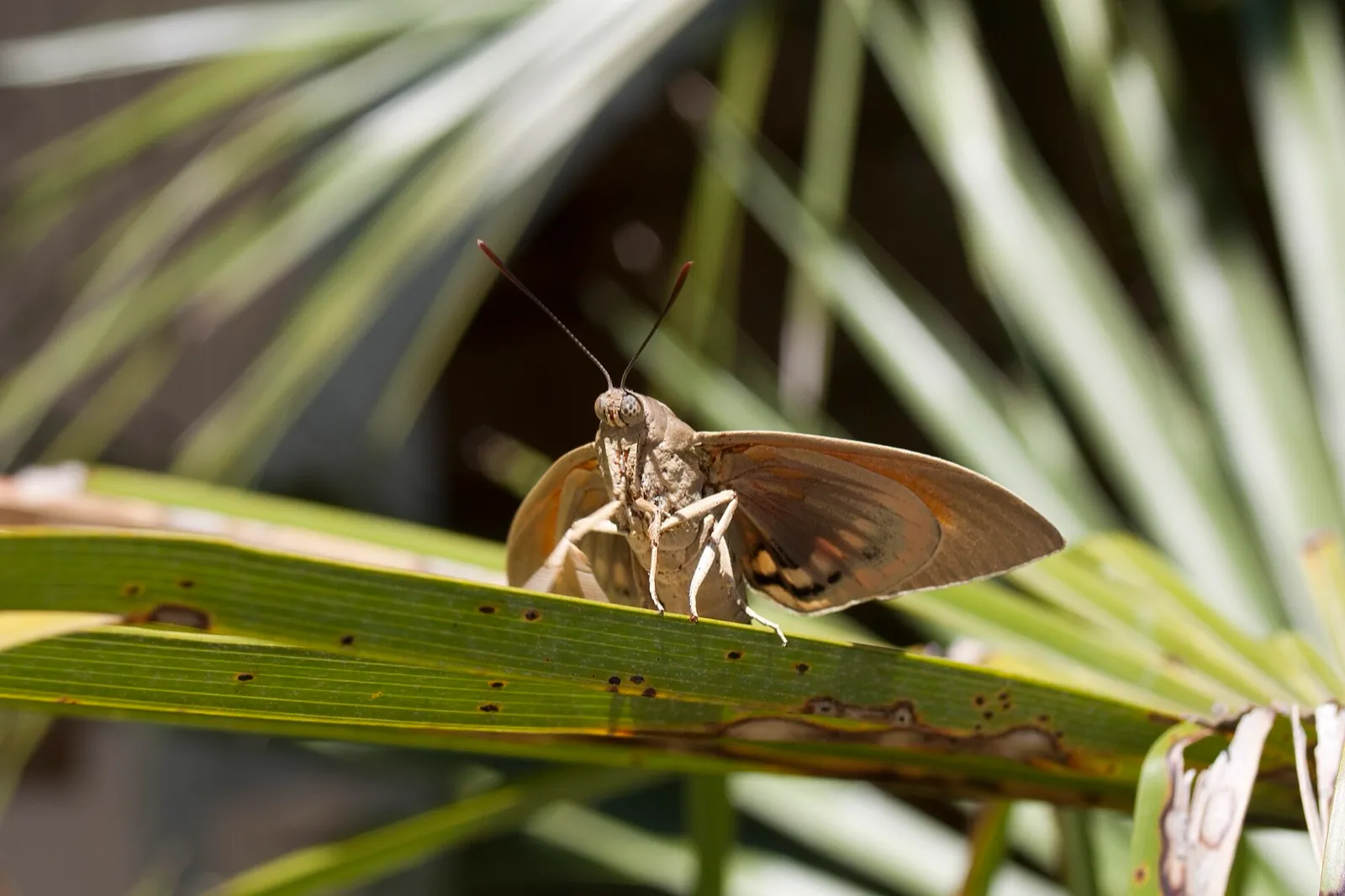
Paysandisia (palm borer moth)
Paysandisia archon
How to spot it
Young leaves that, when they open, show holes. The new leaves dry out and a sticky paste of plant debris and caterpillar droppings appears at the entrance to the tunnels. In heavy attacks it can kill the palm.
What to do
It's the caterpillar of a large moth that lives inside the plant. Check the new leaves regularly and, if you see these symptoms, ask us about an approved treatment.
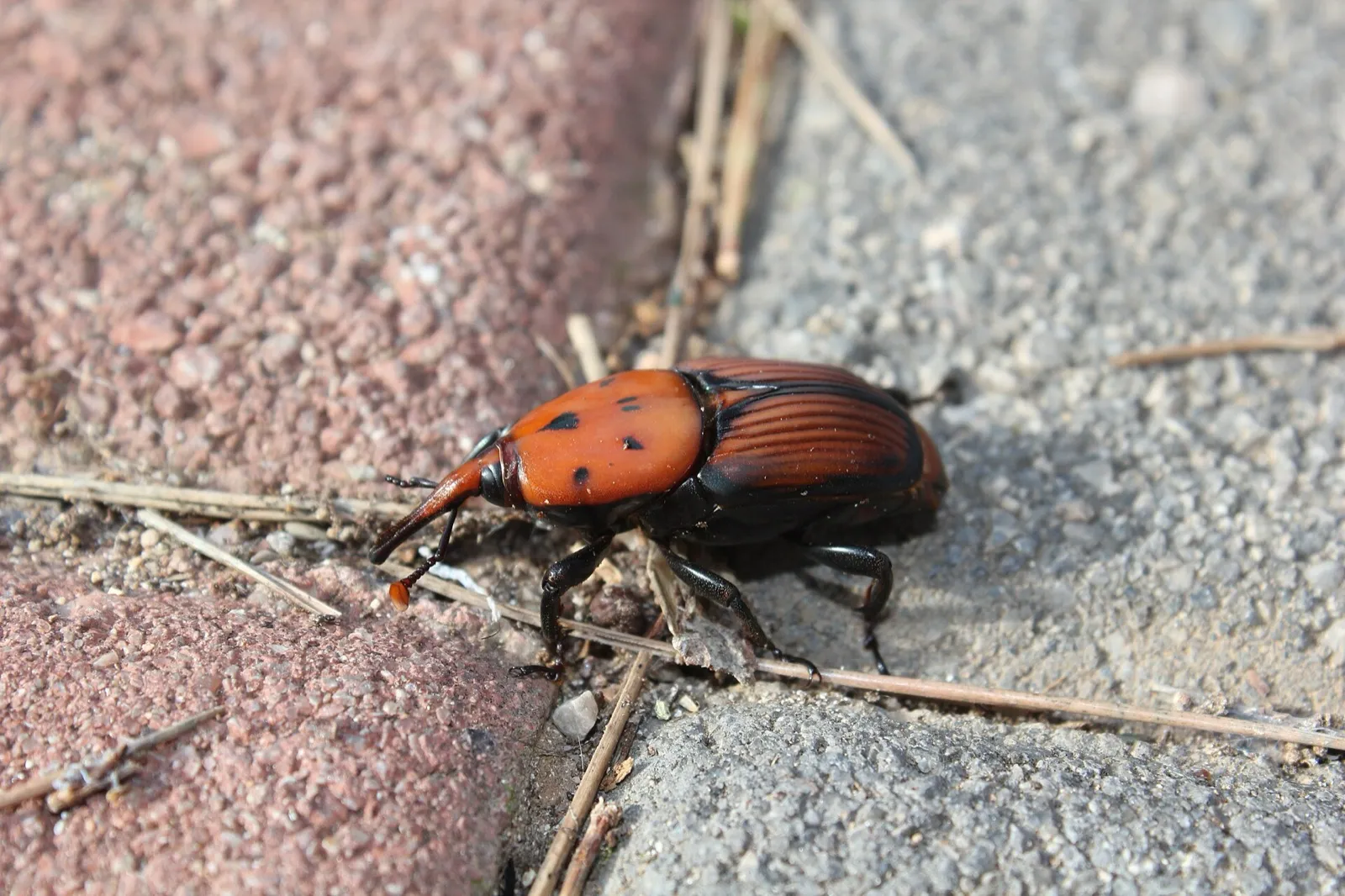
Red palm weevil
Rhynchophorus ferrugineus
How to spot it
The larvae bore tunnels inside the leaves and the trunk, and the damage can't be seen with the naked eye until the attack is advanced. In heavy attacks the plant dies.
What to do
Avoid pruning healthy dwarf fan palms if there are diseased palms nearby: the wounds make it easier for the insect to get in. If you suspect it has it, ask us.