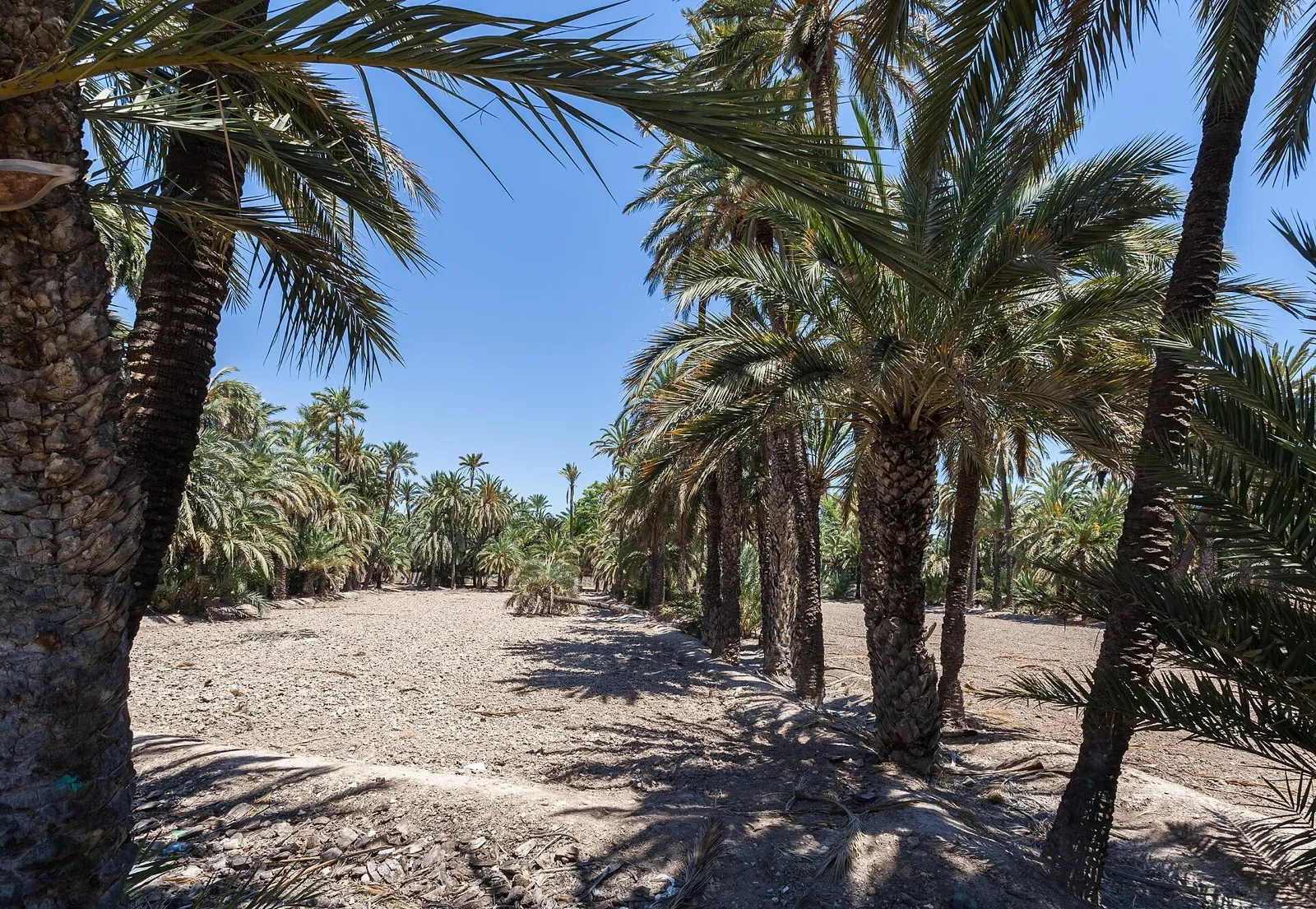
Date palm
Phoenix dactylifera
Also known as: Palm
Palm with a tall trunk and greyish leaves that produces dates. It copes very well with drought, heat and sea breezes, and above all it needs plenty of sun.
- Type
- Palm
- Where
- Outdoor
- Light
- Sun
- Water
- Little water
- Cold
- Withstands frost, although intense cold scorches its leaves
Where to plant it
In full sun and in a warm spot. It adapts to almost any type of soil and isn’t affected by salty breezes or slightly brackish water, but it struggles in compacted soils that don’t let water drain away.
Watering
It copes very well with drought. It’s a different matter if you want dates: for them to ripen fully it needs a lot of heat and plenty of water.
Pruning
The less, the better. Pruning wounds attract the red palm weevil, so if you can, don’t prune it, and if you have to, remove only what’s essential and avoid hard pruning. Do it between December and February, when the insect is less active, and protect the cuts with pruning sealant.
In our climate
It comes from very hot, sunny areas of North Africa and south-west Asia, and adapts to a wide range of climates. If you want a large palm from day one, a mature specimen can be transplanted: we do this. Bear in mind, though, that a newly transplanted palm is weakened and attracts the red palm weevil, so it needs to be watched closely afterwards.
Common problems
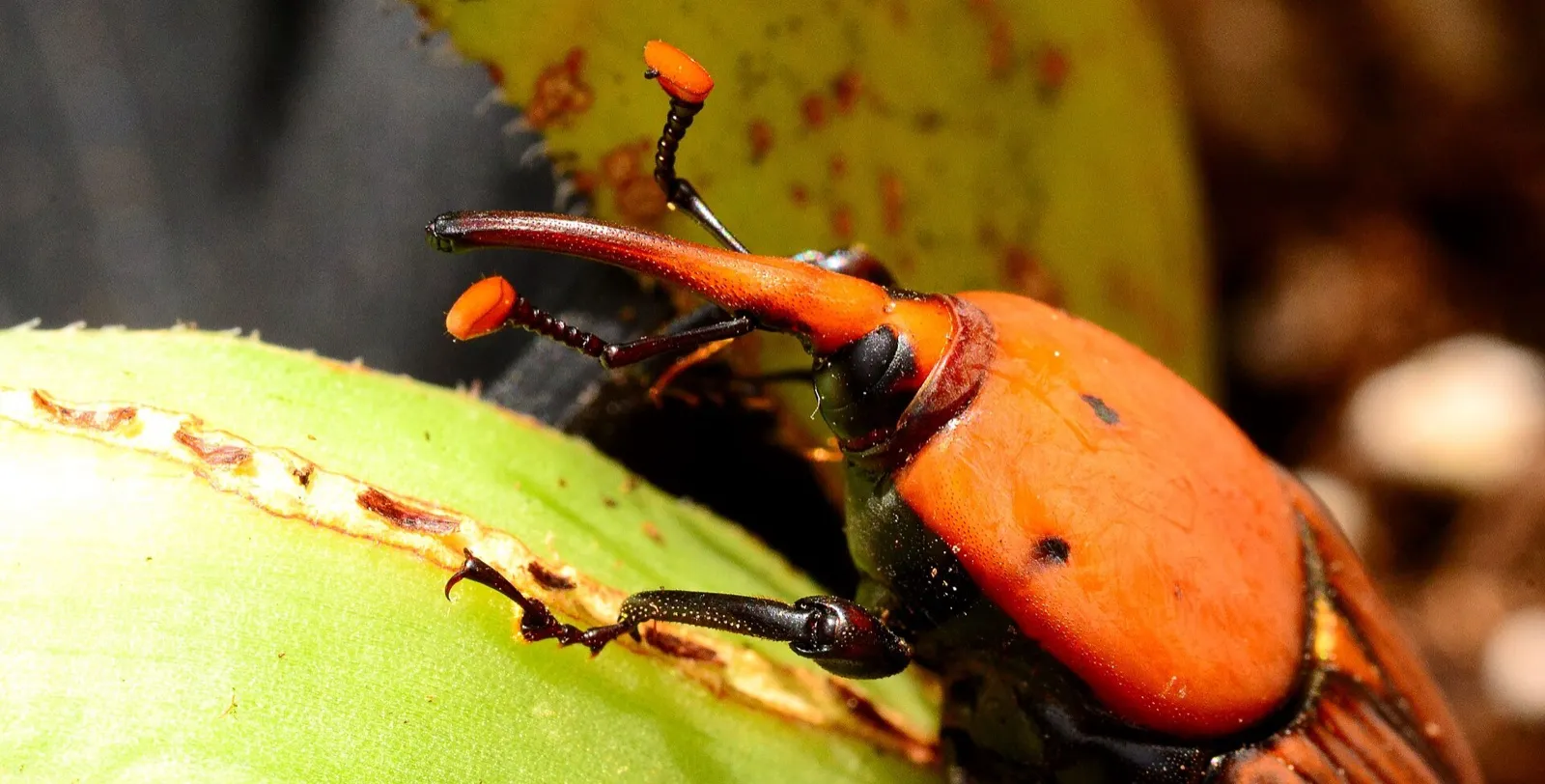
Red palm weevil
Rhynchophorus ferrugineus
How to spot it
The young leaves in the centre come out underdeveloped, with the leaflets eaten. Affected leaves turn yellow, wilt and come away easily. On the date palm the damage is often also seen on the offshoots, which are its way in. Sometimes there are holes and a reddish, sticky liquid on the trunk.
What to do
The larvae eat the palm from the inside and the symptoms take months to show, so keeping an eye on it is what matters: check how it looks at least once a month and, if you notice anything odd, act straight away. If you see symptoms, ask us about an approved treatment before the damage reaches the central bud.
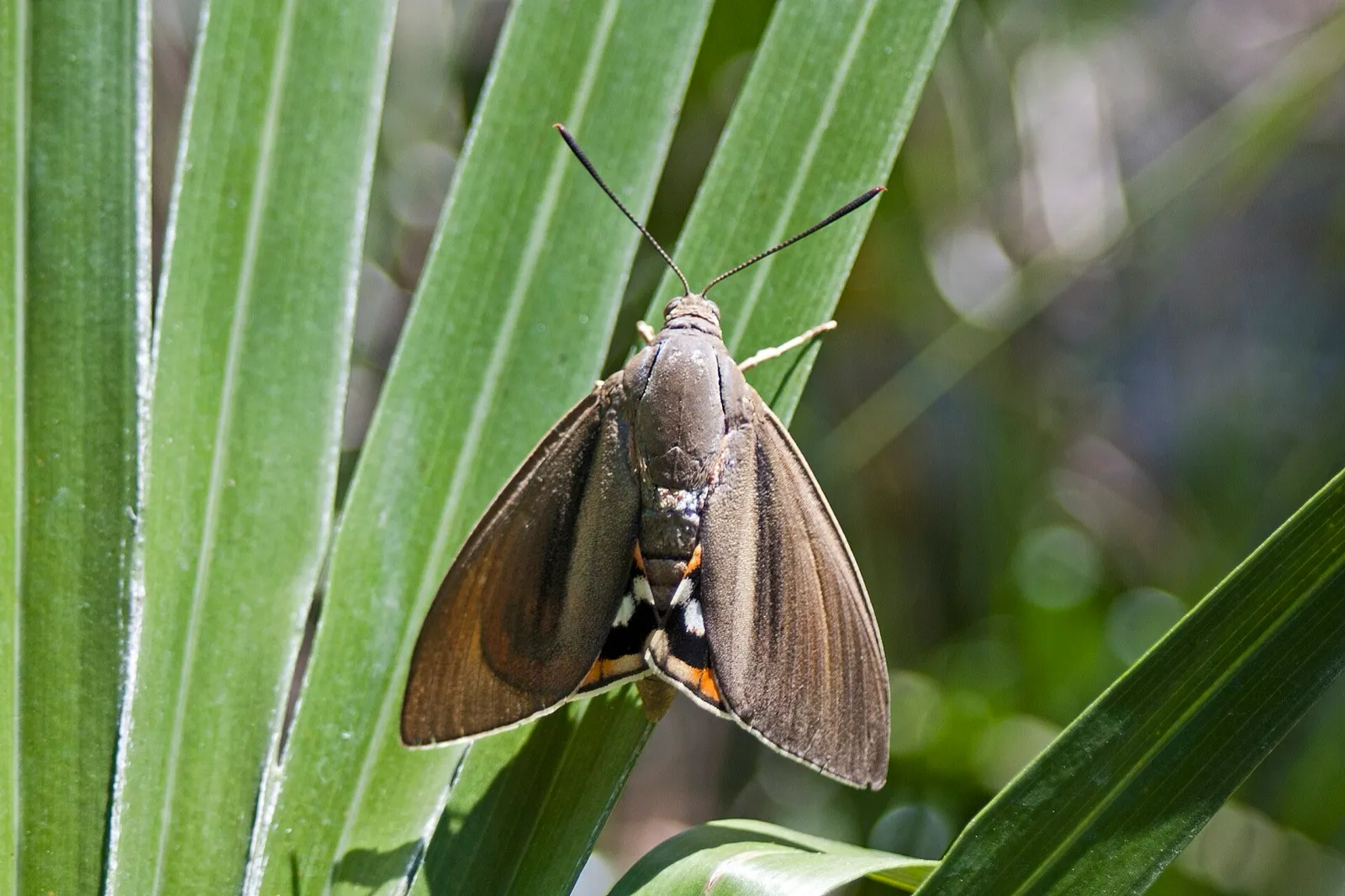
Paysandisia (palm borer moth)
Paysandisia archon
How to spot it
Young leaves that, when they open, show fan-shaped holes. The leaves in the centre turn yellow and wilt, and sawdust and fibres mixed with a sugary liquid appear at the entrance to the tunnels. Over time the whole palm weakens.
What to do
It's the caterpillar of a large moth that lives inside the palm, which is why treatments struggle to reach it. Check the crown regularly and, if you see these symptoms, ask us about an approved treatment.