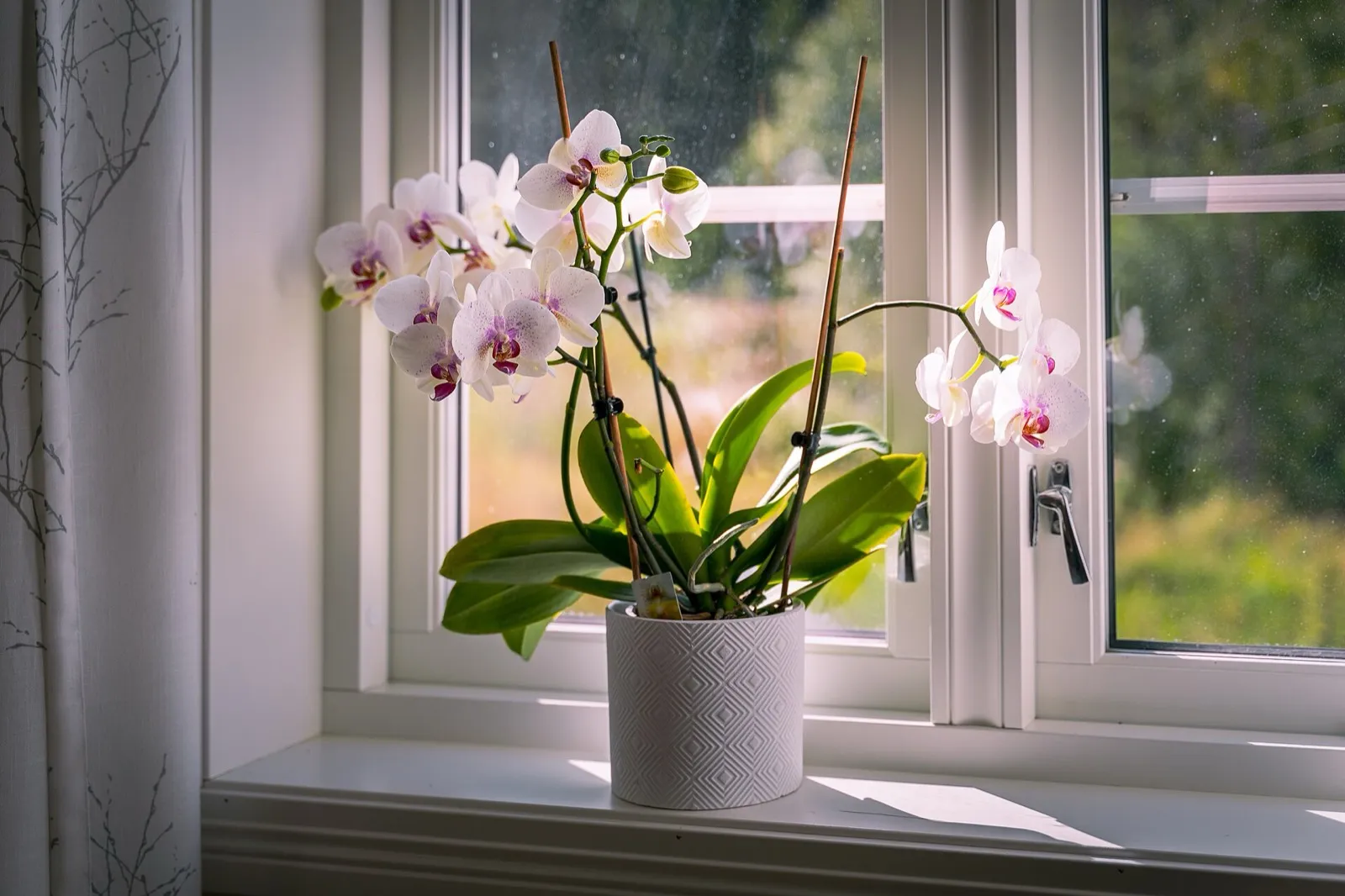
Moth orchid
Phalaenopsis
Also known as: Orchid, Phalaenopsis
Indoor orchid with flowers that last for months. It flowers again if you give it indirect light, a bark-based compost and little water.
- Type
- Houseplant
- Where
- Indoor
- Light
- Part shade
- Water
- Moderate water
- Cold
- Doesn't tolerate cold
Where to put it
In an east- or west-facing window. In winter it needs plenty of light to flower; in summer, protect it from direct sun, which scorches the leaves.
Watering
Roughly once a week from spring to autumn, and a little less in winter. Water in the morning with lukewarm water, ideally rainwater, and let it drain completely. Never leave water in the saucer.
Care
Always plant it in orchid bark compost, never in ordinary soil. Every two years, or when it outgrows its pot, repot it, ideally into a clear pot so you can see the roots. When the flowers finish, cut the stalk just above the second node below the dried flowers: sometimes it produces a new branch with more flowers. If the stalk dries up, cut it off at the base.
Feeding
A little but regularly in spring and summer, with an orchid fertiliser. Every fourth watering, just water, to rinse out the salts. In winter, little or nothing.
At home
It likes steady warmth, away from radiators and draughts. If it hasn’t flowered for a while, put it in a slightly cooler spot in the house for a month. On hot days, mist the leaves and aerial roots or stand the pot on a tray of damp gravel. It isn’t toxic to dogs and cats.
Common problems
Mealybugs and scale insects
How to spot it
Small, motionless insects on the leaves: some covered in a white, cotton-like wax, and others that look like scales.
What to do
The simplest way to get rid of them is to wash the plant under the tap. If they come back, ask us.
Root rot
How to spot it
Soft, dark roots, and wrinkled or limp leaves. If the roots are dry and shrivelled, the problem is the opposite: it's short of water.
What to do
It comes from overwatering or a pot that's too big. Let it drain well after watering, don't leave water in the saucer and change the bark every two years.