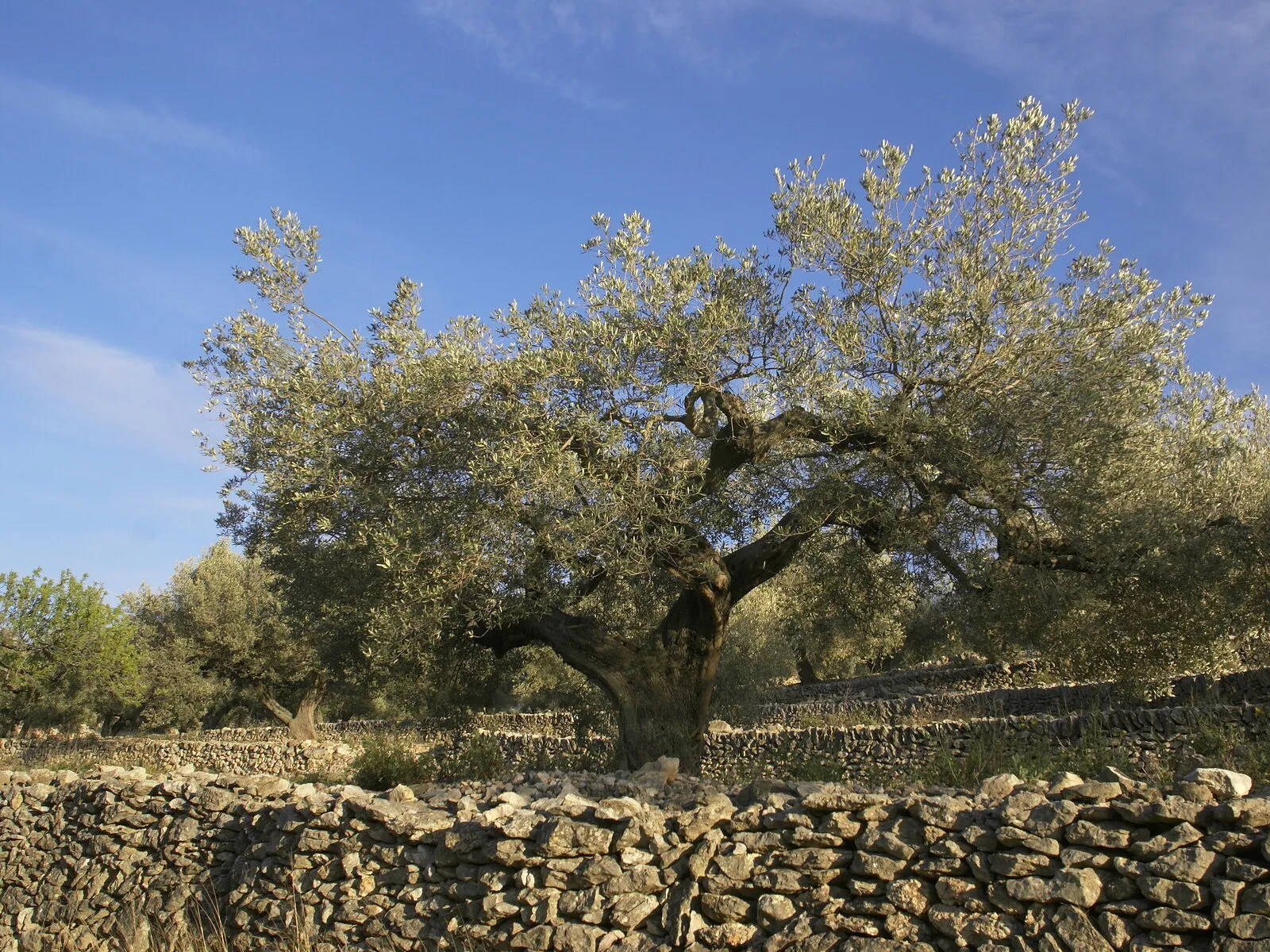
Olive tree
Olea europaea
Also known as: Olive, Wild olive (wild variety)
The Mediterranean tree above all others: it lives for centuries, copes with the drought and heat of the area and needs very little care once established.
- Type
- Tree
- Where
- Outdoor
- Light
- Sun
- Water
- Little water
- Cold
- Withstands moderate frost once established
Where to plant it
In full sun, in soil that drains well. It tolerates poor, chalky soils like those in the area, but not waterlogging: if the soil holds a lot of water, the roots rot.
Watering
For the first two years, water regularly in summer so it takes root. After that, an olive planted in the ground almost looks after itself: an occasional deep watering during long hot spells is enough. In a pot it needs watering all year round, without leaving water in the saucer.
Pruning
The time to do it is the end of winter, once the risk of frost has passed. Remove dry branches, crossing branches and suckers growing from the trunk, and thin out the centre so light gets in. An airy canopy suffers fewer pests and diseases.
Feeding
A little. Some compost or well-rotted manure at the end of winter is enough. Too much fertiliser, especially nitrogen, produces lots of tender leaves that attract pests.
In our climate
It’s probably the plant best adapted to La Costera. If you want a large olive tree from day one, a mature tree can be planted with a crane: we do this in gardens around the area.
Common problems
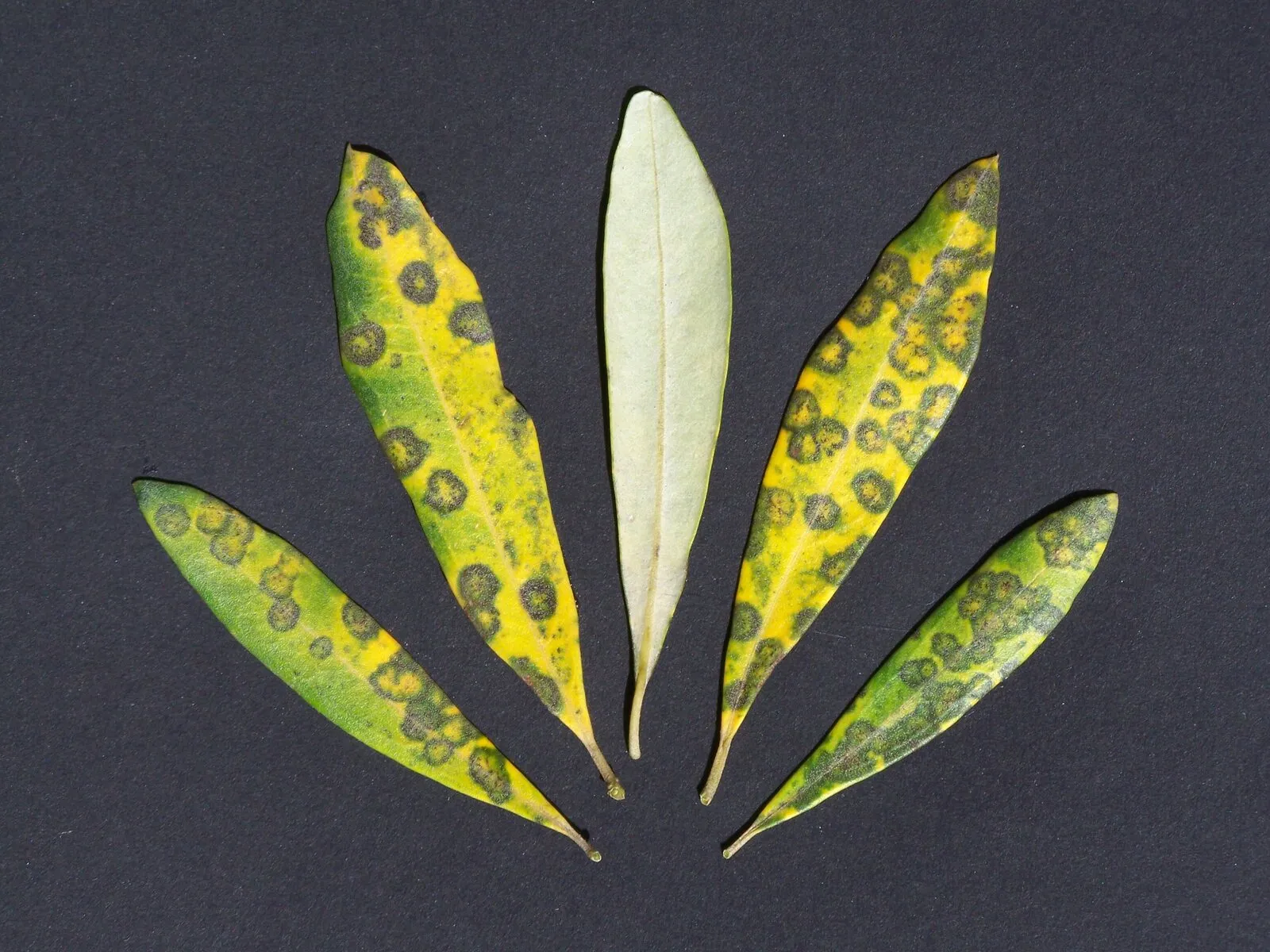
Olive peacock spot
Venturia oleaginea
How to spot it
Dark circular spots on the upper side of the leaves, often with a yellow halo. Affected leaves turn yellow and drop, and the tree becomes sparse.
What to do
It's a fungus that spreads with humidity and mild temperatures, especially in autumn and spring. Prune so that air and light get into the canopy. If it appears every year, it's treated preventively at the start of autumn and at the end of winter with an approved product.
Black scale and sooty mould
Saissetia oleae
How to spot it
Small, dark brown, domed bumps on branches and leaves. The leaves become covered in a black powder (sooty mould), a fungus that grows on the honeydew the scale releases.
What to do
An airy canopy and watering and feeding without excess keep it in check; too much nitrogen encourages it. It has many natural enemies that are worth protecting. If the infestation is heavy, ask us about an approved treatment.