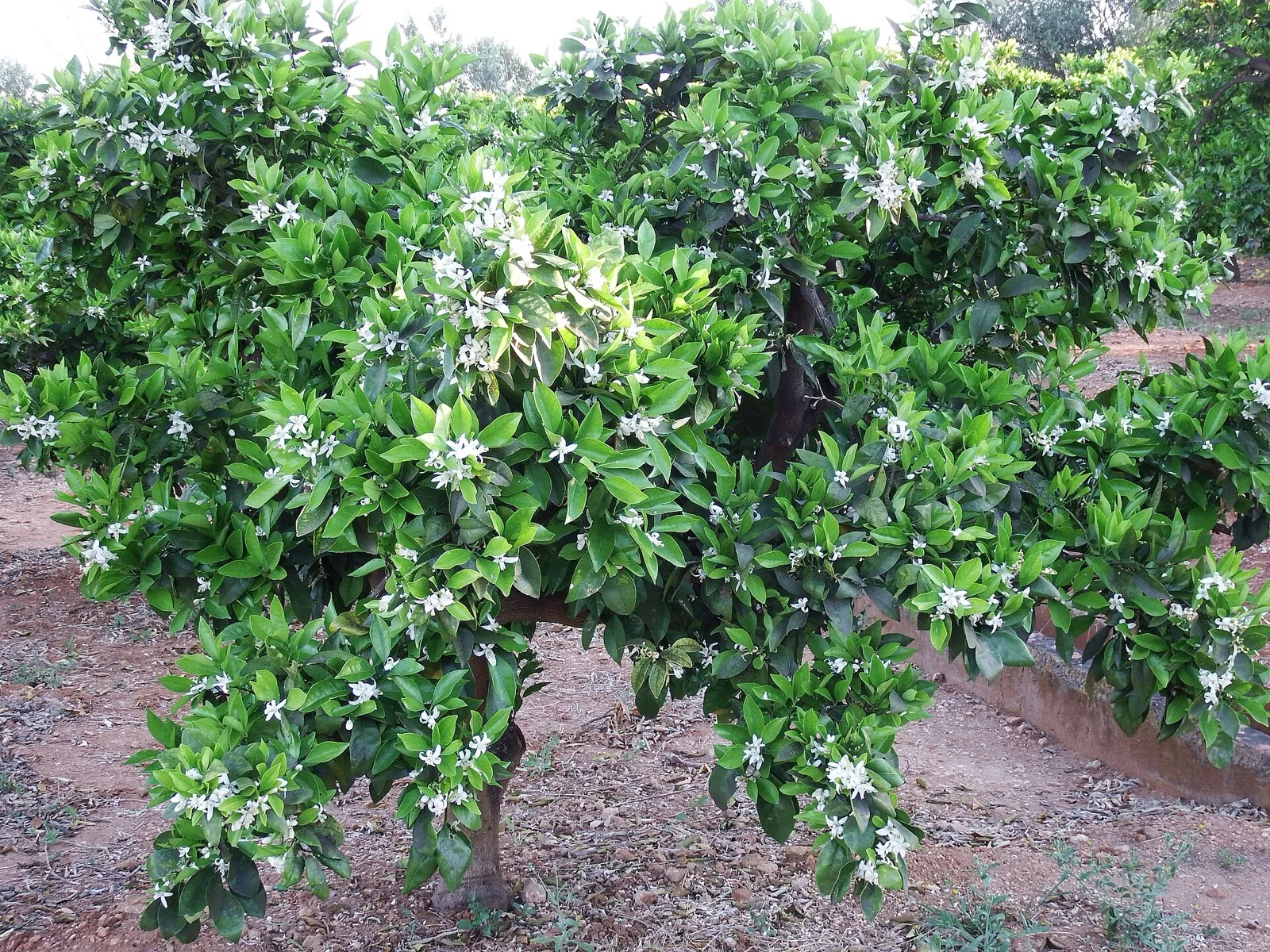
Orange tree
Citrus sinensis
Also known as: Sweet orange
The orange tree of our local groves: an evergreen fruit tree that needs full sun, soil that drains well and regular watering without waterlogging.
- Type
- Fruit tree
- Where
- Outdoor
- Light
- Sun
- Water
- Moderate water
- Cold
- Sensitive to frost, especially when young
Where to plant it
In full sun, in a spot without shade from other trees or walls for at least half the day. It does well in deep soil that drains well; it suffers in clay soils that get waterlogged. When planting, keep the graft above soil level and don’t put lawn right up against the trunk: its roots are shallow and compete poorly with grass.
Watering
Its roots shouldn’t be wet all the time. The ideal is to let the soil dry out roughly halfway down between one watering and the next. When newly planted, keep the root ball moist until it takes root. Try not to let the water wet the trunk: keep the drippers away from the base.
Pruning
Often it’s enough to remove dry branches, suckers growing from below the graft and crossing branches. Thinning out the inside lets in light and air, and in an airy canopy scale insects have a harder time. Prune in spring or early summer: from late summer onwards, new shoots that appear after pruning suffer in the cold.
Feeding
Once a year, spread between late February and summer. Stop giving nitrogen in August, so that tender shoots don’t come out just before winter.
In our climate
It’s a subtropical fruit tree and hard frosts damage it, especially when it’s young. If you have one in your garden, we can take care of its pruning and install drip irrigation that doesn’t wet the trunk.
Common problems
South African mealybug
Delottococcus aberiae
How to spot it
Small oval insects covered in a whitish wax, hidden in the calyx of the oranges or between fruits that touch. The oranges come out misshapen, with bulges next to the stalk, and the honeydew they release becomes covered in sooty mould.
What to do
Check the fruit between April and June, which is the time to keep an eye on it. For now there are no local natural enemies that stop it in time, although the ladybird Cryptolaemus montrouzieri helps from summer onwards. If you find a lot of affected fruit, ask us about an approved treatment.
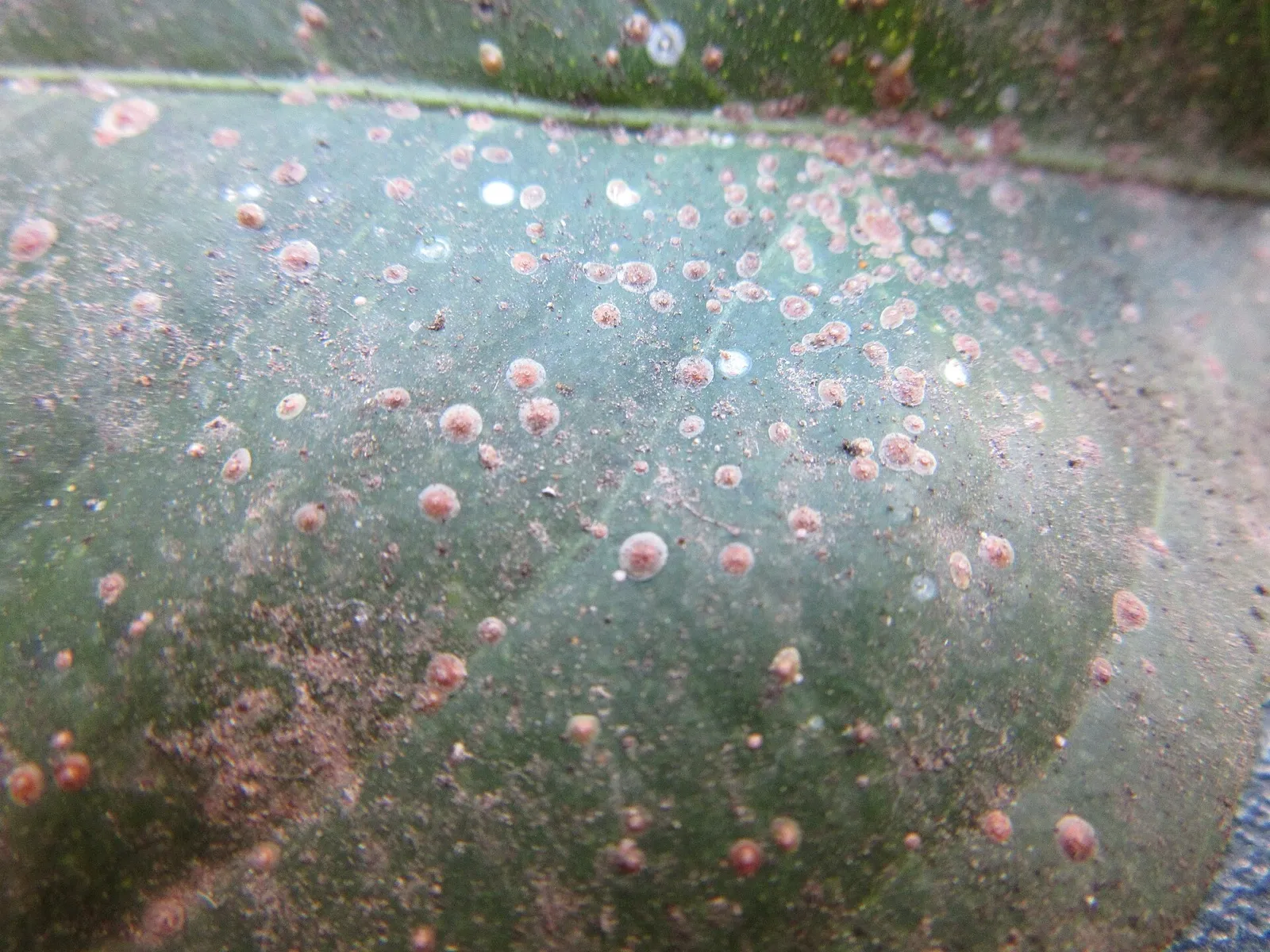
California red scale
Aonidiella aurantii
How to spot it
Tiny, round, reddish shields stuck to leaves, branches and fruit. The fruit is left marked and, if the infestation is heavy, the tree weakens.
What to do
It has natural enemies, such as tiny parasitoid wasps and ladybirds, which control it when numbers aren't very high: it's worth protecting them. An airy canopy also helps. If it appears on the fruit every year, ask us about an approved treatment.
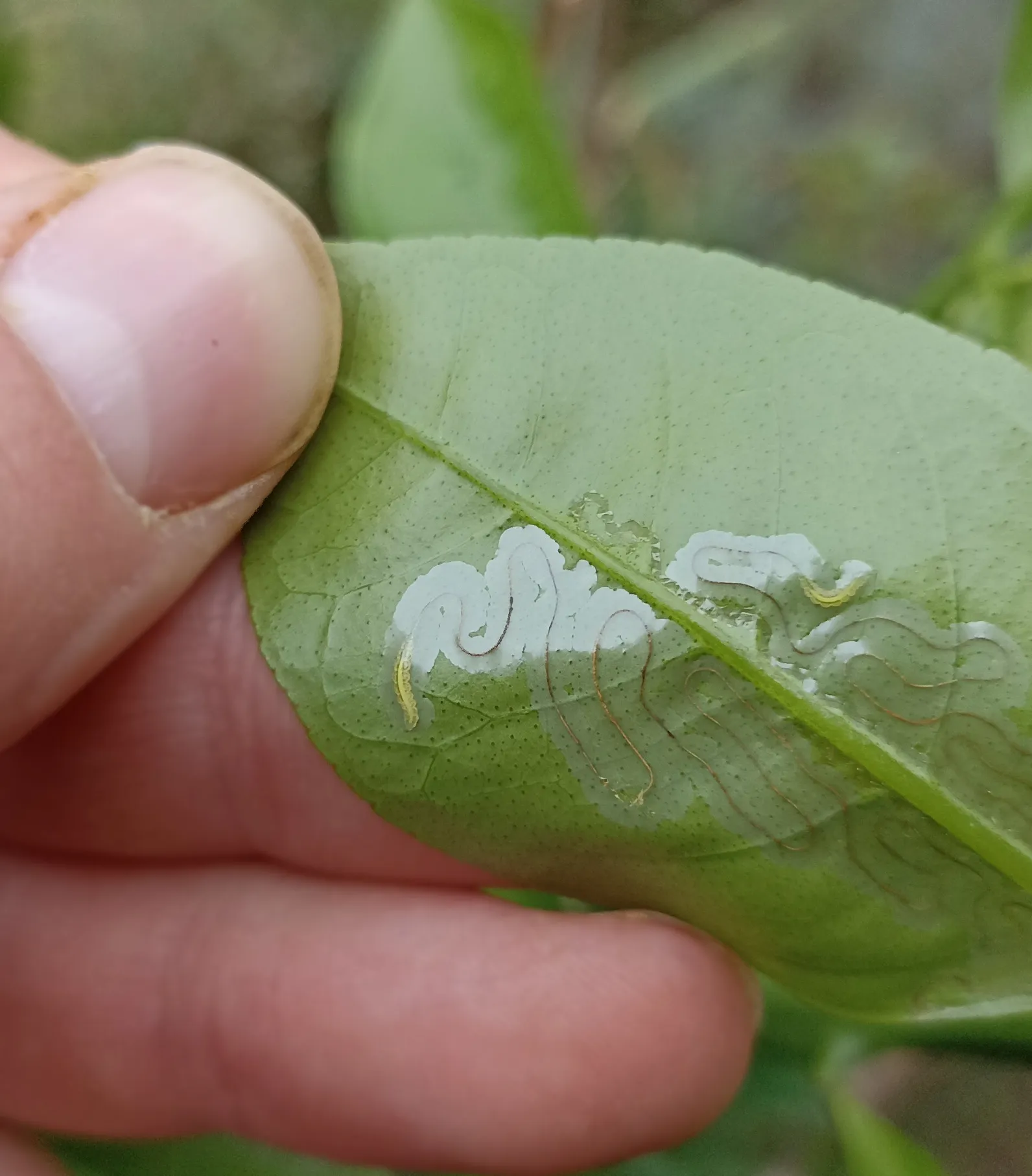
Citrus leafminer
Phyllocnistis citrella
How to spot it
Silvery, winding tunnels in the tender leaves. Affected leaves curl up, dry out and break. It's more common on the summer and autumn flushes of growth.
What to do
On a mature orange tree it doesn't affect the harvest, because the spring flush, the one that carries the flowers, is hardly affected. It's more of a concern on young or newly planted trees. It has a parasitoid that reduces its numbers and is worth protecting; if the tree is young and the attack is heavy, ask us.