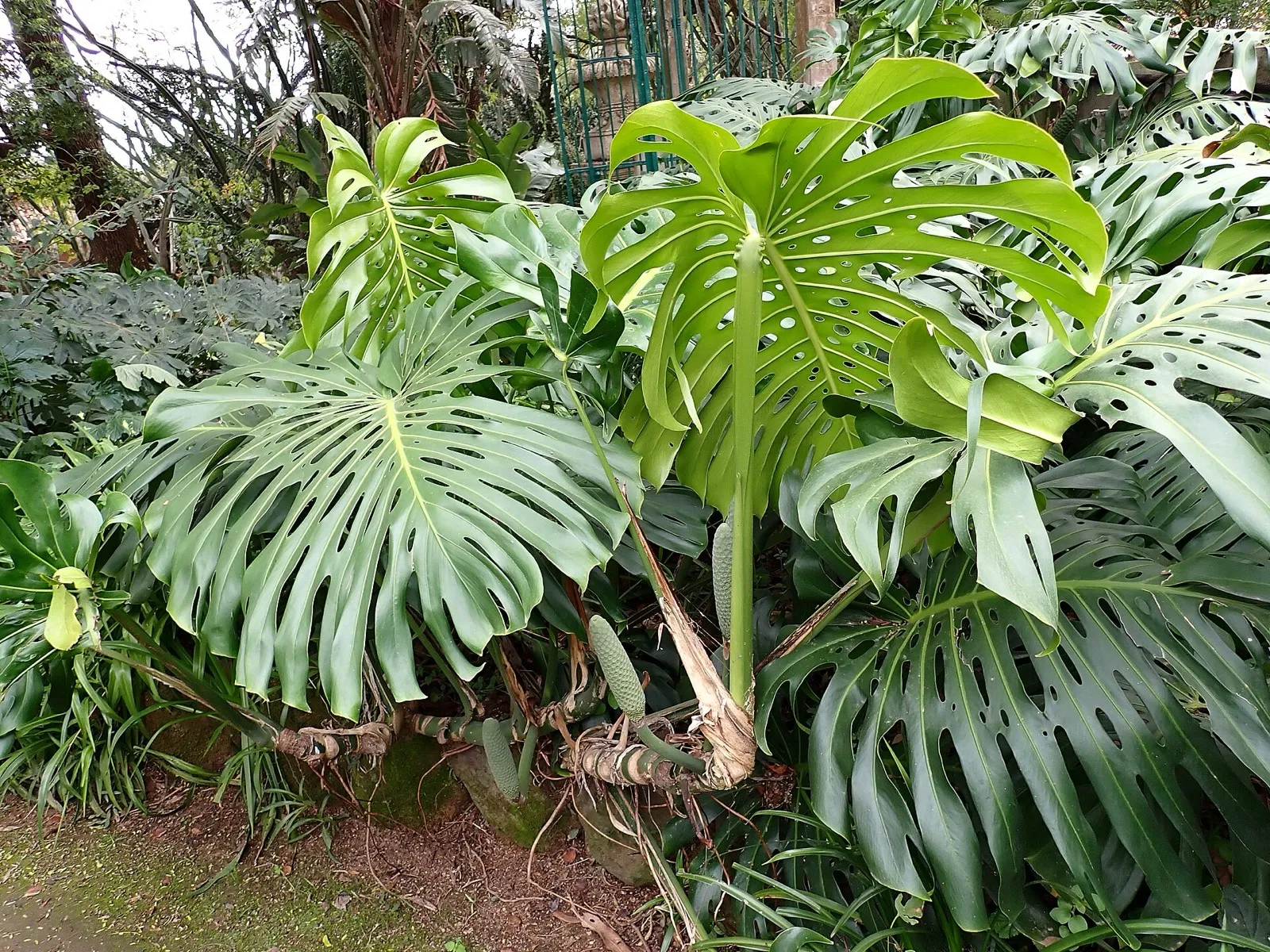
Monstera
Monstera deliciosa
Also known as: Swiss cheese plant, Ceriman
Tropical climber with large, deeply cut leaves full of holes. Indoors it needs light without direct sun, humidity and a good support.
- Type
- Houseplant
- Where
- Indoor
- Light
- Part shade
- Water
- Moderate water
- Cold
- Doesn't tolerate cold
Where to put it
With quite a lot of light but no direct sun. Variegated varieties need more light than green ones. Use a compost rich in organic matter that drains well. It’s a climber: give it a sturdy support so the stems don’t snap under the weight.
Watering
Water thoroughly and wait until roughly the top third of the soil has dried out before watering again. In winter, keep the soil only slightly moist.
Care
It likes high humidity. If the air in your home is dry, stand the pot on a tray of wet pebbles or use a humidifier. Indoors it usually stays at around 2 metres tall and hardly ever flowers.
Feeding
A balanced liquid fertiliser once a month while it’s growing.
Caution
It’s toxic to dogs and cats: if they chew it, it irritates the mouth and can cause drooling, vomiting and difficulty swallowing. In people, eating a large amount causes a burning sensation in the mouth and stomach upset, and the sap can irritate the skin.
At home
A bright living room suits it, with no direct sun on the leaves. It prefers roughly 16 to 29 °C. If you put it outside in summer, don’t do it while nights are below 18 °C.
Common problems
Scale insects
How to spot it
Small, scale-like bumps stuck to stems and leaves.
What to do
Check the plant now and then, including the undersides of the leaves. If the infestation is heavy, ask us about an approved treatment.
Red spider mite
Tetranychus urticae
How to spot it
Tiny greenish-yellow mites on the undersides of the leaves. From above, the leaf shows a fine, pale speckling. In heavy attacks fine webs appear and the leaves dry up or drop.
What to do
Warm, dry conditions encourage it. If you see it, ask us.