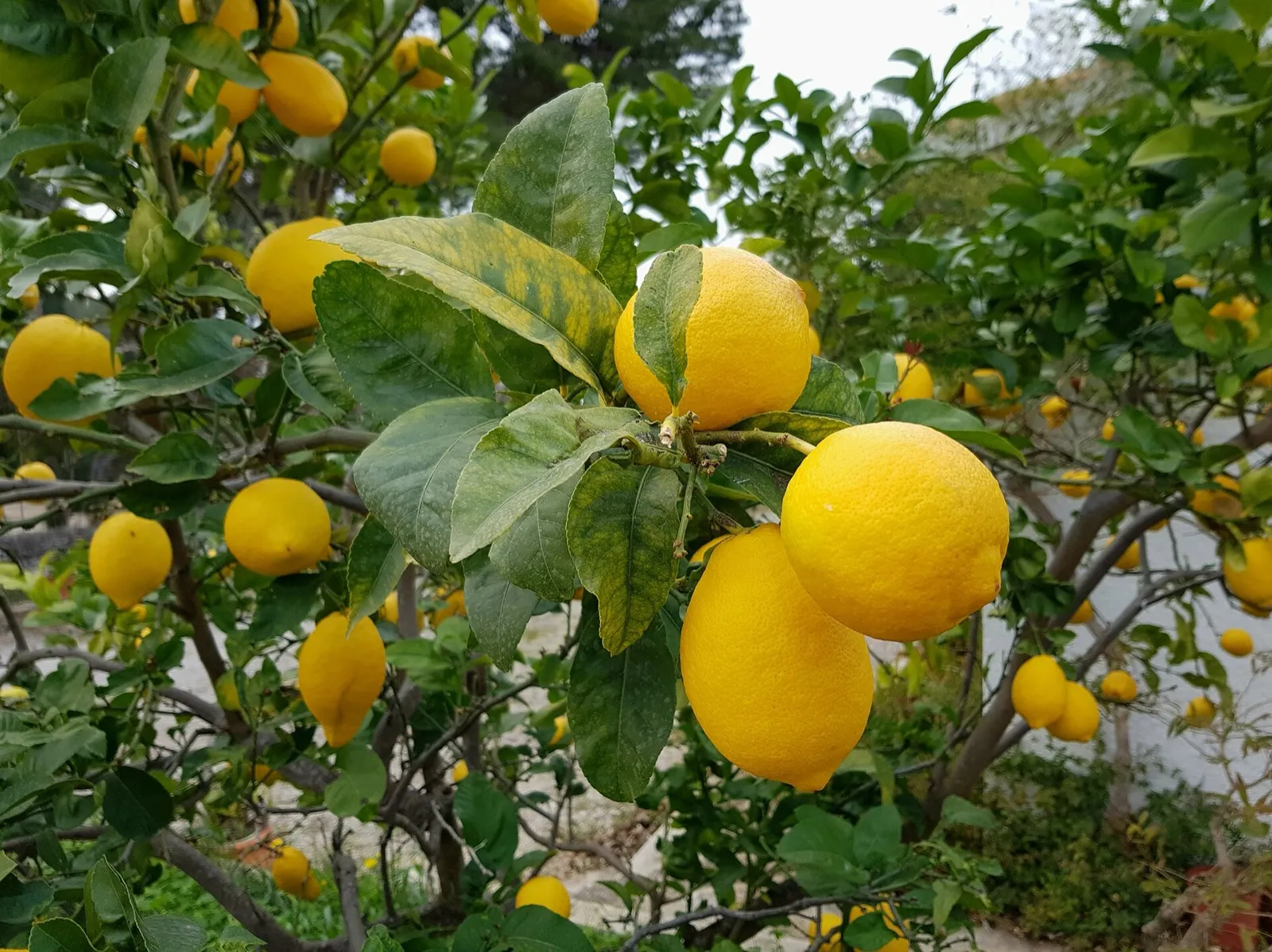
Lemon tree
Citrus limon
Also known as: Lemon
The family lemon tree: an evergreen fruit tree that needs sun, deep soil that doesn't waterlog and a light prune every year, never a hard one.
- Type
- Fruit tree
- Where
- Outdoor
- Light
- Sun
- Water
- Moderate water
- Cold
- More sensitive to frost than the orange tree
Where to plant it
In full sun and in deep, loose soil, because it needs room for its roots. It can’t stand waterlogging. If your soil holds a lot of water, plant it on a ridge or a small mound, and always keep the graft above ground level.
Watering
It needs enough moisture in spring and summer, when it flowers and sets fruit, but without waterlogging: too much water yellows the leaves because the roots suffocate. Citrus trees are fussy about water quality and salty water harms them. Don’t let the watering wet the trunk.
Pruning
A light prune every year is better than a hard one every two or three: if you prune it hard, it easily gets out of balance. Open up the centre, and remove suckers and dry or crossing branches. The best time is as winter ends, in February or March, before flowering.
Feeding
Spread the feeding between late winter and summer. While the tree is taking shape, it’s worth adding manure every two years. If the leaves turn yellow from lack of iron (chlorosis), it’s corrected in spring with iron chelates.
In our climate
Lemon trees cope worse with frost than orange trees, and young trees are the most delicate. That’s why it’s best to plant it in spring, once the risk of frost has passed.
Common problems
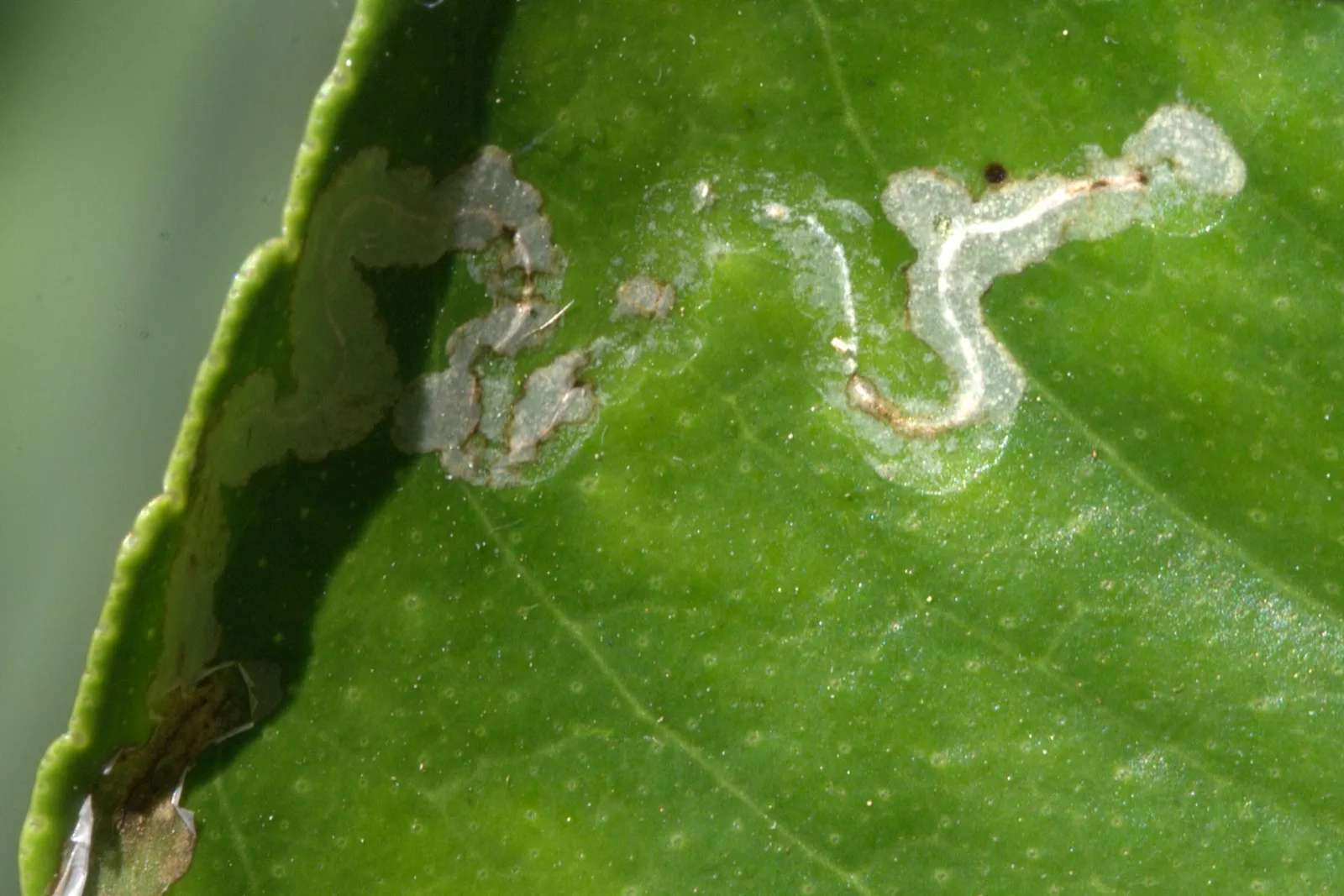
Citrus leafminer
Phyllocnistis citrella
How to spot it
Silvery, winding tunnels in the tender leaves. Affected leaves curl up, dry out and break. It's more common on the summer and autumn flushes of growth.
What to do
On a mature tree it doesn't affect the harvest. It's more of a concern on young or newly planted trees. It has a parasitoid that reduces its numbers and is worth protecting; if the tree is young and the attack is heavy, ask us.
Gummosis and collar rot
Phytophthora spp.
How to spot it
The tree loses vigour and the leaves turn yellow, especially along the central vein. Patches that ooze gum appear on the trunk and main branches. If the lesion rings the whole trunk, the tree dies.
What to do
It's caused by a soil organism that becomes active with waterlogging, so prevention is what matters: good drainage, drippers placed away from the trunk, the graft above ground level and no plastic trunk guards that hold water around the trunk. If you already see gum on the trunk, ask us.