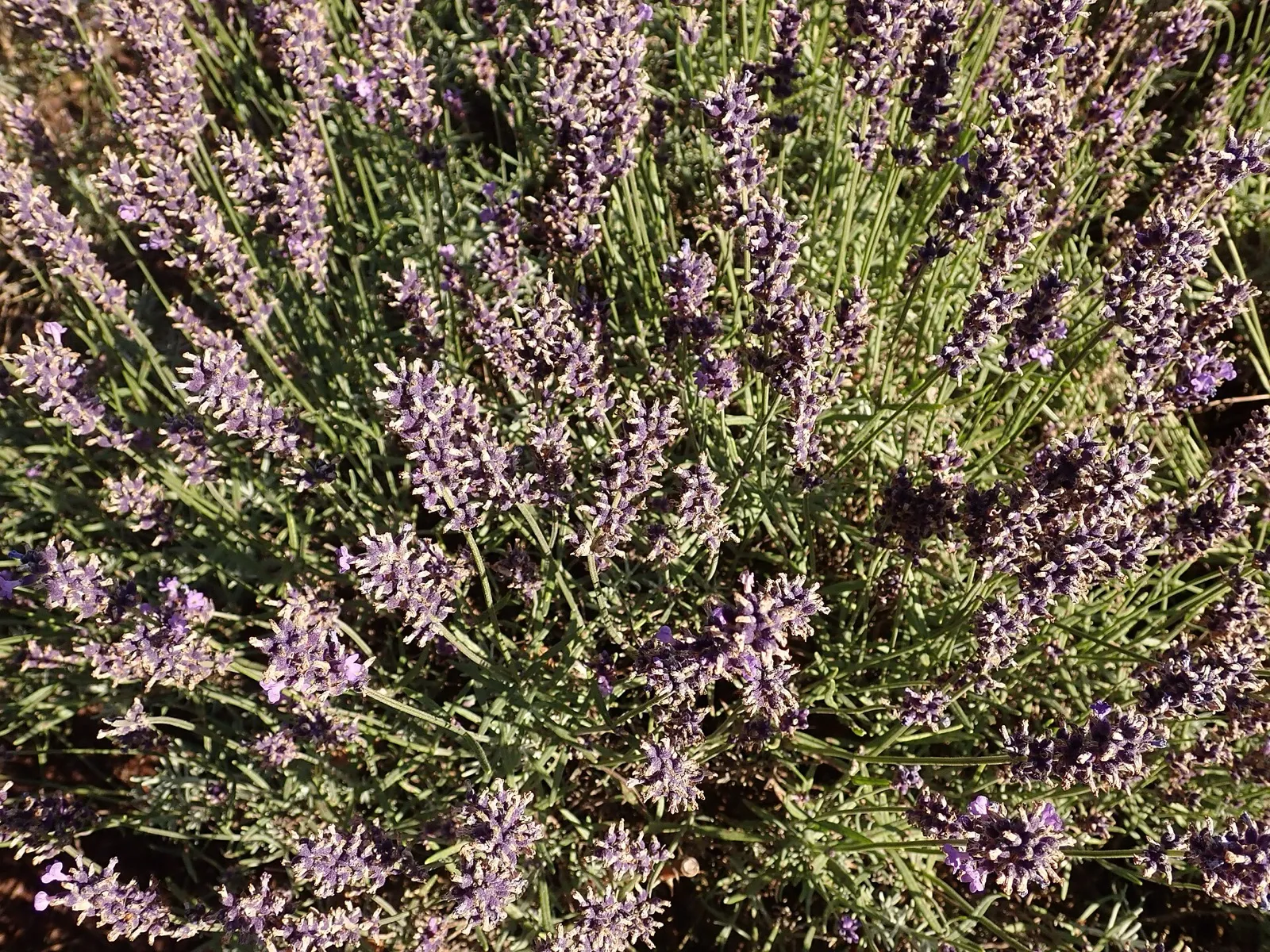
Lavender
Lavandula spp.
Also known as: English lavender, True lavender
Aromatic shrub with lilac flowers for full sun, poor soil and little water. What it copes with worst is waterlogging.
- Type
- Herb
- Where
- Outdoor
- Light
- Sun
- Water
- Little water
- Cold
- Depends on the species; in winter, what harms it most is wet roots
Where to plant it
In full sun and in soil that drains well. It likes poor, dry, chalky soils; in very rich soil it grows lots of leaves but smells less. Avoid heavy clay and places where water collects, because its roots rot there. If your soil is heavy, plant it on a mound, in a raised bed or in a pot.
Watering
In the first summer, water regularly. Once established, in the ground it hardly needs watering except in severe droughts. In a pot it dries out sooner: in summer, water when the compost starts to dry, and in winter keep it on the dry side.
Pruning
Once a year, when flowering finishes in late summer: remove the dry flower spikes and a few centimetres of foliage. Don’t cut into old wood, because it doesn’t always regrow. Over the years the plant becomes woody and opens up even if you prune it every year; then the most practical thing is to replace it with a new one.
Feeding
It doesn’t need it. It prefers soils that aren’t very fertile, and too much fertiliser reduces its scent.
In our climate
There are several species of lavender and they don’t all cope with cold equally, so check the label before planting. What harms it most is too much water: if you have automatic irrigation, put it on a separate zone from plants that need more water. We can help you adjust the system.
Common problems
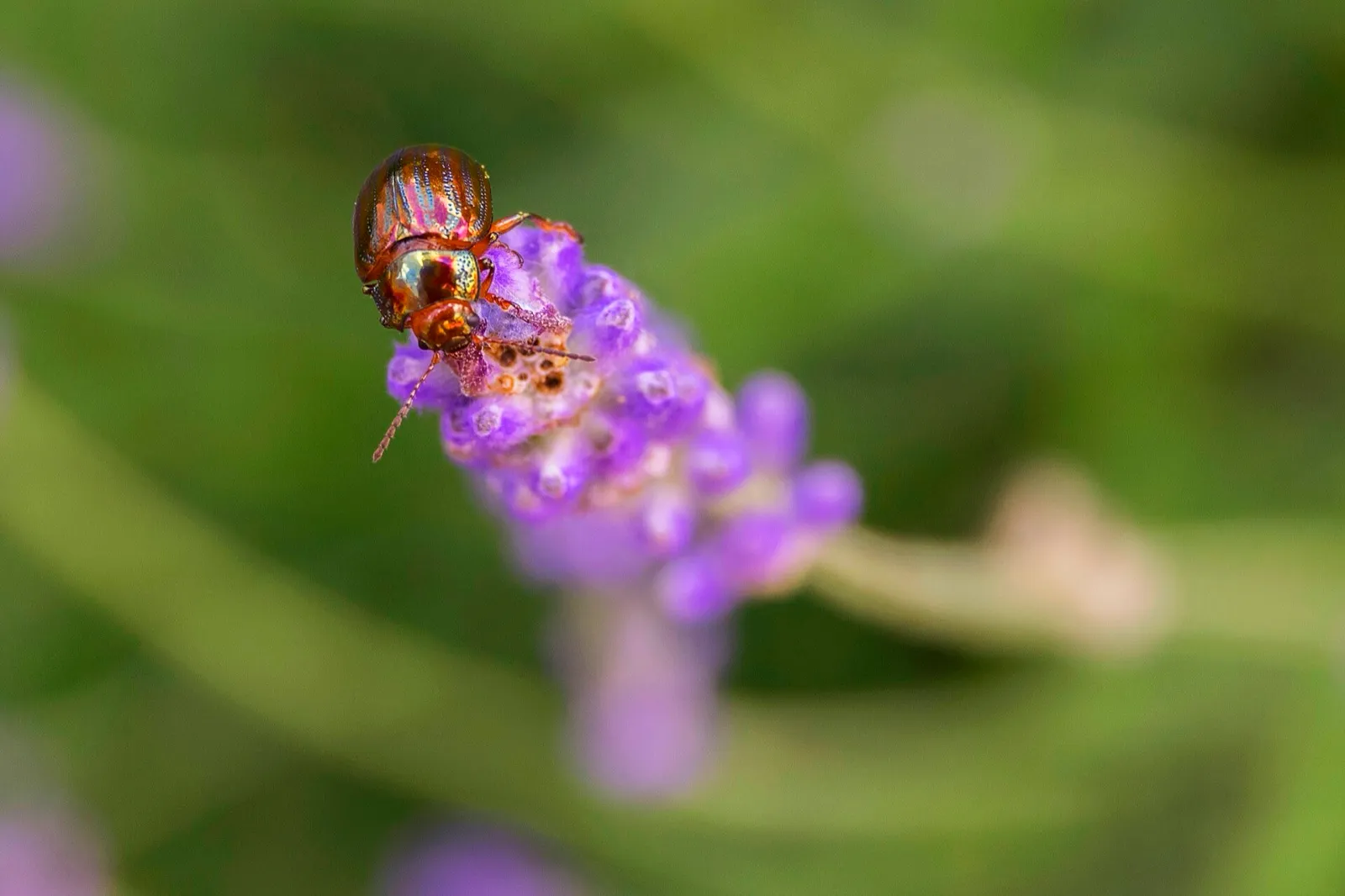
Rosemary beetle
Chrysolina americana
How to spot it
Shiny beetles about 6 to 7 mm long, with metallic green and purple stripes, and greyish larvae. Adults and larvae eat the leaves and sometimes the flowers, mainly from late summer to spring.
What to do
A healthy plant usually copes with it without any trouble, so treatment is hardly ever needed. If there are a lot, shake the branches over a sheet of newspaper and remove them. Birds and other predators also help to keep it under control.