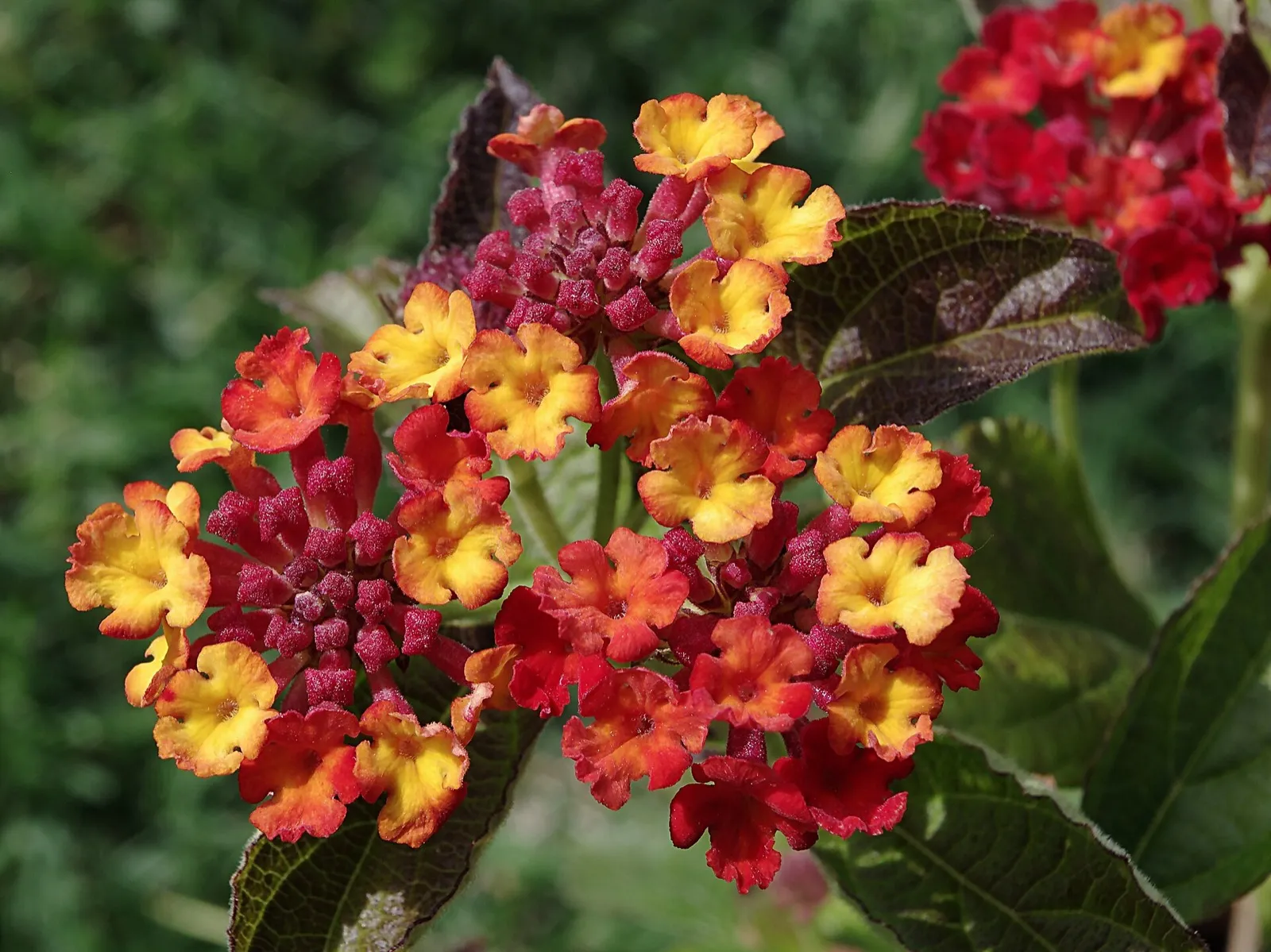
Lantana
Lantana camara
Also known as: Spanish flag
Shrub with flowers that change colour, very tolerant of heat and drought. You can plant it, but its berries are toxic and it sometimes escapes from gardens.
- Type
- Shrub
- Where
- Outdoor
- Light
- Sun
- Water
- Little water
- Cold
- Doesn't withstand frost
Caution
Lantana isn’t on the Spanish Catalogue of Invasive Alien Species, so it can be sold and planted as normal. Even so, the Ministry includes it in its Atlas of invasive alien plants (2004), which already recorded it as naturalised in La Ribera Baixa. Birds eat its berries and carry the seeds far away. Those berries are toxic if eaten, and there have been fatal cases in children. It’s also very poisonous to livestock, and the leaves can irritate the skin. If there are children or animals nearby, or you don’t want it to spread, choose a sterile variety, which doesn’t produce berries.
Where to plant it
In full sun. If it flowers poorly, it’s almost always due to lack of sun or too much fertiliser. It adapts to almost any soil that drains well, including poor ones, and it tolerates salt. It grows fast and spreads, so think carefully about where you put it.
Watering
For the first few weeks after planting, keep the soil moist. Once established it withstands drought, although if it goes too thirsty it flowers less: while it’s flowering, if it doesn’t rain, one deep watering a week is enough. Water at the base, without wetting the leaves.
Pruning
In summer, lightly trim the tips so it flowers again. Hard pruning is done at the start of spring; avoid it in autumn, because the plant then copes worse with the cold. Wear gloves, because the leaves can irritate the skin.
Feeding
Not much. A light feed in spring is usually enough. Too much fertiliser means fewer flowers and makes it more vulnerable to diseases.
In our climate
The first record of lantana in Spain, in 1951, comes from the province of Valencia itself. It’s widely grown in gardens on the Mediterranean coast. According to the 2004 Atlas, when it escaped it only occupied disturbed ground and the outskirts of towns, although it tended to spread little by little in warm coastal areas. Frost kills it. If you’d rather swap it for another low-water plant, we can help you with the design.
Common problems
Whitefly and sooty mould
How to spot it
Small white insects on the undersides of the leaves. They release a sticky honeydew on which sooty mould grows, a blackish layer that dirties the leaves.
What to do
Sooty mould disappears if you control the insect that produces it. Check the undersides of the leaves now and then. If the infestation is heavy, ask us about an approved treatment.
Powdery mildew
How to spot it
A fine white powder that covers the leaves.
What to do
It's a fungus that appears mainly when the lantana is in the shade. Plant it in full sun and don't water over the leaves. If it appears every year, ask us.