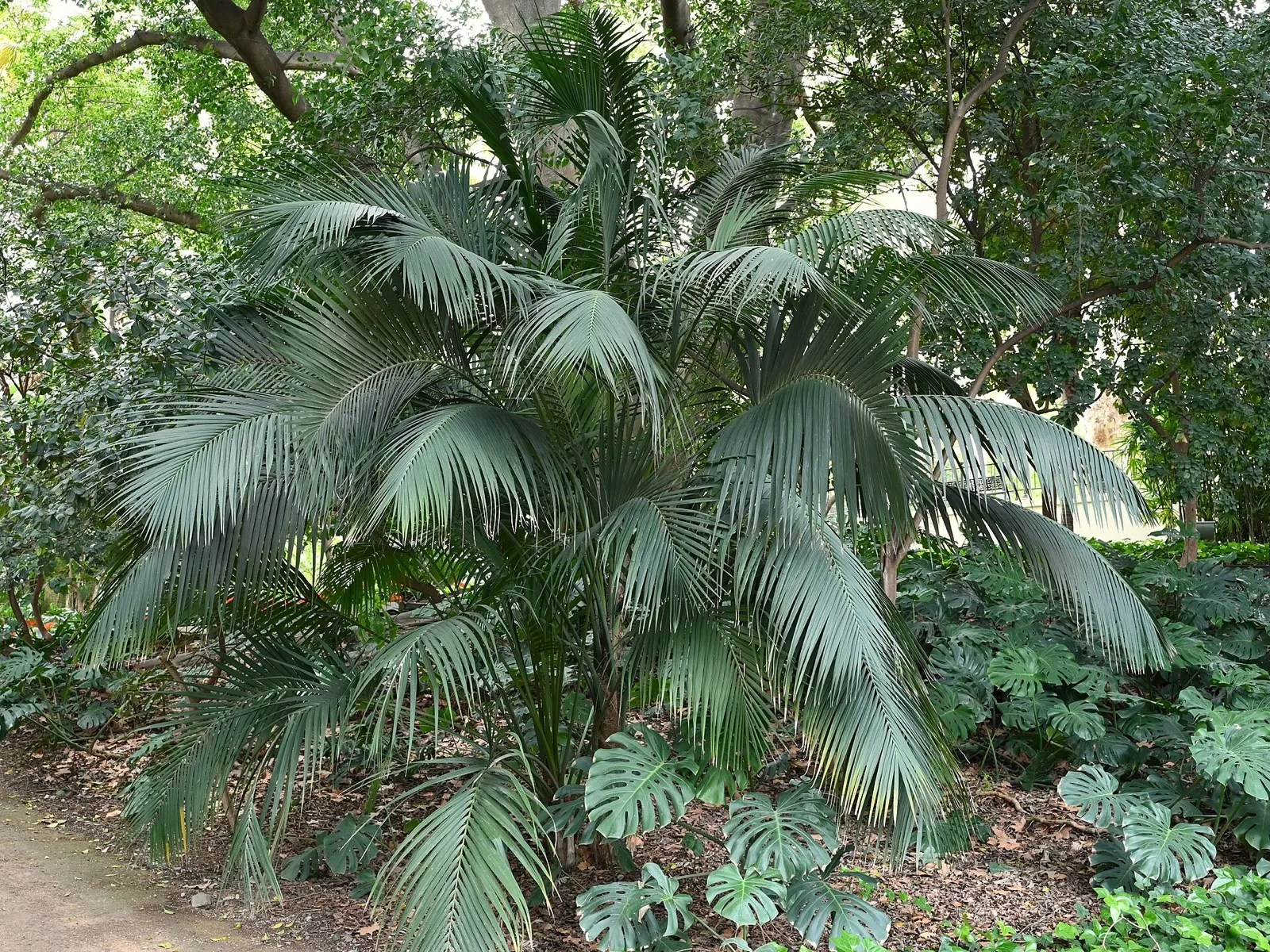
Kentia palm
Howea forsteriana
Also known as: Kentia, Kentia forsteriana (old name)
Slow-growing palm that adapts well to life indoors: it copes with low light, dust and central heating.
- Type
- Houseplant
- Where
- Indoor and outdoor
- Light
- Part shade · Shade
- Water
- Moderate water
- Cold
- Withstands light frosts
Where to put it
It prefers shade or part shade and needs little light, although indoors it grows better with moderate light. Use a compost rich in organic matter that drains well. In a pot it can also live on a terrace or patio in the shade.
Watering
Don’t let the soil in the pot dry out completely, but don’t waterlog it. It can’t stand severe drought or constant overwatering, especially in winter.
Care
It grows slowly. The bases of old leaves can be removed by pulling gently. Don’t force them off: the trunk is marked for ever and the wound is a way in for diseases.
Feeding
A little, now and then. A slow-release fertiliser is ideal.
At home
It’s a palm widely used indoors because it copes with low light, dust and central heating. It works in a living room or a corner without direct sun. The ASPCA considers it non-toxic to dogs and cats.
Common problems
Dry tips on the old leaves
How to spot it
The leaflets of the oldest leaves dry out at the tips and edges, with hardly any yellow patches. It's usually a lack of potassium, the most serious nutritional problem for this palm.
What to do
Feed it with a slow-release fertiliser that contains potassium; it works better than soluble fertilisers, which watering quickly washes away.
Red spider mite and scale insects
How to spot it
They're the most common pests, especially on indoor kentias: tiny mites (red spider mite) and scale insects that look like scales or white cotton.
What to do
Check the undersides of the leaves now and then. If the infestation is heavy, ask us about an approved treatment.