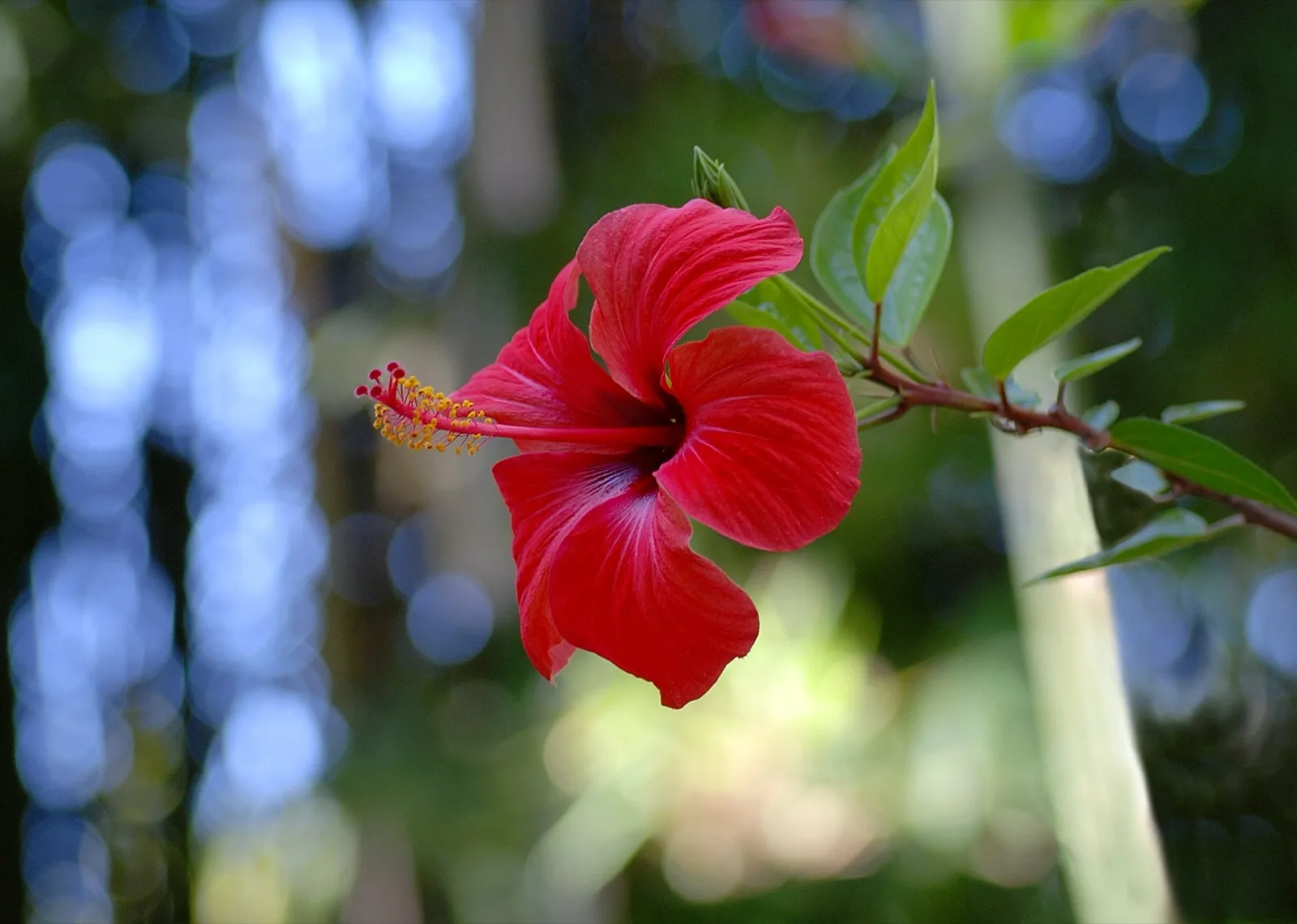
Hibiscus
Hibiscus rosa-sinensis
Also known as: Chinese hibiscus, Rose of China
Shrub with large, brightly coloured flowers for a sunny, sheltered spot. Outdoors or in a bright room indoors, always frost-free.
- Type
- Shrub
- Where
- Indoor and outdoor
- Light
- Sun
- Water
- Moderate water
- Cold
- Doesn't tolerate frost; protect it in winter
Where to plant it
In a sunny, warm, sheltered spot, for example against a wall and protected from cold winds. It needs fertile soil, rich in organic matter and with good drainage; compacted soils that get waterlogged don’t suit it. Indoors, give it plenty of light and some morning sun, and don’t move or turn it, because it may drop its flowers and buds.
Watering
Water often while it’s flowering and more moderately the rest of the year, always without waterlogging: too much water rots the roots. Indoors, if the air is dry, mist the leaves now and then.
Pruning
It flowers on new shoots. In late winter or early spring, give it a fairly hard prune so it produces lots of shoots, leaving the main branches. Take the chance to remove dry, broken or crossing branches, suckers and spent flowers. If you prune lightly, you’ll have a bigger plant but with fewer flowers.
Feeding
In spring. In a pot, a liquid feed for flowering plants following the instructions on the pack, once a month while it’s growing and flowering. After repotting, wait a month before feeding.
In our climate
It’s a plant of warm, frost-free climates. If it freezes in your area, protect it in winter; in a pot it’s easier to shelter it in a cool place, without heating and with little watering. Young plants are the most delicate, because their stems aren’t woody yet.
Common problems
Aphids
How to spot it
Clusters of small, soft insects on the tender shoots and on the underside of the leaves. They release a sticky honeydew that attracts ants and becomes covered in sooty mould, and they can curl the leaves and stunt the shoots.
What to do
An established plant usually copes with them without treatment. Check the new shoots, remove the worst-affected ones and knock the aphids off with a jet of water in the morning. Protect ladybirds, lacewings and hoverflies, keep ants away and don't overdo the nitrogen fertiliser. If that's not enough, ask us.
Mealybugs
How to spot it
Oval insects covered in white wax, in clusters on stems, leaf axils and the underside of leaves. They weaken the plant, release honeydew on which sooty mould grows and, if there are many, cause leaf drop.
What to do
Remove the clusters by hand or prune the affected parts, and check new plants carefully before putting them next to the others. Keep ants away and protect their natural enemies. If the infestation is heavy, ask us about an approved treatment.