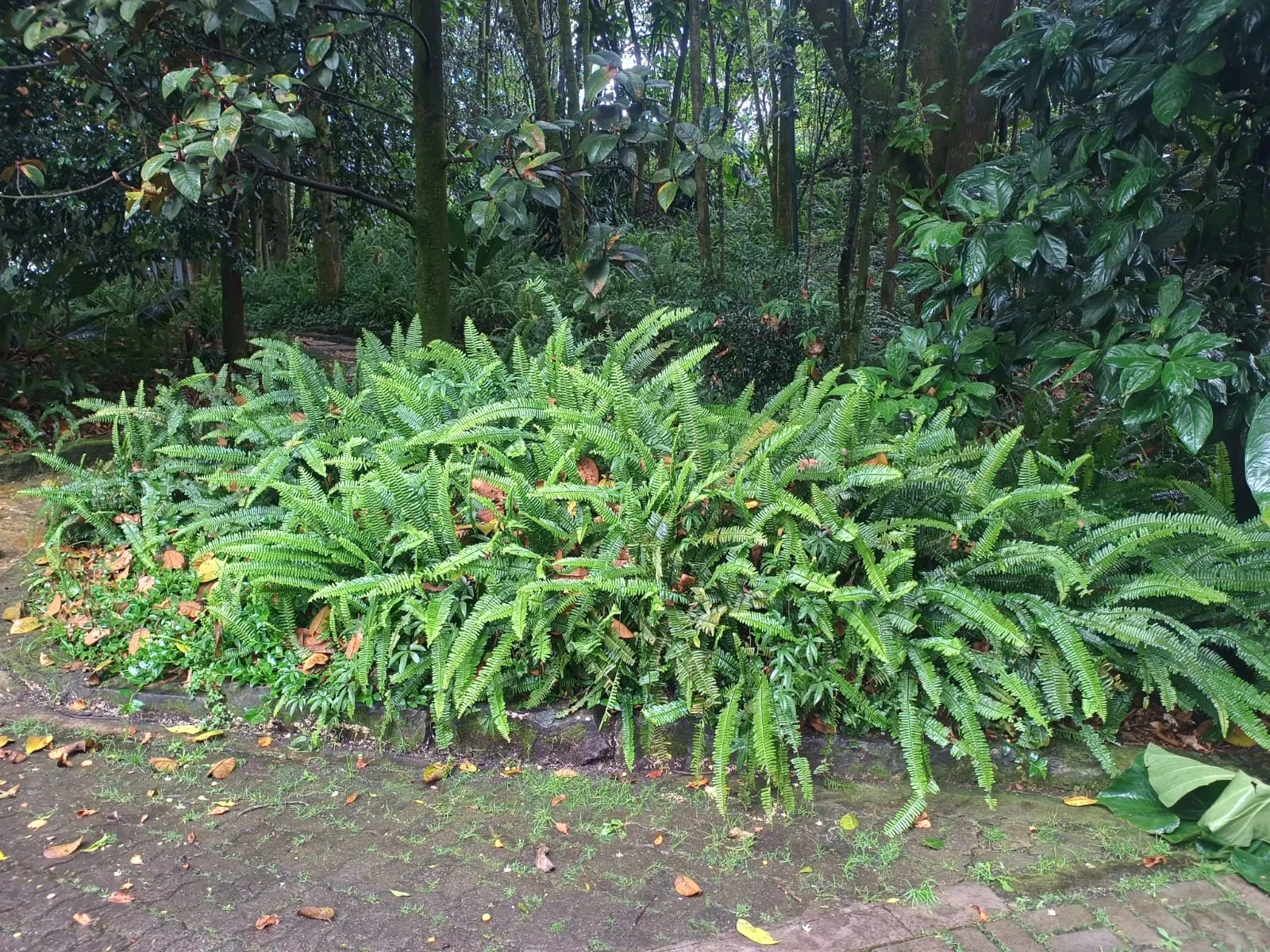
Boston fern
Nephrolepis exaltata
Also known as: Fern, Sword fern
Fern with long, arching fronds that looks good hanging. It needs indirect light, always moist soil and humid air. In summer it can go outside in the shade.
- Type
- Houseplant
- Where
- Indoor and outdoor
- Light
- Part shade · Shade
- Water
- Plenty of water
- Cold
- Doesn't tolerate cold; indoors in winter
Where to put it
With plenty of light, but indirect or filtered. It looks great in hanging pots or on a plant stand, where the fronds can hang down freely.
Watering
Keep the soil moist at all times: don’t let it dry out. In winter, when it grows little, water less, because too much water rots the roots. Soft water, such as rainwater, is best.
Care
Remove dry fronds. The tiny brown or black dots that appear under the fronds are spores, not a pest or a disease. You can get new plants by separating runners that already have roots, at the end of winter or the start of spring.
Feeding
A balanced liquid fertiliser at half strength, once a month while it’s growing.
At home
It needs humid air: the kitchen or the bathroom, if they get light, are good spots. If not, stand the pot on a tray of wet gravel. In summer it can go out onto the patio or terrace, always in the shade, but in winter it has to be indoors. It isn’t toxic to dogs and cats.
Common problems
Scale insects and red spider mite
How to spot it
Small, scale-like bumps on the fronds, or fronds with tiny pale dots that look discoloured.
What to do
They appear mainly when the air is too dry. Raise the humidity and check the fronds now and then. If the infestation is heavy, ask us.
Rotting fronds
How to spot it
The fronds rot if they're always wet.
What to do
Water the soil, not the fronds, and water less in winter, when it grows little.