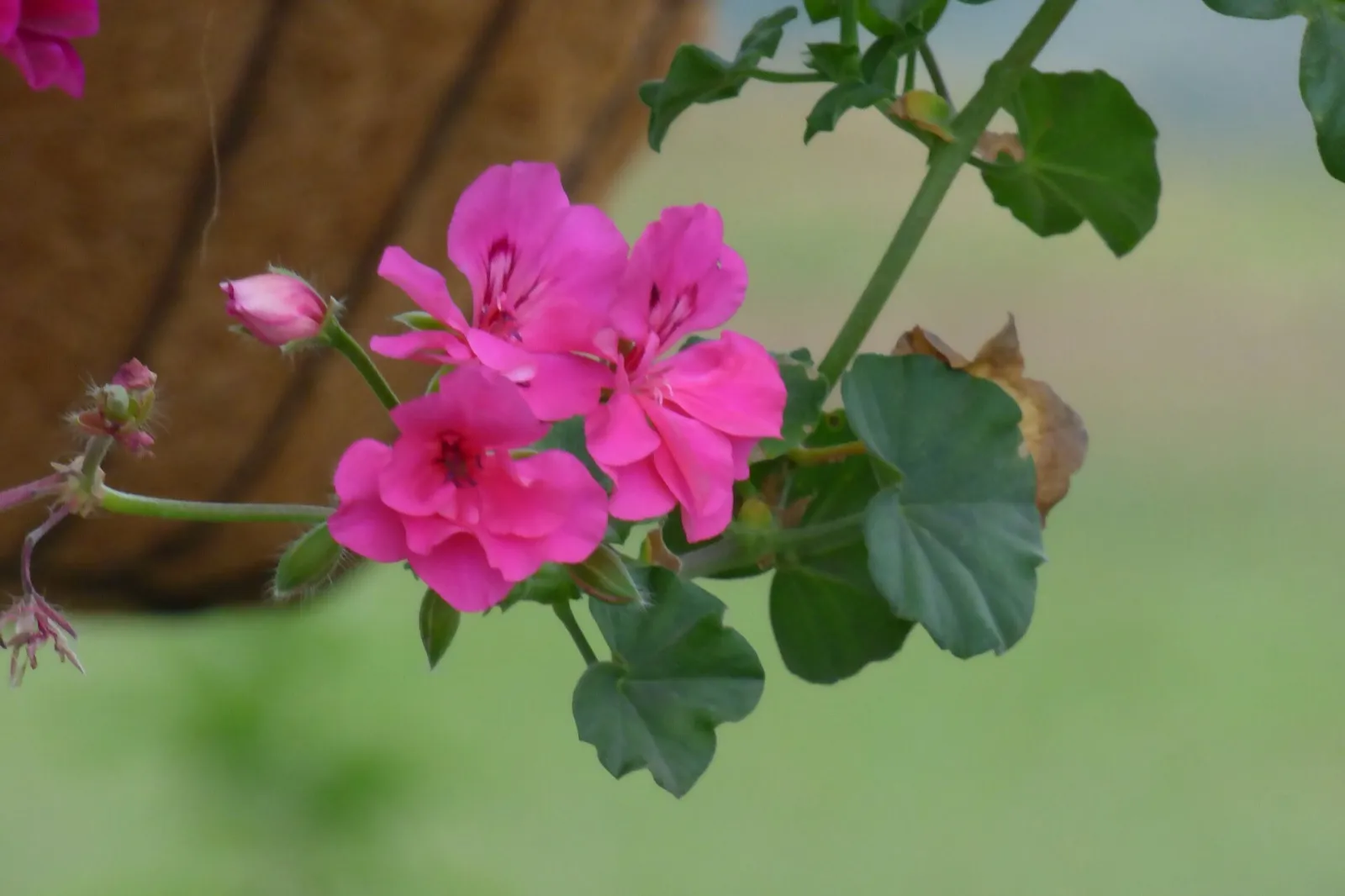
Ivy-leaved geranium
Pelargonium peltatum
Also known as: Trailing geranium, Ivy geranium
The trailing geranium with fleshy leaves seen on patio walls. It flowers in spring, rests in summer and flowers again in autumn.
- Type
- Perennial
- Where
- Outdoor
- Light
- Part shade · Sun
- Water
- Moderate water
- Cold
- Doesn't withstand frost
Where to plant it
It likes sun, but not too much: part shade is ideal, especially in summer, when direct sun punishes it. Its long, trailing stems hang down, which is why it’s the one you see on patio walls. It prefers small pots, where it’s a little cramped.
Watering
Water regularly, but without leaving the roots waterlogged, because they suffocate. Too much water in humid heat brings fungi such as blackleg. Use a compost that drains well.
Pruning
Prune it when the spring flowering is over; that way it copes better with the heat. Cut at the node just below the new shoots and take the chance to tidy the inside, remove dry leaves and branches and check for pests. Instead of repotting it, remove the top layer of compost and add fresh compost: it doesn’t like having its roots disturbed.
Feeding
A slow-release granular fertiliser in November and again in February or March, and a bit more potassium when it’s in flower. If you add manure, make sure it’s well rotted and use it in moderation.
In our climate
An ivy-leaved geranium lasts three or four years; after that it becomes very woody and stops flowering. Before that happens, take cuttings from the healthiest stems and you’ll have new plants. Below zero degrees it can freeze, so if frost is forecast move it to a sheltered spot.
Common problems
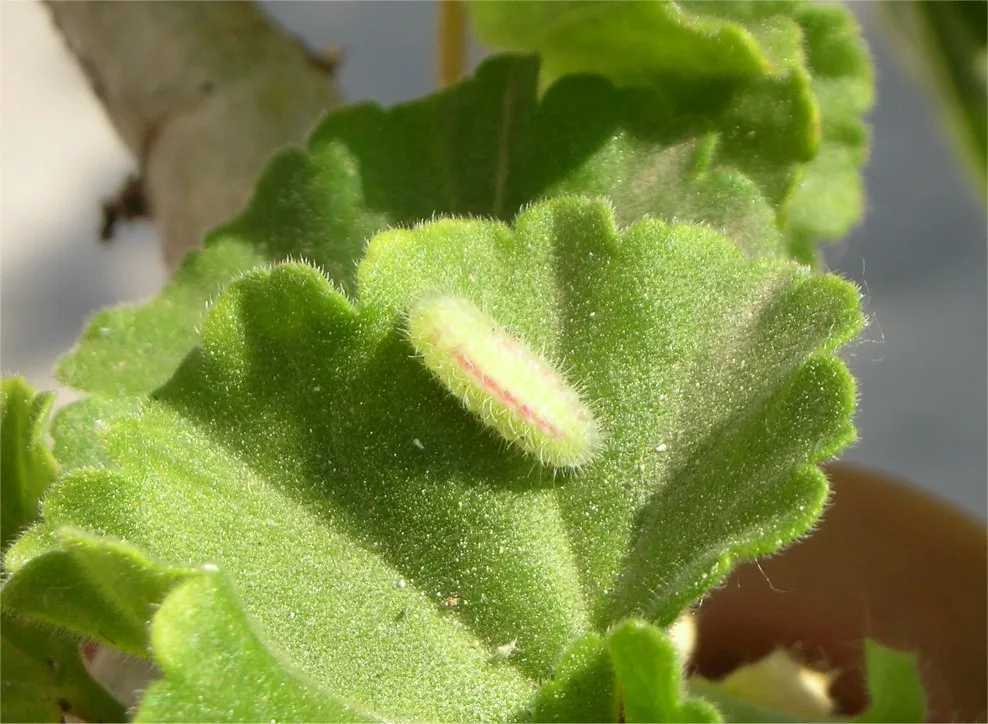
Geranium bronze butterfly
Cacyreus marshalli
How to spot it
Buds that wilt and drop for no obvious reason, holes in stems and leaves, plump green caterpillars and, in the end, hollow, blackened stems. It attacks ivy-leaved geraniums just as it does geraniums.
What to do
The caterpillar hides inside the stem and treatments struggle to reach it. Cut off the affected parts and put them in the bin before it completes its cycle, and check new plants carefully before putting them with yours. If the infestation is heavy, ask us.
Blackleg
How to spot it
The base of the stem rots and darkens, and the rot gradually moves up the stem.
What to do
It's a fungus that appears with overwatering and humid heat. Water less, clean the pot thoroughly and don't reuse the soil from an affected plant.