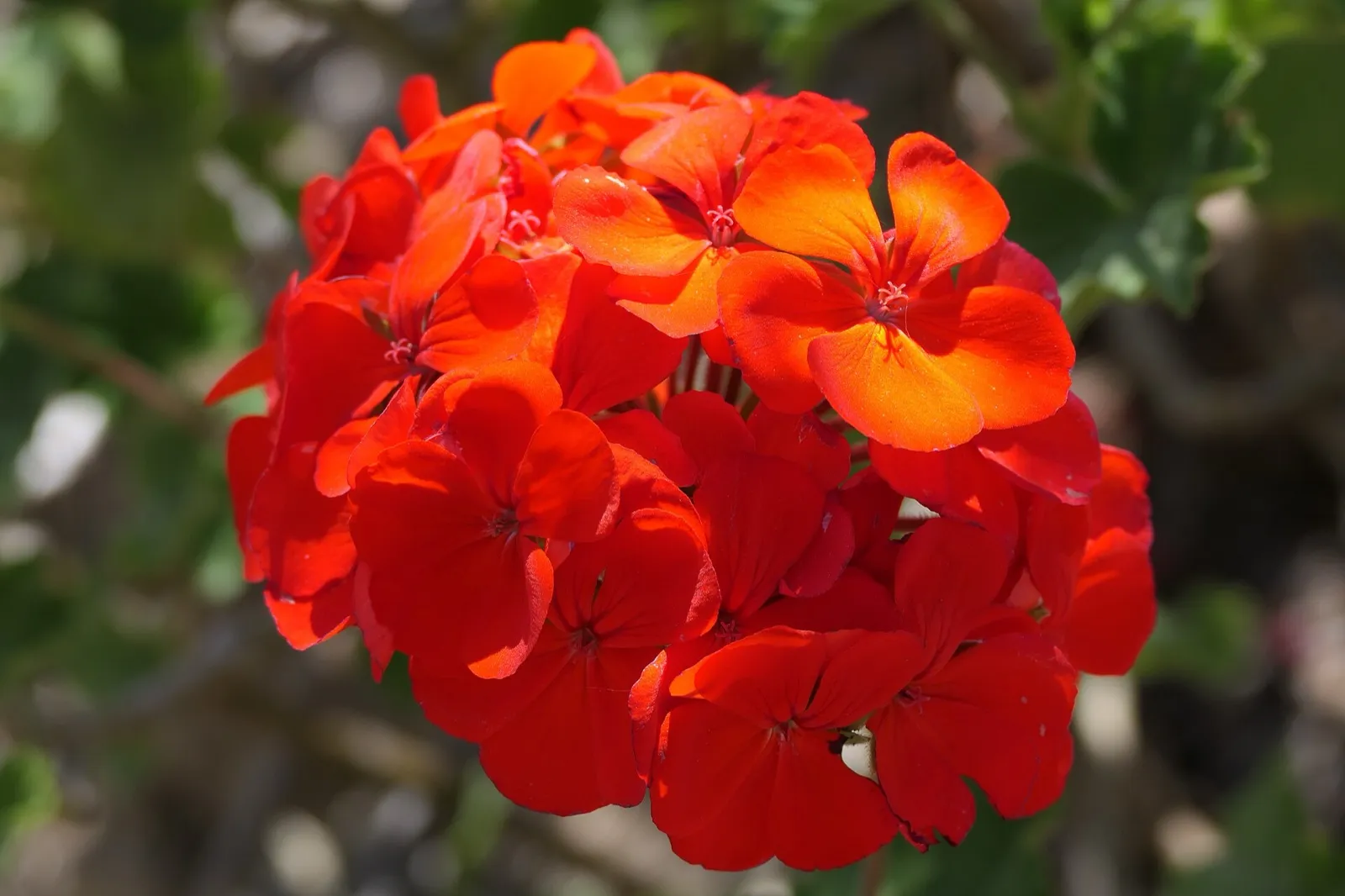
Geranium
Pelargonium zonale (Pelargonium x hortorum)
Also known as: Zonal geranium, Zonal pelargonium
The classic balcony geranium: easy to look after and to propagate from cuttings, although you need to watch out for the geranium bronze butterfly.
- Type
- Perennial
- Where
- Outdoor
- Light
- Sun · Part shade
- Water
- Moderate water
- Cold
- Doesn't withstand frost
Where to plant it
It likes plenty of light, and needs sun from autumn to spring to flower well. In summer, on the other hand, direct sun doesn’t suit it: look for a bright spot with some shade during the hottest hours. In a pot, use a compost that drains well and doesn’t compact.
Watering
Water regularly, but without leaving the roots waterlogged, because they suffocate. Too much water, especially in humid heat, brings fungi such as blackleg.
Pruning
Prune it when the big spring flowering is over, or else in November (in that case it won’t flower again until spring). Leave roughly a third of each stem and make a clean, angled cut just above a node. After pruning, keep watering as normal and keep it out of strong sun for a few days. The stems you cut can be used as cuttings to grow new plants.
Feeding
A little well-rotted manure mixed into the compost, without overdoing it, and a slow-release granular fertiliser in November and again in February or March. When it’s in full flower, it appreciates a fertiliser with more potassium.
In our climate
On the Mediterranean coast the geranium bronze butterfly can breed from February to November, and each generation takes barely a month. If it gives you trouble every season, try regal pelargoniums (Pelargonium x domesticum), which resist it better. And watch out in winter: below zero degrees it can freeze, so if frost is forecast move it to a sheltered spot.
Common problems
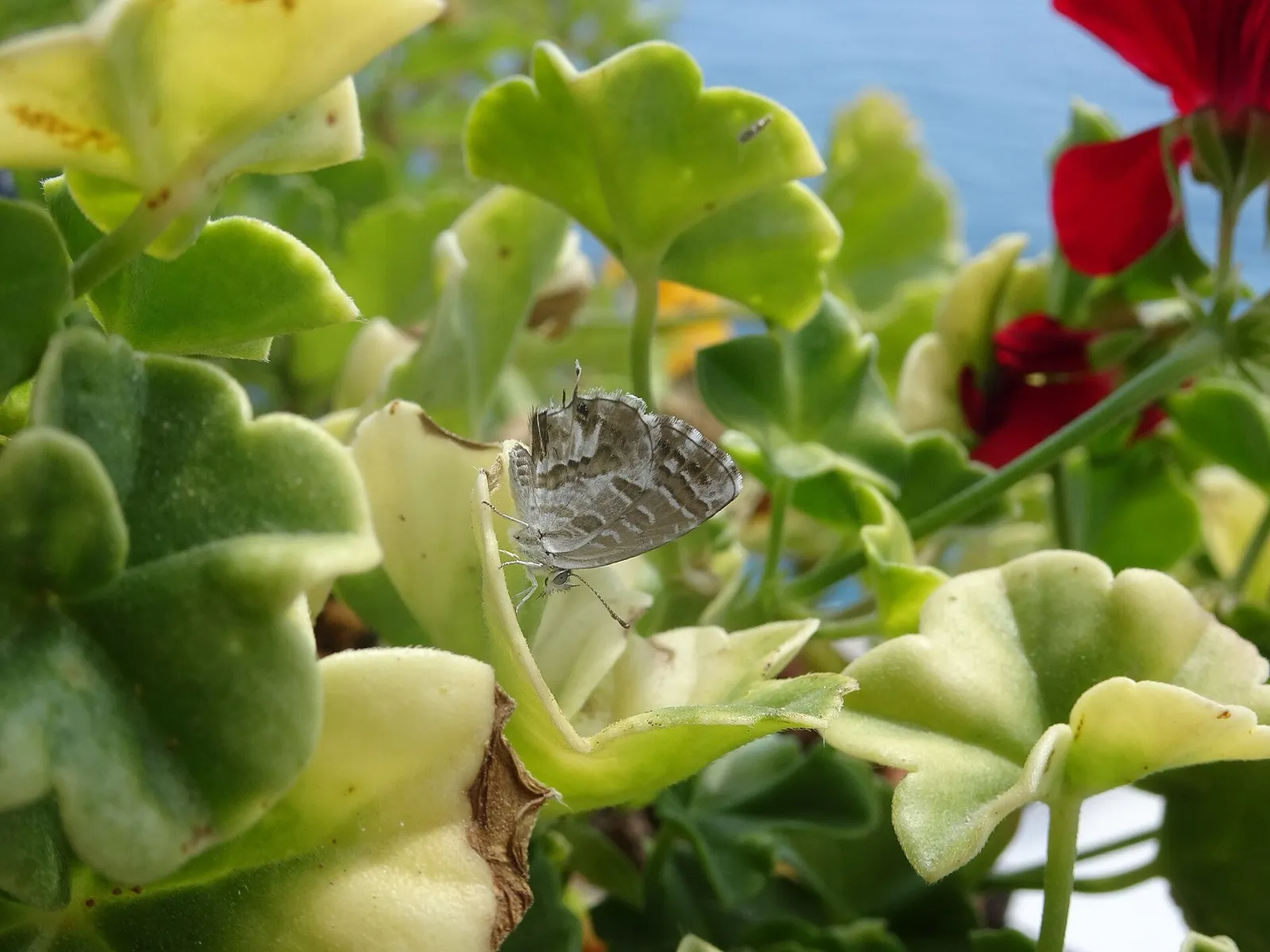
Geranium bronze butterfly
Cacyreus marshalli
How to spot it
At first, some buds wilt and drop for no obvious reason. Then holes appear in stems and leaves, the green caterpillar bores tunnels inside, and the stems end up blackened and dead. You'll see a small brown butterfly flying around the plant.
What to do
The caterpillar almost always lives inside the stem, so treatments struggle to reach it. Cut off the affected parts and put them in the bin before the caterpillar completes its cycle, and check any new geranium carefully before taking it home. Pruning after the spring flowering strengthens the stem and makes things harder for it. If the infestation is heavy, ask us.
Blackleg
How to spot it
The base of the stem rots and darkens, and the rot gradually moves up the stem.
What to do
It's a fungus that appears with overwatering and humid heat. Water less, clean the pot thoroughly and don't reuse the soil from an affected plant.