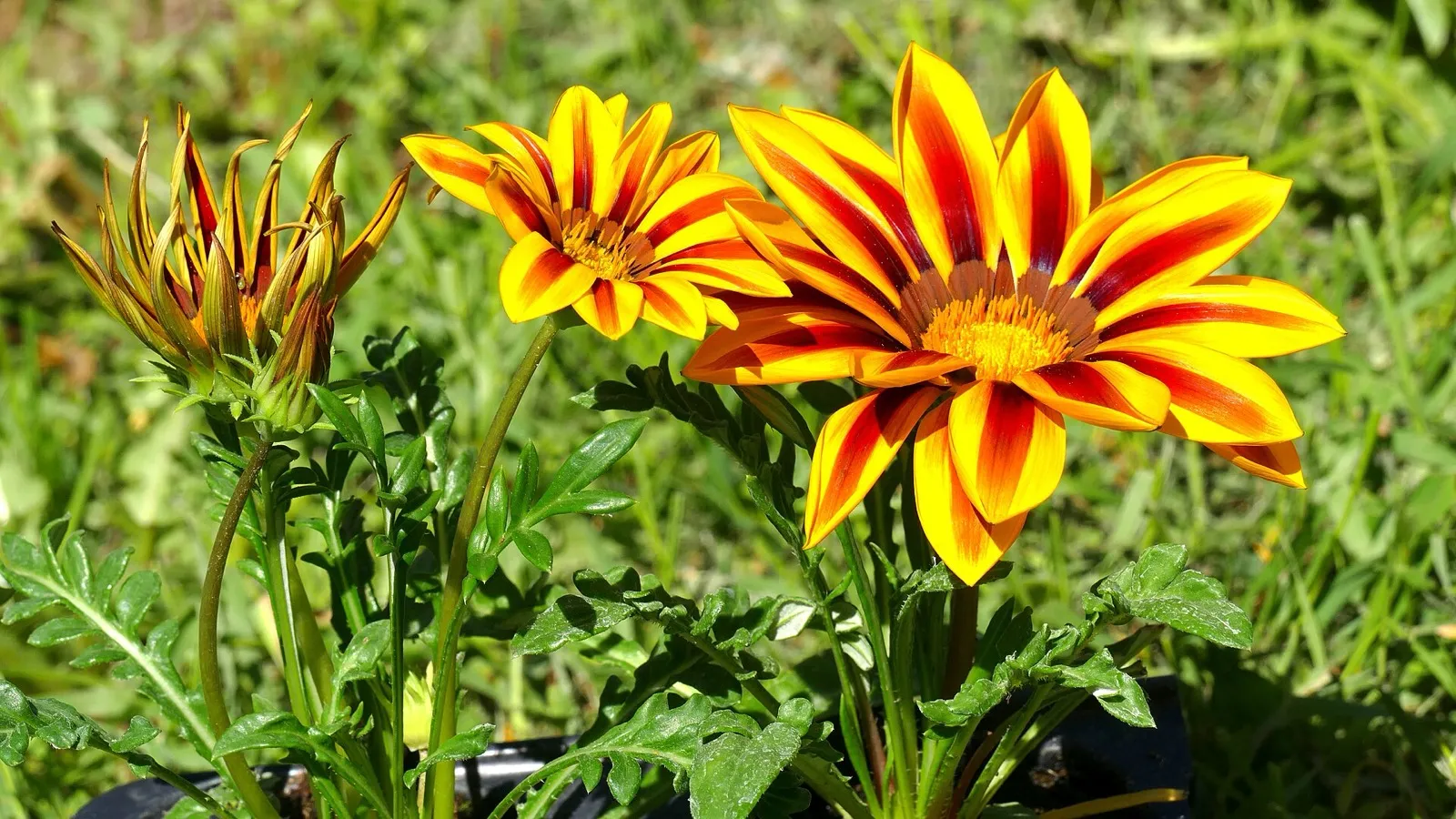
Gazania
Gazania rigens
Also known as: Treasure flower
Low-growing perennial with large, showy flowers that open in the sun. It withstands heat and drought, but not overwatering.
- Type
- Perennial
- Where
- Outdoor
- Light
- Sun
- Water
- Little water
- Cold
- Copes poorly with frost
Where to plant it
In full sun: that’s how it flowers best. Its flowers close at night and on cloudy days may not open fully, so in shade it doesn’t show off much. It prefers sandy or ordinary soil that drains well, and it tolerates poor soils.
Watering
Water little and let the soil dry out between one watering and the next. Too much water is its worst enemy, because it rots the roots.
Care
Remove spent flowers so it keeps producing new ones. If you have it in a pot and you’re worried about the cold, you can move it to a sheltered spot in winter, or take stem cuttings and root them to get new plants.
In our climate
It copes very well with heat and drought, so it fits into low-water gardens. In the height of summer it may stop flowering and start again when autumn arrives. Bear in mind that gazanias escaped from gardens have been found in the Valencia area, and that in Spain they colonise coastal rocks and cliffs. Don’t dump plant waste outside your garden. If you’re thinking of a low-water garden, we can help you with the design and the watering.
Common problems
Root and stem rot
How to spot it
The roots and the base of the stems rot and the plant goes downhill. It happens mainly when it's overwatered.
What to do
Don't overwater, and let the soil dry out between waterings. Plant it in soil that drains well.
Leaf miner
Chromatomyia syngenesiae
How to spot it
Winding white or brown lines on the upper side of the leaves, which are the tunnels the larvae bore inside. You may also see tiny pale dots where the adult flies feed.
What to do
Although it looks unsightly, the plant usually keeps growing and flowering, so it can often be tolerated. If only a few leaves are affected, remove them or squash the larva at the end of the tunnel. If the infestation is heavy, ask us.