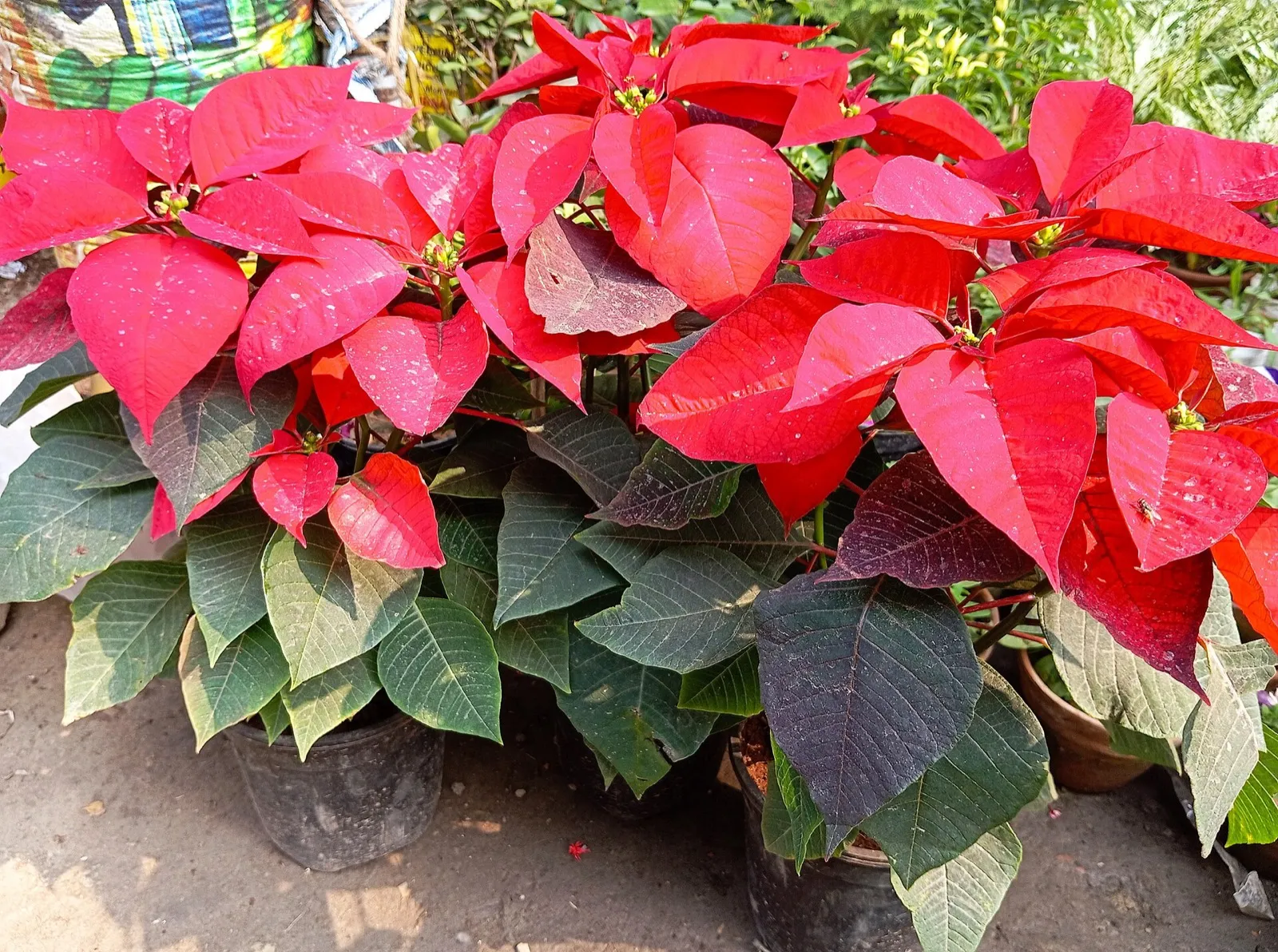
Poinsettia
Euphorbia pulcherrima
Also known as: Christmas star
The Christmas plant. The red parts are coloured leaves, not flowers. It lasts for weeks with plenty of light, away from heating and without overwatering.
- Type
- Seasonal flower
- Where
- Indoor
- Light
- Part shade
- Water
- Moderate water
- Cold
- Doesn't withstand cold or draughts
Where to put it
With plenty of light, but indirect: next to a bright window. It copes with some direct sun, but then the colour doesn’t last as long and it needs more water. Keep it away from radiators, fireplaces and doors that open onto the street, and make sure the leaves don’t touch the cold window glass.
Watering
Keep the soil moist, never waterlogged. When you water, water thoroughly until it runs out of the bottom and pour away what’s left in the saucer. If it comes wrapped in decorative plastic, take it off or make holes in it so the water can drain out. Overwatering is one of the main reasons it drops its leaves.
Care
When you buy it, look at the little yellow beads in the middle, which are the real flowers: it’s better if they’re still closed. With good care it stays looking nice for two or three months.
If you want to keep it, in spring cut the stems back to about 10 or 15 cm above the soil. In summer it can go outside, protected from the wind and the afternoon sun. Pinch out the new shoots until early September, not after.
Feeding
Don’t feed it while it has its colour. After the holidays, a balanced fertiliser every three or four weeks.
Caution
The milky sap can irritate the skin and eyes: wear gloves if you prune it. It’s toxic to dogs and cats if they nibble it, although it usually only causes mouth and stomach discomfort.
At home
Getting it to turn red again the following year is hard: from the beginning of October it needs 14 hours in a row of complete darkness every night until the colour appears, and the light of a lamp is enough to spoil it. If you don’t want the hassle, it can carry on as a green plant.
Common problems
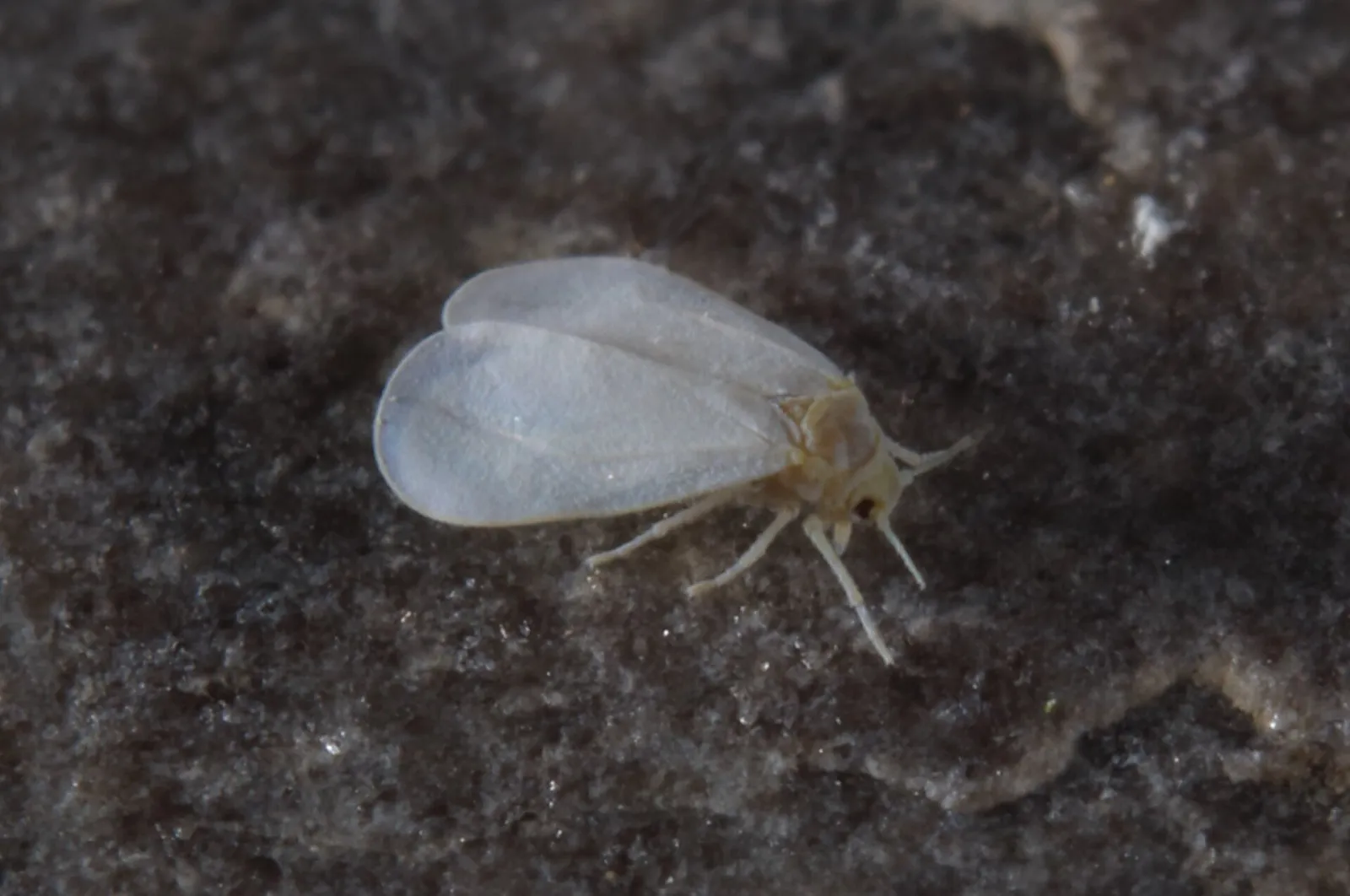
Whitefly
How to spot it
Tiny white insects on the undersides of the leaves. The leaves become sticky, turn yellow, twist and may drop early, and a black fungus (sooty mould) grows on the honeydew.
What to do
Before buying a plant, look carefully at the undersides of the leaves: many pests come home with a new plant. If the infestation is heavy, ask us.
Leaf and bract drop
How to spot it
The plant loses green leaves and coloured leaves soon after arriving home.
What to do
The most common cause is overwatering. Also cold or hot draughts, radiators and the bracts touching the cold window glass. Water only as much as needed and find a spot without draughts.