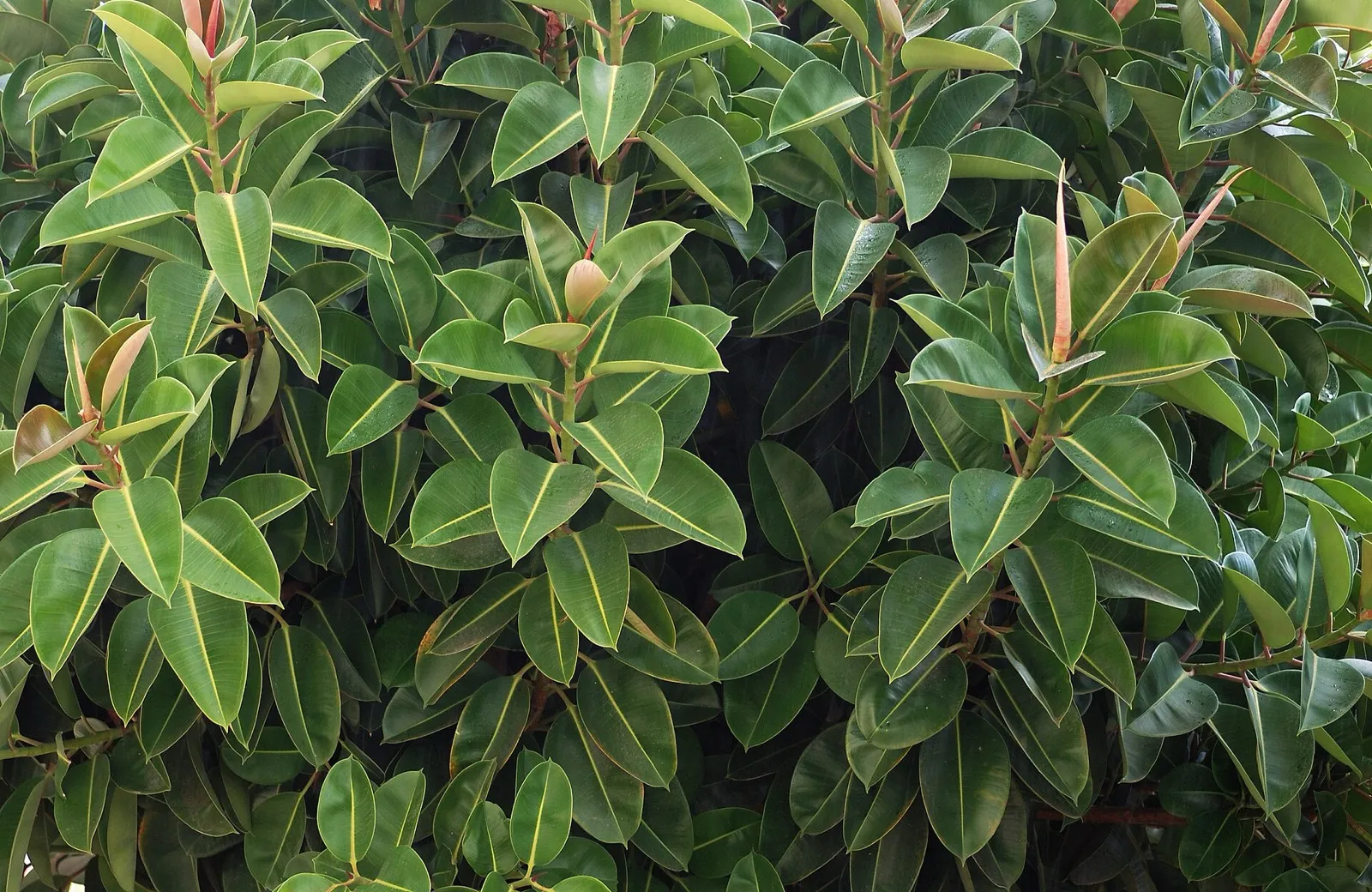
Rubber plant
Ficus elastica
Also known as: Ficus elastica, Rubber tree
Ficus with large, thick, glossy leaves. It's tough and easy to look after indoors, with indirect light and without overdoing the watering.
- Type
- Houseplant
- Where
- Indoor
- Light
- Part shade
- Water
- Moderate water
- Cold
- It doesn't like cold or draughts
Where to put it
With plenty of light, but indirect, protected from afternoon sun. Variegated varieties need more light than green ones. Use a soil-based potting compost that drains well. Over time it becomes big and heavy, so think of a roomy spot where it can stay.
Watering
In spring and summer, water regularly and let the soil dry out a little between waterings. From autumn to late winter, water less and keep the soil only slightly moist. Too much water is the most common cause of problems.
Pruning
It isn’t essential. If you cut the main branches, it branches out and becomes bushier; if you don’t prune it, it grows tall and narrow. The best time is late winter or early spring. When cut it releases a sticky white sap: wear gloves.
Feeding
From spring to late summer, a nitrogen-rich fertiliser to encourage the leaves.
Caution
Figs are toxic to dogs and cats if they chew them. The milky sap can irritate the skin or cause an allergy, so wear gloves when pruning it.
At home
It needs a warm, steady temperature, without cold draughts. Try not to let the temperature drop below 10 to 13 °C. Now and then, wipe the leaves with a soft, damp cloth to remove the dust. Every couple of years, in spring, repot it into a slightly bigger pot.
Common problems
Leaf drop or yellowing
How to spot it
The leaves turn yellow, get dark spots or drop. It's normal for a few of the lower ones to yellow and drop with age.
What to do
It's usually down to overwatering, although also to cold, draughts or lack of light. Water less, especially in winter, and find it a warm spot without draughts.
Scale insects and red spider mite
How to spot it
Scale insects that look like scales or white cotton on stems and leaves, and tiny mites (red spider mite) on the undersides of the leaves.
What to do
Check the plant frequently: the sooner you spot it, the easier it is to control. If the infestation is heavy, ask us about an approved treatment.