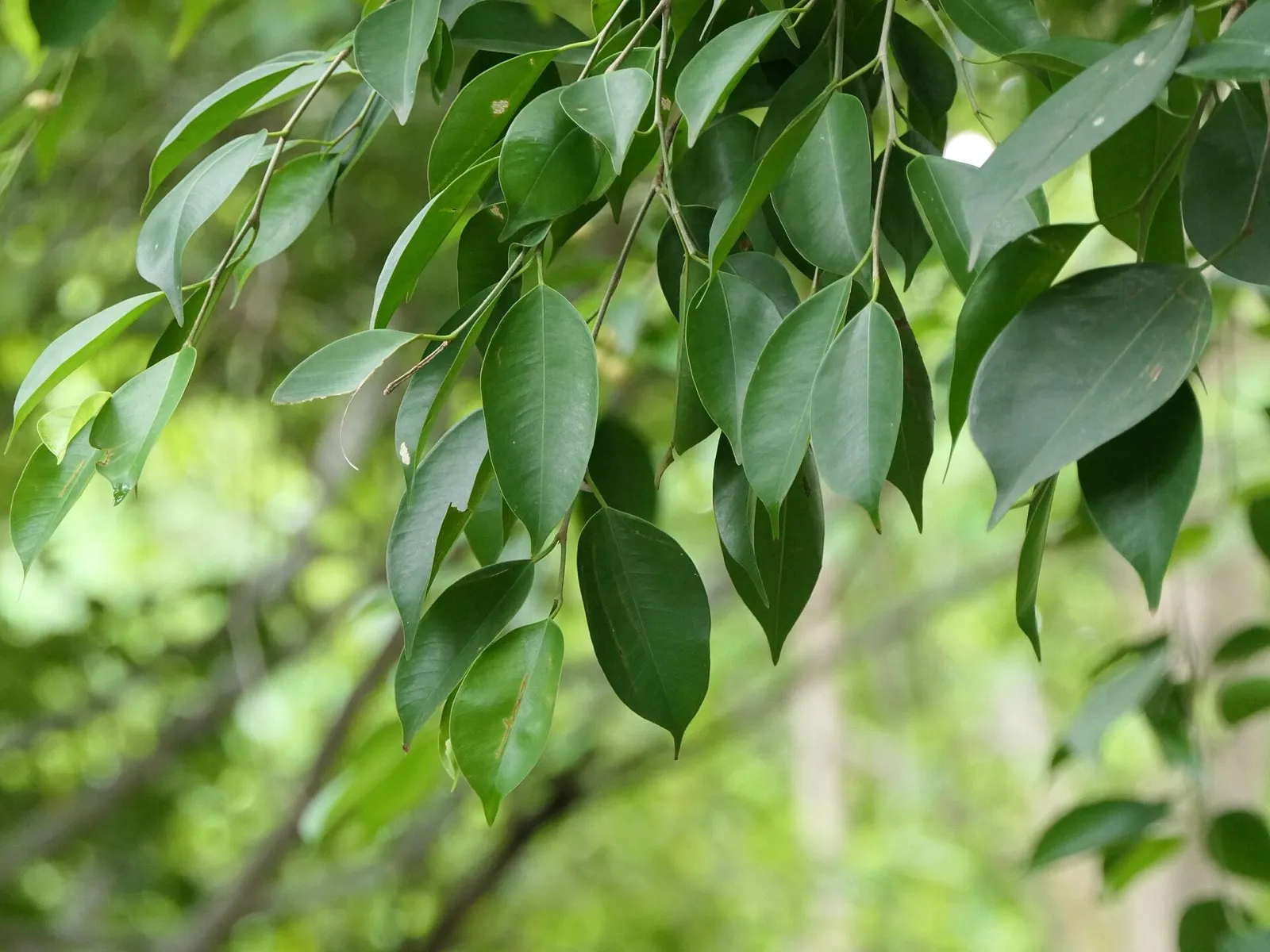
Weeping fig
Ficus benjamina
Also known as: Ficus benjamina, Benjamin fig
Small-leaved tree with drooping branches, very common indoors. It needs light without direct sun, a fixed spot and regular watering without waterlogging.
- Type
- Houseplant
- Where
- Indoor
- Light
- Part shade
- Water
- Moderate water
- Cold
- Very sensitive to frost and cold draughts
Where to put it
With plenty of light, but indirect. It copes with some early morning or late afternoon sun, especially in winter. Variegated varieties need more light than green ones. Once you find a good spot, leave it there: it doesn’t like being moved.
Watering
In spring and summer, water regularly, with water at room temperature, and let the soil dry out a little between waterings. In winter, keep the soil only slightly moist. Don’t let it get waterlogged.
Pruning
It needs little. If it grows too big, shorten long stems in late winter or early spring, cutting just above a leaf. If a completely green branch appears on a variegated variety, remove it. Very hard pruning shortens the plant’s life. Wear gloves: the white sap can irritate the skin or cause an allergy.
Feeding
From spring to late summer, a nitrogen-rich fertiliser to encourage the leaves.
Caution
It’s toxic to dogs and cats if they chew it. The milky sap can irritate the skin, so wear gloves when pruning it.
At home
It needs a warm, steady temperature, without sudden changes and away from draughts. Try not to let the temperature drop below 10 to 13 °C. It likes humidity: mist the leaves when it’s hot and stand the pot on a tray of damp gravel. Every couple of years, in spring, repot it into a slightly bigger pot.
Common problems
Leaf drop
How to spot it
It sheds lots of leaves all at once. This is very typical when it's moved or when something isn't right.
What to do
The most common cause is overwatering, but also cold, draughts, lack of light or too much fertiliser. Correct the cause and don't move it: it will grow new leaves adapted to its spot.
Red spider mite and scale insects
How to spot it
Insects and mites that suck the sap: scale insects that look like scales or white cotton on stems and leaves, and tiny mites (red spider mite) on the undersides of the leaves.
What to do
Check the plant frequently: the sooner you spot it, the easier it is to control. If the infestation is heavy, ask us about an approved treatment.