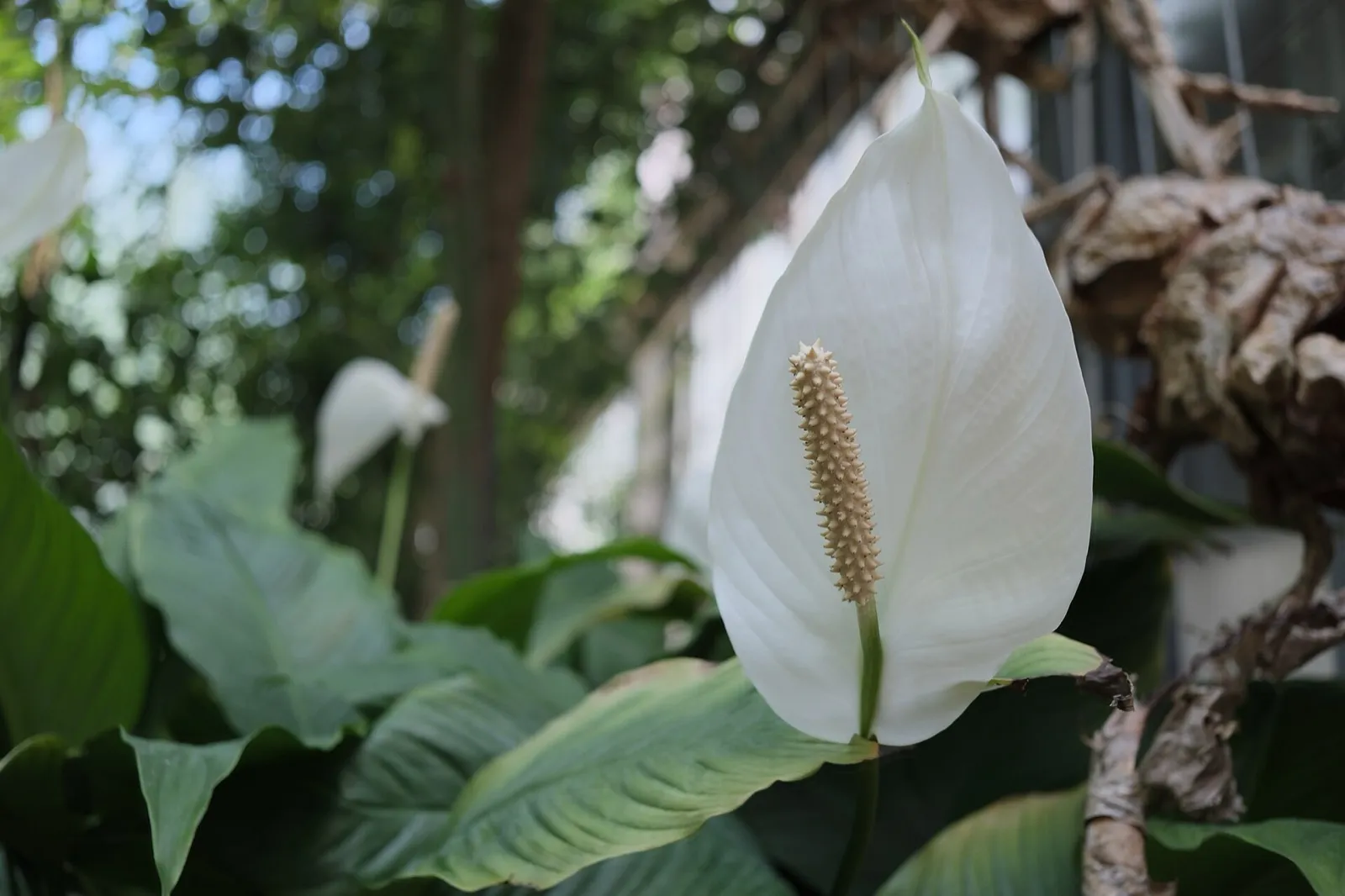
Peace lily
Spathiphyllum
Also known as: Spathiphyllum
Houseplant with dark green leaves and white flowers. It likes indirect light and regular watering, and it lets you know when it's thirsty by drooping.
- Type
- Houseplant
- Where
- Indoor
- Light
- Part shade · Shade
- Water
- Moderate water
- Cold
- Doesn't tolerate cold
Where to put it
With plenty of light, but indirect, near a window and out of direct sun in summer. It copes with corners with little light, but there it grows very slowly and hardly flowers.
Watering
From April to October, water when the top few centimetres of soil are dry. In winter, less. If you can, use rainwater or filtered water: the fluoride in tap water can damage the leaves. If it droops, it’s almost always thirsty, and it recovers once watered.
Care
Wipe the leaves with a damp cloth now and then. Repot it in spring when the roots fill its pot, into one only a few centimetres bigger. A large clump can be divided in spring to get new plants.
Feeding
A liquid fertiliser every few weeks from April to October.
Caution
It’s toxic if eaten, for people, dogs and cats: it contains calcium oxalate crystals that irritate the mouth and can cause drooling and vomiting. Keep it out of reach of children and pets, and wear gloves when handling it, because the sap irritates the skin.
At home
Normal household temperatures suit it, away from radiators and cold draughts. With the heating on the air dries out: a tray of damp gravel under the pot helps.
Common problems
Mealybug
How to spot it
Small insects covered in a white, cotton-like wax on the leaves and where the leaves join the stems.
What to do
It's the most common pest indoors. Wiping the leaves often with a damp cloth helps keep it in check and removes the dust. If the infestation is heavy, ask us.
Overwatering
How to spot it
Leaves that turn yellow or brown and soil that's always wet. The roots end up rotting.
What to do
Let the top of the soil dry out between waterings and don't move it to a pot much bigger than it needs.
Dry tips and edges
How to spot it
The tips or edges of the leaves turn brown.
What to do
It's usually caused by dry air, although it can also be from direct sun or too much fertiliser. Stand the pot on a tray of damp gravel and mist the leaves.