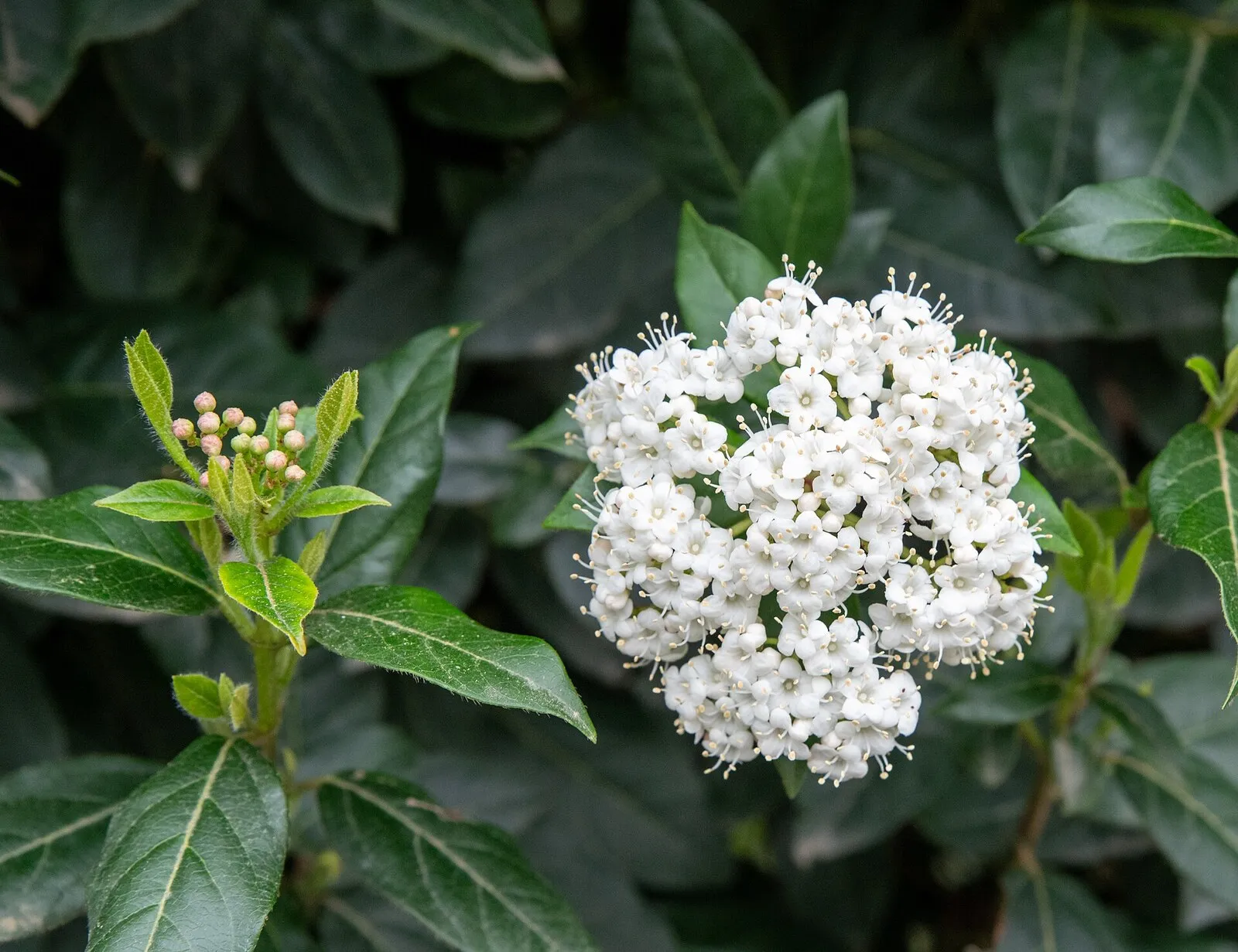
Laurustinus
Viburnum tinus
Also known as: Viburnum
Native evergreen shrub that flowers in winter and spring. It works as a hedge or a standalone shrub and needs little care.
- Type
- Shrub
- Where
- Outdoor
- Light
- Sun · Part shade · Shade
- Water
- Moderate water
- Cold
- Frost can scorch it, but it sprouts again
Where to plant it
It copes with sun and shade, wind and sea air, and adapts to almost any soil as long as it doesn’t get waterlogged. It forms dense hedges, looks good as a standalone shrub and also works in large pots on patios and terraces. Plant it once the risk of frost has passed.
Watering
It tolerates dry spells, but prefers soil that’s slightly moist, without becoming waterlogged.
Pruning
It doesn’t need much. If you want to control its size, prune after flowering. It usually reaches 2 to 4 metres tall and about as wide.
Feeding
A little, without overdoing it. Too much nitrogen leads to overly vigorous growth and makes the plant more susceptible to powdery mildew.
Caution
It’s toxic if swallowed. Bear this in mind if there are children or animals that might eat its berries.
In our climate
It’s a native plant: it grows naturally in all three Valencian provinces, in the hills, alongside holm oaks, kermes oaks and mastic trees. It copes with cold and heat, and flowers in the middle of winter, when there are few flowers in the garden.
Common problems
Aphids
How to spot it
Small insects clustered on the shoots and tender leaves. Affected leaves curl up and become covered in sticky honeydew.
What to do
Ladybirds and other natural enemies usually keep them under control, so it's worth protecting them and not treating at the first sign. If the infestation is heavy, ask us about an approved treatment.
Powdery mildew
How to spot it
Patches of white or greyish powder on the leaves, first on the tender shoots, which can end up covering the whole leaf. Badly affected leaves dry out and drop.
What to do
It appears more when the plant gets little sun. Pick up infected leaves that fall to the ground and, when pruning, remove the whitish shoots. Don't overdo the nitrogen fertiliser, which encourages it.