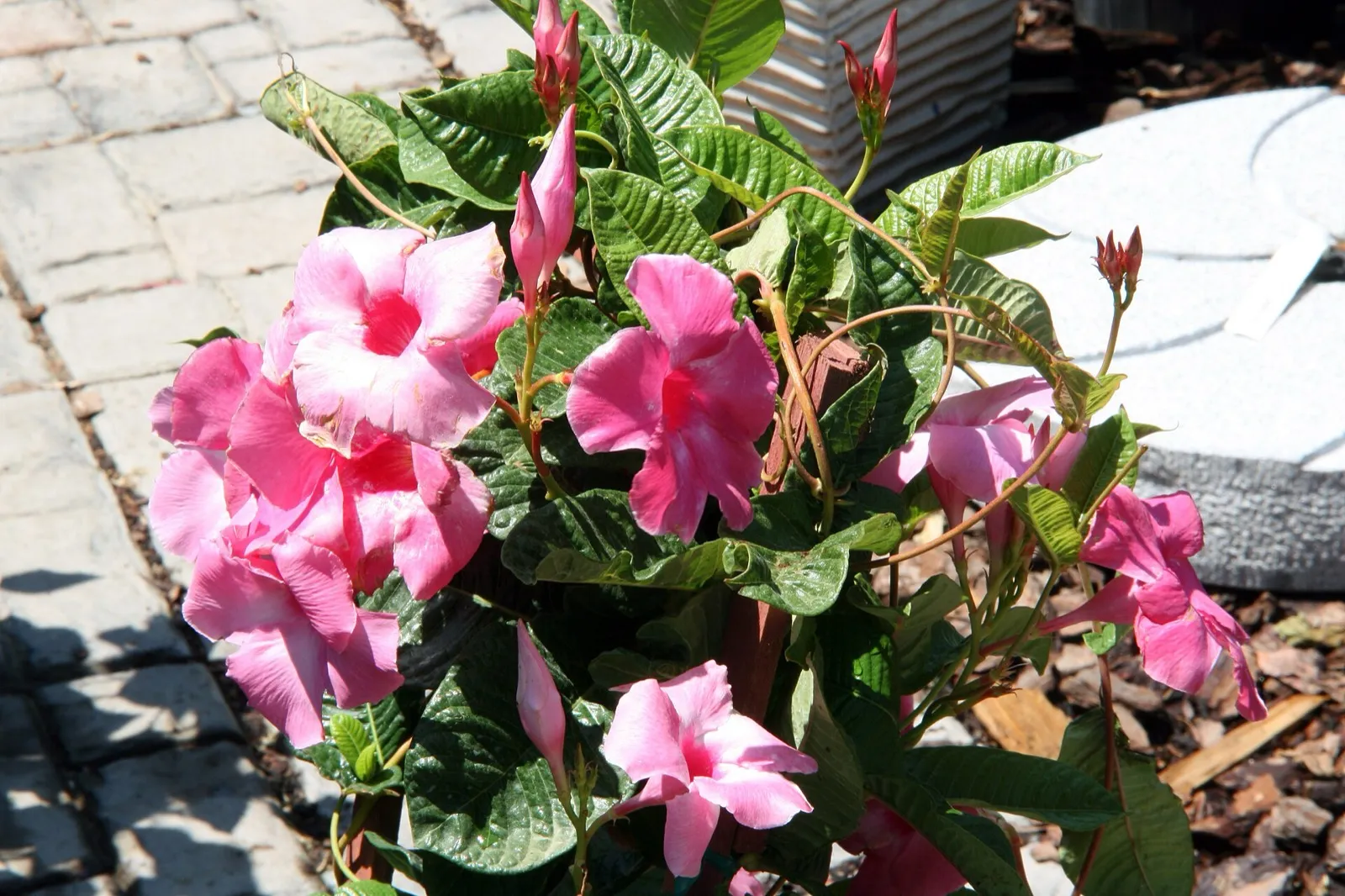
Dipladenia
Mandevilla sanderi (syn. Dipladenia)
Also known as: Mandevilla
Climber with trumpet-shaped pink, red or white flowers. It flowers a lot with sun and regular watering and feeding, but needs protecting from the cold.
- Type
- Climber
- Where
- Indoor and outdoor
- Light
- Sun · Part shade
- Water
- Moderate water
- Cold
- Doesn't withstand frost
Where to put it
It needs sun to flower well. Compact varieties cope with a little more shade than large climbers. Indoors, put it next to a window with plenty of light but no direct sun. Plant it in loose soil, rich in organic matter, that drains well. Climbing varieties need a support: a trellis, wires or a post. Compact ones hardly twine at all and look great in pots and hanging baskets, with the stems trailing over the edge.
Watering
Water regularly during spring and summer. In winter, when the plant is resting, water less often.
Pruning
Prune it at the end of winter or the start of spring, before it starts to sprout: remove old or crowded stems and shorten the rest. On young plants, pinch out the tips so they branch. Take care when pruning: the milky white sap can irritate the skin and may be toxic if swallowed. Wear gloves.
Feeding
In spring and summer, feed it every two weeks with a phosphorus-rich fertiliser.
In our climate
If there’s a frost, the top growth dies back. If you have it in a pot, before the first frosts check it carefully for pests, remove the dry leaves and move it to a bright spot sheltered from the cold until spring.
Common problems
Mealybugs and scale insects
How to spot it
Little bumps stuck to stems and leaves that suck the sap. Mealybug can be recognised by its white, cotton-like look.
What to do
Check the plant regularly, especially before bringing it indoors in winter, and remove any you see. If the infestation is heavy, ask us about an approved treatment.
Anthracnose
How to spot it
Tan to brown spots on the leaves, which eventually drop.
What to do
It's a fungus that gets worse when the leaves stay wet for a long time. Water at the base, remove the affected leaves and put them in the bin.