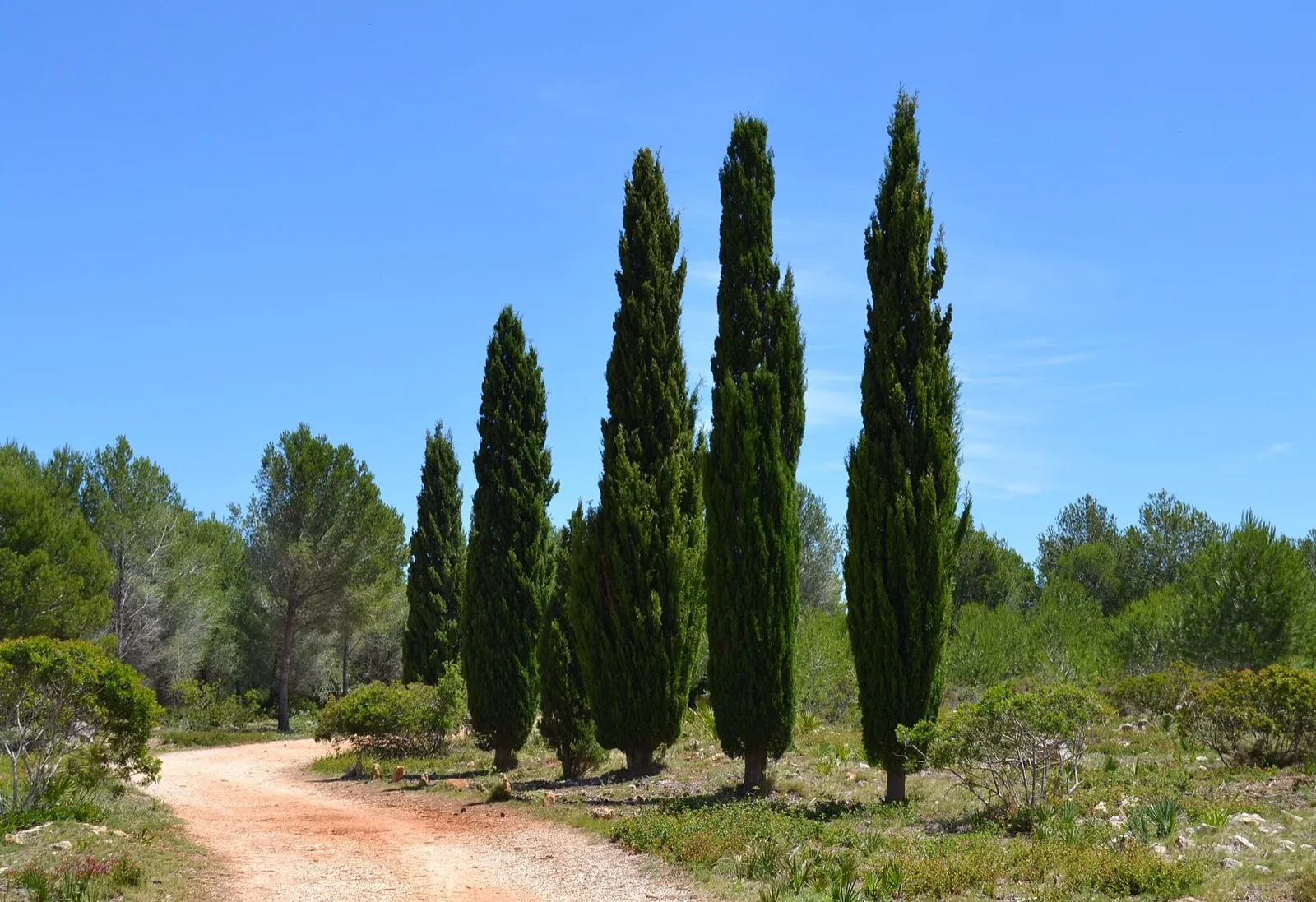
Cypress
Cupressus sempervirens
Also known as: Italian cypress, Mediterranean cypress
Very long-lived Mediterranean tree with a tall, narrow crown. It copes with drought, wind and sun, and works as a screen or windbreak.
- Type
- Tree
- Where
- Outdoor
- Light
- Sun
- Water
- Little water
- Cold
- Cold-hardy
Where to plant it
In full sun. Any type of soil will do, including chalky ones, as long as it drains well: waterlogging doesn’t suit it. It copes very well with wind and sea air. Leave at least 5 metres between it and the house, and bear in mind that its pollen is a fairly common allergen.
Watering
It needs little water and tolerates drought well. What it can’t stand is standing water around its roots.
Pruning
It doesn’t normally need pruning. If you use it as a hedge or screen and it needs trimming, do it between autumn and midwinter. The fewer wounds, the better: that’s how cypress canker gets in.
In our climate
It’s a classic tree of the Mediterranean garden, and in the wild it lives on dry hills and chalky soils. The best time to plant it is late winter or early spring.
Common problems
Cypress canker
Seiridium cardinale
How to spot it
Branches or sections of the crown that dry out and turn reddish. Elongated lesions that ooze resin appear on the bark of branches and trunk, often dotted with tiny black specks, which are the fruiting bodies of the fungus.
What to do
The fungus gets in through cracks and wounds in the bark and spreads with rain and wind. Cut out and remove affected branches as soon as possible, without leaving the debris next to the tree. Treatments give mixed results; if the attack reaches the trunk, ask us.