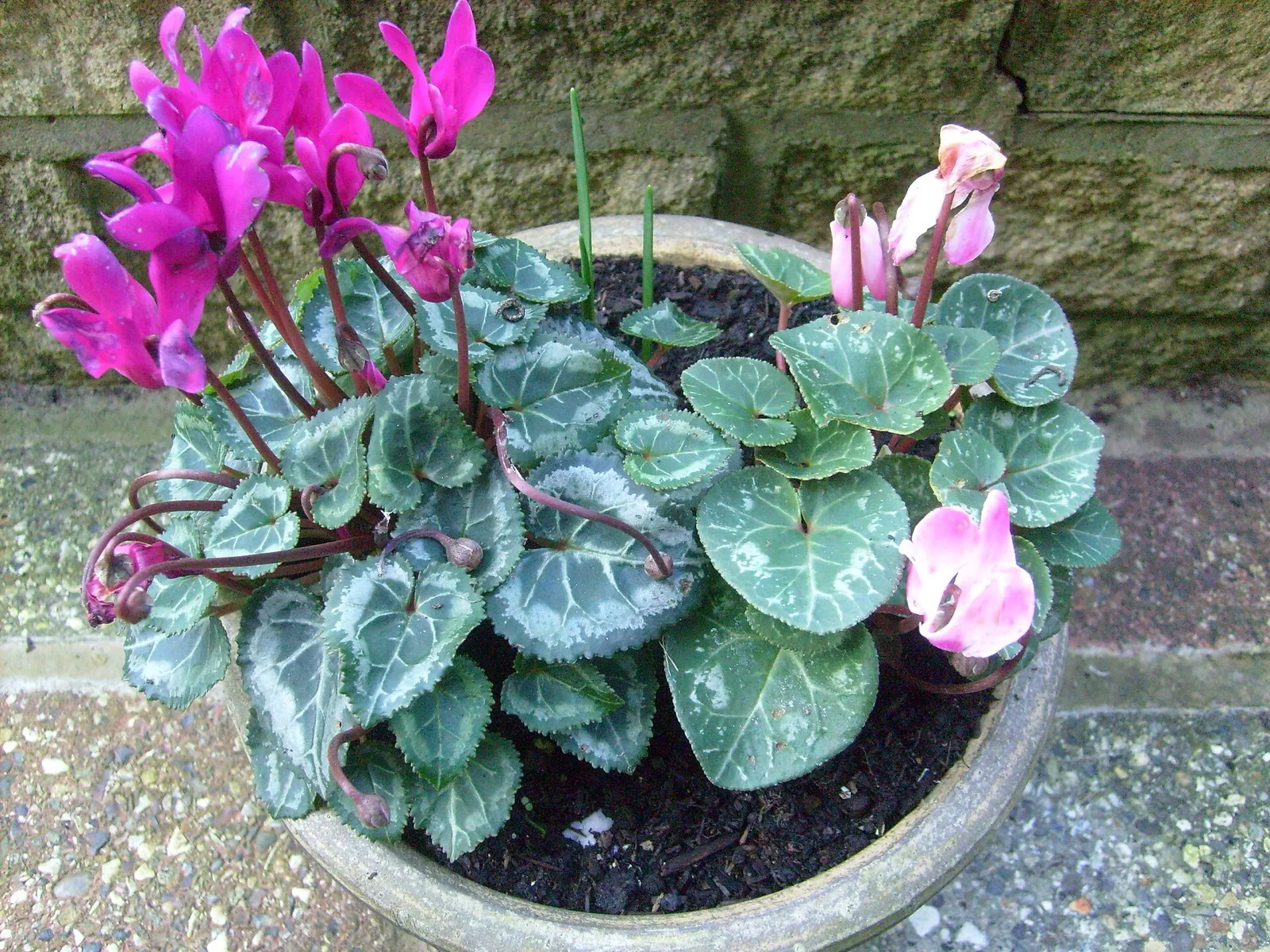
Cyclamen
Cyclamen persicum
Flowering plant for the cooler months. It needs plenty of light without direct sun, watering from below and a spot away from the heating.
- Type
- Seasonal flower
- Where
- Indoor
- Light
- Part shade
- Water
- Moderate water
- Cold
- Likes it cool, not the warmth of the heating
Where to put it
With plenty of light, but indirect: an east-facing window is a good spot. It needs to be cool. In the warmth the buds don’t open and flowering is cut short, so put it in the coolest room in the house and never near a radiator.
Watering
Water when the soil is dry on top, around the edge of the pot or from below: put water in the saucer, leave it for about 15 minutes and pour away what’s left. Don’t wet the centre of the plant, because the tuber rots easily. Firm leaves mean it has enough water; if they go limp, it’s thirsty.
Care
Remove withered flowers by twisting the stalk and pulling from the base, so that no piece is left behind. That way it keeps producing new flowers. It likes a humid atmosphere while it’s flowering: a tray of wet gravel under the pot helps.
At the end of spring it stops flowering, the leaves turn yellow and the plant rests for two or three months. Water very little during that time and keep it in a cool, shady spot. When new leaves appear, give it light and normal watering again. Getting it to flower again at home is possible, but it isn’t easy.
Feeding
Not much. A low-nitrogen fertiliser for flowering plants every two weeks while it’s growing. Too much fertiliser produces lots of soft leaves that get diseases more easily.
Caution
Cyclamen is toxic to dogs and cats if they nibble it, especially the tuber. Keep it out of their reach.
At home
Heat is its worst enemy. Away from the heating, with light and just the right amount of water, it flowers for weeks.
Common problems
Grey mould
Botrytis cinerea
How to spot it
The flowers turn brown and papery and become covered in a fuzzy grey mould. Brown spots appear on the leaves, often where a flower has fallen.
What to do
Regularly remove dry flowers and leaves, don't wet the flowers when watering and leave space between pots so air can circulate.
Cyclamen mite
Phytonemus pallidus
How to spot it
Small, thick, wrinkled leaves. The plant doesn't flower or produces misshapen flowers.
What to do
It's a mite that's very hard to get rid of. The most practical thing is to throw away the affected plant so it doesn't spread to others. If you're not sure, ask us.