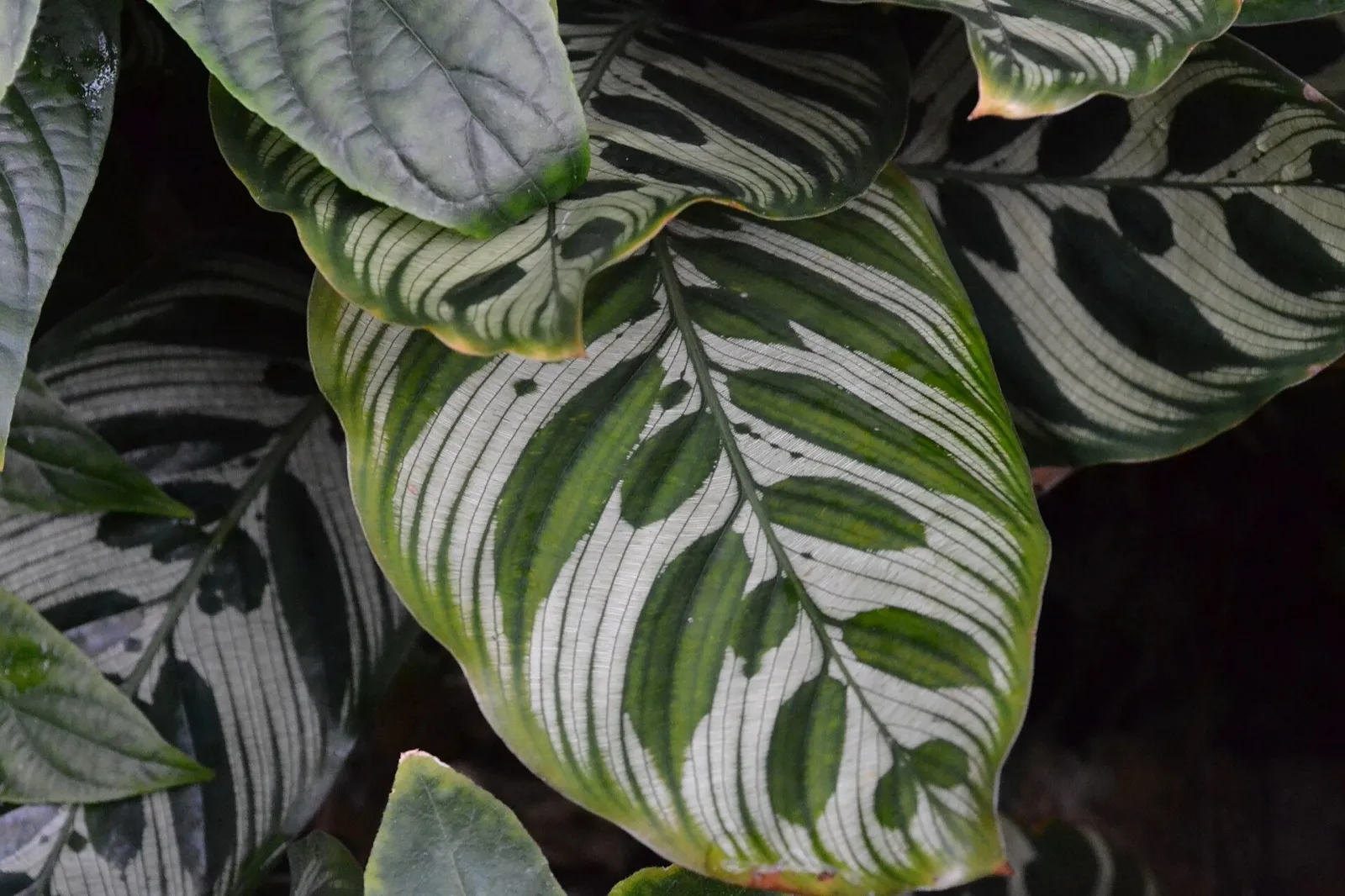
Calathea
Goeppertia (syn. Calathea)
Also known as: Prayer plant
Houseplant with patterned leaves that fold up at night. It needs indirect light, soil that's always slightly moist and plenty of humidity in the air.
- Type
- Houseplant
- Where
- Indoor
- Light
- Part shade
- Water
- Moderate water
- Cold
- Doesn't tolerate cold
Where to put it
In a bright spot but out of direct sun, which scorches the leaves. In summer, near a north- or east-facing window; in winter, it can go in a south-facing window. In low light it grows weak.
Watering
In spring and summer, keep the soil evenly moist, without waterlogging it. In autumn and winter, let the surface dry out before watering, but never completely. Rainwater is best; if you use tap water, leave it to stand for a day first.
Care
Almost all the plants sold as calathea now belong to the genus Goeppertia. Remove dry leaves and wipe the leaves with a soft cloth to remove the dust. Every few years, in spring, move it to a slightly bigger pot or divide the clump into pieces with several leaves each.
Feeding
A liquid houseplant fertiliser once a month, from April to September. From October to March, nothing.
At home
It likes a steady temperature, away from radiators and draughts. It needs plenty of humidity: the bathroom or kitchen, if they get light, are good spots. With the heating on, group several plants together or stand the pot on wet gravel. It isn’t toxic to dogs and cats.
Common problems
Red spider mite
How to spot it
Leaves with tiny pale dots, yellowish or silvery, and sometimes fine webbing.
What to do
Dry air encourages it, so keep the humidity high. If the infestation is heavy, ask us.
Dry tips and edges
How to spot it
The tips and edges of the leaves turn brown.
What to do
It's almost always a lack of humidity in the air. Put it in the bathroom or kitchen, or on a tray of wet gravel, and mist the leaves.
Watery patches (oedema)
How to spot it
Areas of the leaf that look soaked, especially in winter.
What to do
It's caused by overwatering when the plant is growing slowly. In autumn and winter, let the surface of the soil dry out before watering again.