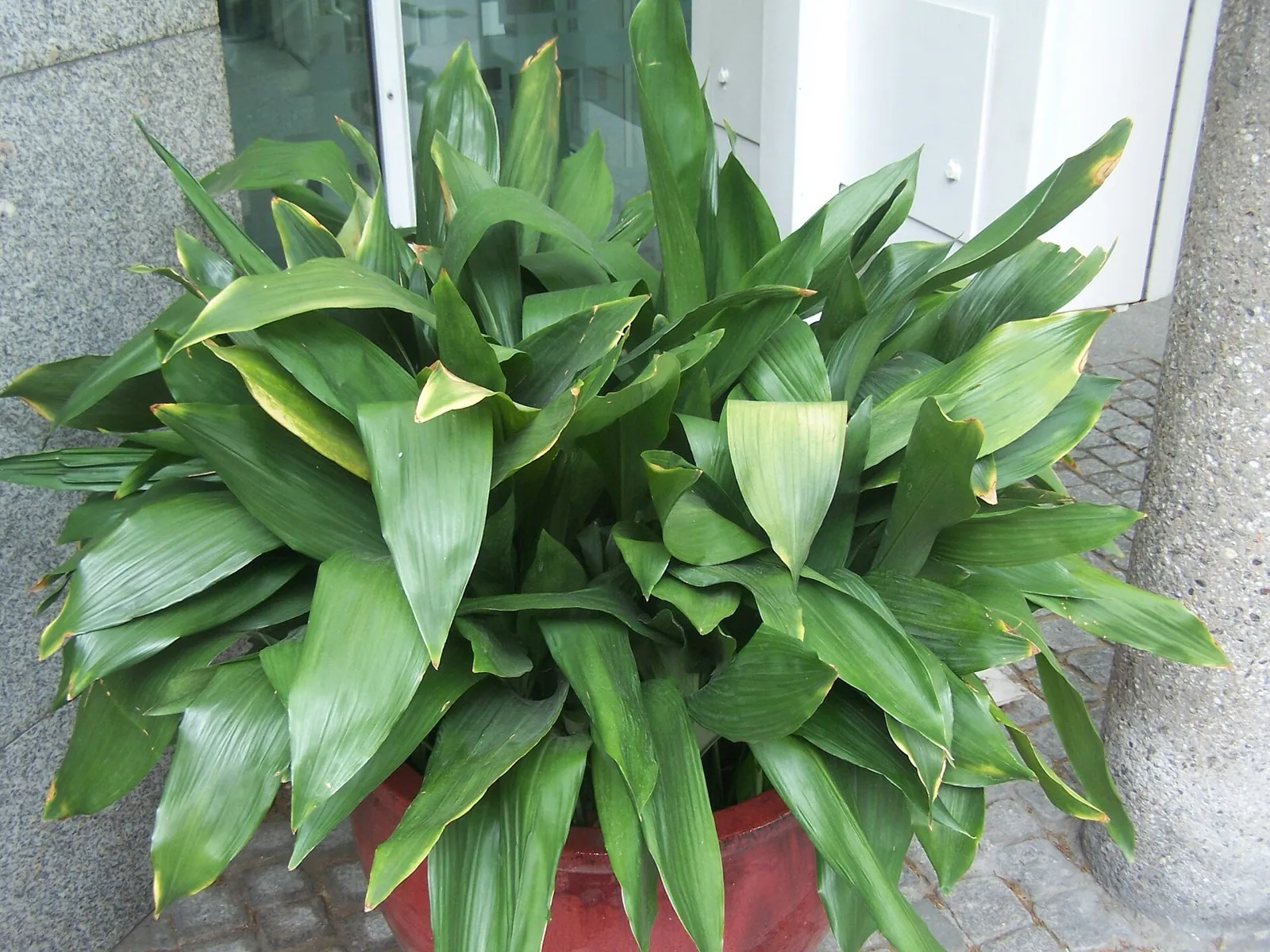
Aspidistra
Aspidistra elatior
Also known as: Cast-iron plant, Bar-room plant
Plant with large, dark green leaves that copes with little light and with draughts. It does well indoors and in shady corners of the garden.
- Type
- Houseplant
- Where
- Indoor and outdoor
- Light
- Part shade · Shade
- Water
- Moderate water
- Cold
- Withstands cold; protect it from the wind in winter
Where to put it
In low or filtered light, never in direct sun, which scorches its leaves. It copes with dark corners, although it grows more slowly there. In the garden, it does well in shady areas as an accent plant or as ground cover.
Watering
From spring to autumn, water regularly so the soil is moist but never waterlogged. In winter, less, without letting it dry out completely. It copes with some drought.
Care
It doesn’t need pruning: just remove the leaves as they dry. Wipe the leaves with a damp cloth to remove the dust. It grows slowly, so only repot it in spring when roots poke out of the drainage holes. A large clump can be divided in spring by cutting the rhizomes, leaving several leaves on each piece.
Feeding
A houseplant fertiliser once a month, from spring to late summer.
At home
It prefers a fairly cool room, away from the heating, and copes with draughts: an entrance hall by the door suits it. Turn the pot a quarter turn each time you water so it grows evenly. It isn’t toxic to dogs and cats.
Common problems
Overwatering
How to spot it
The roots rot and the plant goes downhill, with the soil always wet.
What to do
It's its main problem. Water less in winter and never leave it waterlogged.
Red spider mite
How to spot it
Leaves with tiny pale dots or discoloured.
What to do
Check the leaves now and then. If the infestation is heavy, ask us.
Mealybugs and scale insects
How to spot it
Small, motionless insects on the leaves: some covered in a white, cotton-like wax, and others that look like scales.
What to do
Check the undersides of the leaves. If the infestation is heavy, ask us about an approved treatment.