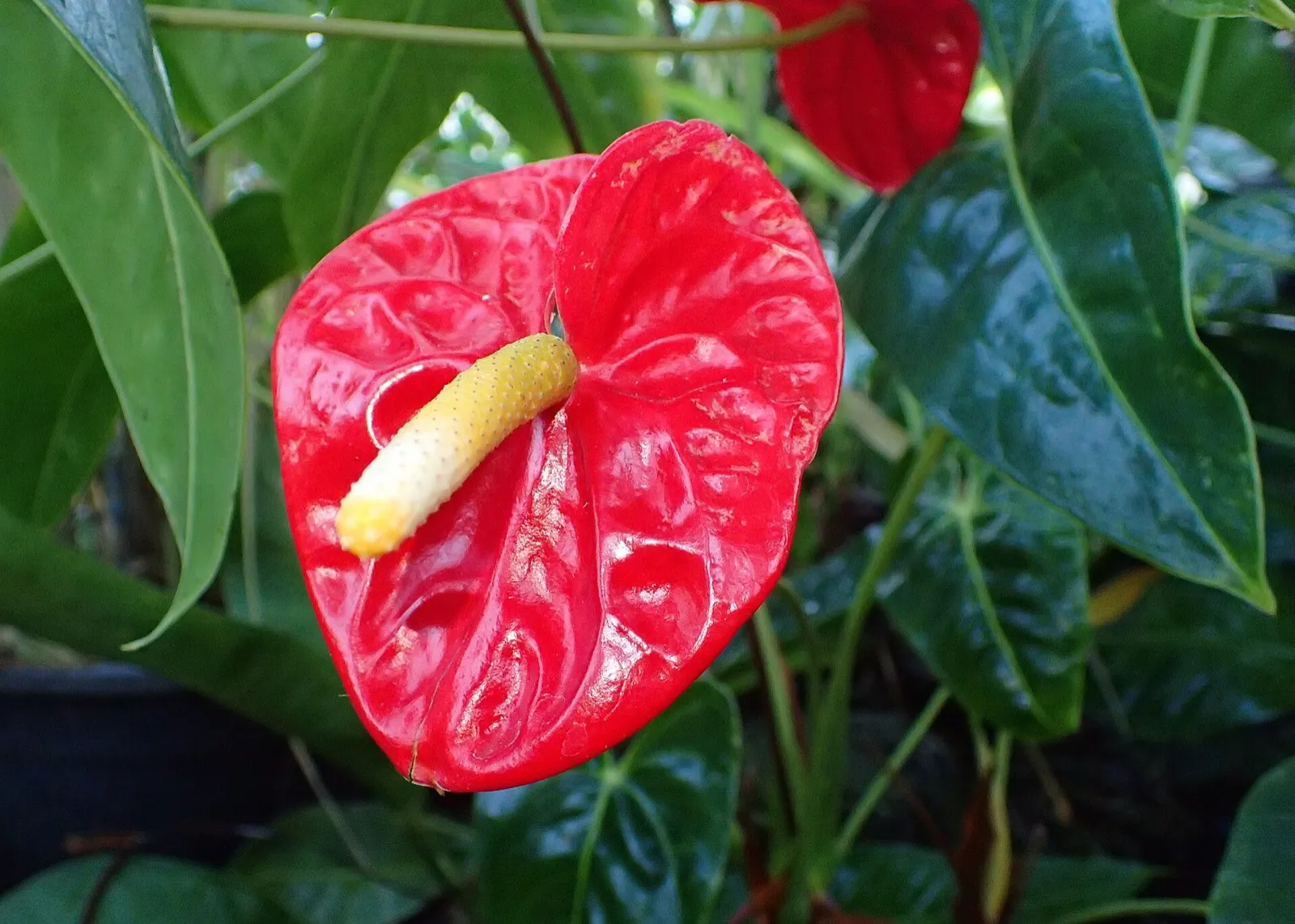
Anthurium
Anthurium andraeanum
Also known as: Flamingo flower
Houseplant with heart-shaped red, pink or white flowers. It needs warmth, indirect light and a humid atmosphere, and it's toxic if eaten.
- Type
- Houseplant
- Where
- Indoor
- Light
- Part shade
- Water
- Moderate water
- Cold
- Doesn't tolerate cold
Where to put it
With plenty of light, but indirect, for example next to an east- or west-facing window. If the window faces south, put up a thin curtain. Direct summer sun scorches the leaves, and with too little light it stops flowering.
Watering
Water when the soil is almost dry: push a finger in about 5 cm to check. Rainwater or filtered water at room temperature is best, because hard tap water doesn’t suit it. In winter, water less.
Care
It doesn’t need pruning: just remove dry leaves and spent flowers from the base. Repot it every two or three years into a pot only slightly bigger, with a loose, acidic compost. Wear gloves, because the sap is an irritant.
Feeding
From April to October, an orchid fertiliser regularly. Its needs are similar.
Caution
All parts are toxic if eaten, for people, dogs and cats: it contains calcium oxalate, which irritates the mouth and can cause vomiting. Keep it out of reach of children and pets.
At home
It needs warmth all year round, away from radiators and cold draughts. It likes humidity, so the bathroom is a good spot if it gets light. In the rest of the house, mist the leaves or group several plants together.
Common problems
Mealybug
How to spot it
Small insects covered in a white, cotton-like wax on the leaves and stems.
What to do
Check the plant now and then, especially the undersides of the leaves. If the infestation is heavy, ask us.
Root rot
How to spot it
The plant goes downhill and the leaves turn yellow even though the soil is moist. The roots rot.
What to do
It comes from overwatering or soil that's always soaked. Water only when the soil is almost dry and don't use pots much bigger than necessary.
Brown edges
How to spot it
The edges of the leaves turn brown.
What to do
It's usually caused by dry air, which is common with the heating on. Raise the humidity by misting the leaves or with a tray of damp gravel under the pot.