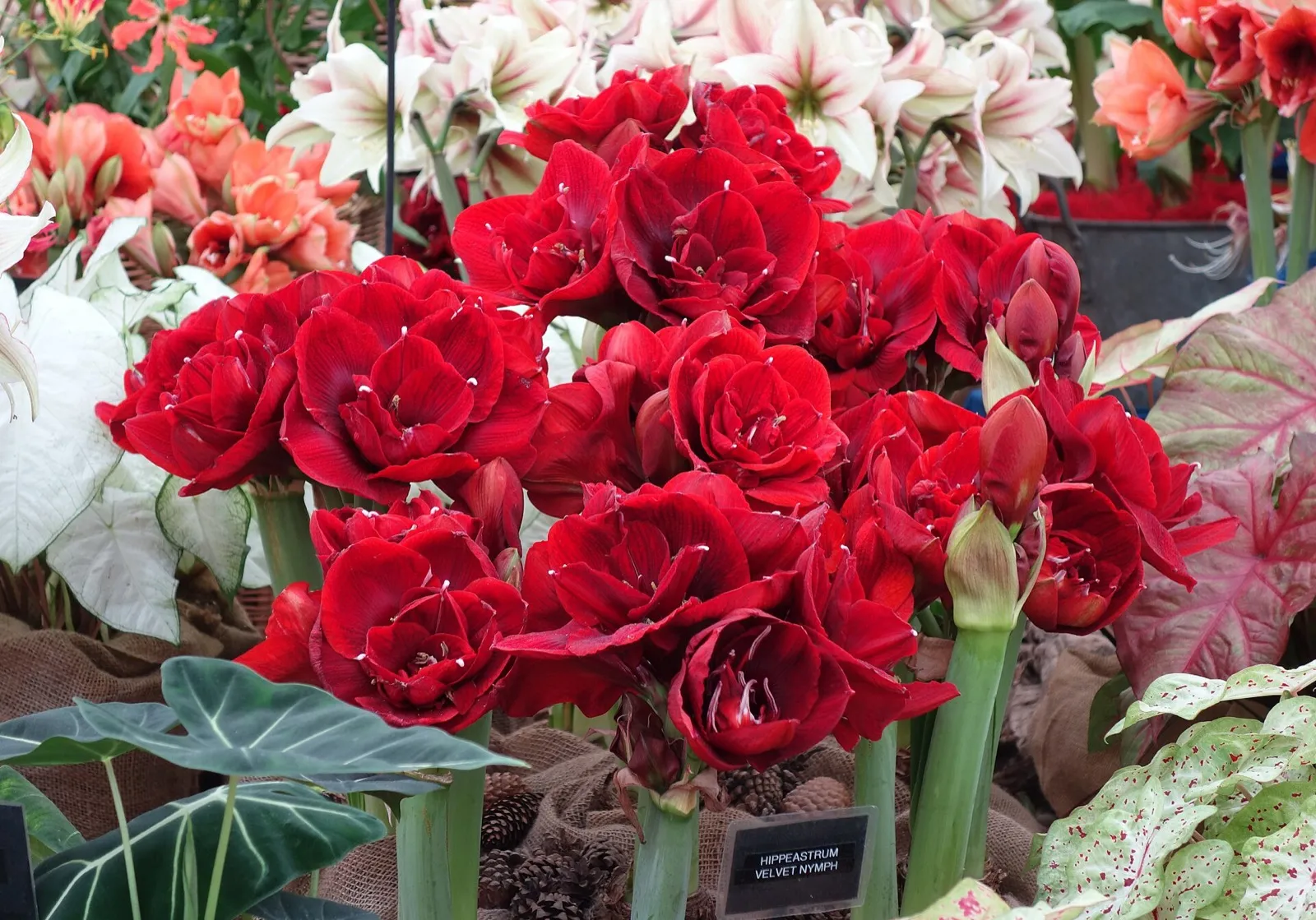
Amaryllis
Hippeastrum
A large bulb that produces several huge flowers on a tall stalk. If you look after the leaves after flowering, it can flower again another year.
- Type
- Bulb
- Where
- Indoor
- Light
- Sun · Part shade
- Water
- Moderate water
- Cold
- Doesn't withstand frost
Where to put it
If you buy a loose bulb, plant it in a pot that drains well and is only about 2 or 3 cm wider than the bulb, with the tip pointing up and a third of the bulb above the soil. It flowers better when it’s a little snug.
Put it in the brightest window in the house: the more light it gets, the straighter the stalk grows and the easier it is for it to flower again. Turn the pot a little each time you water so it doesn’t lean.
Watering
At first, very little: the soil barely moist. When the stalk is a few centimetres tall, water more, letting the top of the soil dry out between waterings. While it’s flowering, water regularly, and less once the flowers wither. Try not to wet the leaves or the stalk.
Care
While it’s flowering, keep it away from the heating: in the warmth the flowers don’t last as long. When they dry up, cut the stalk but leave the leaves, which feed the bulb. Once the frosts are over it can go outside, in part shade.
To get it to flower again in winter, at the end of summer move it to a cool, dry spot and stop watering until the leaves dry up. After about six to eight weeks of rest, when it starts to sprout, go back to normal care.
Feeding
It doesn’t need any while the stalk is growing. After flowering, a houseplant fertiliser until it goes dormant.
Caution
The whole plant is toxic if eaten, especially the bulb, and it’s particularly dangerous for dogs and cats. Keep it out of reach of small children and animals.
At home
If you look after it like any other plant, with plenty of light and without cutting off the leaves, the bulb can flower again in later years.
Common problems
Red blotch (red fire)
Stagonospora curtisii
How to spot it
Red spots on the leaves, flower stalks and bulb scales. The affected parts bend or become misshapen, and the stalk can dry up without ever flowering.
What to do
It's a fungus that spreads in damp conditions. Water carefully so you don't wet the leaves or the stalk, and give it good light and ventilation. If the bulb is badly affected, it's best to throw it away.