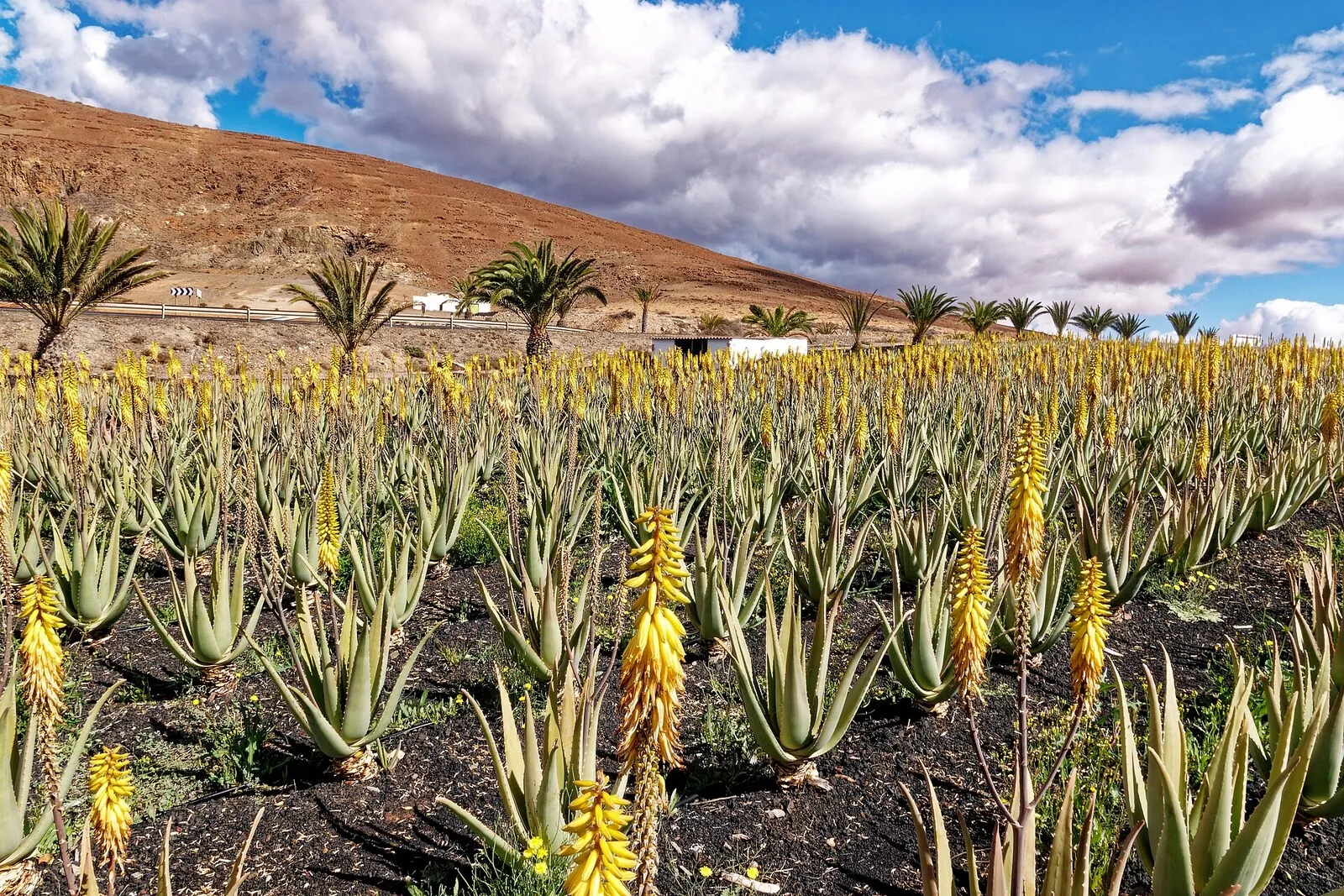
Aloe vera
Aloe vera
Also known as: Aloe barbadensis (synonym)
Succulent with fleshy leaves in a rosette. It needs plenty of light, little water and a well-draining compost, in a pot or in the garden.
- Type
- Succulent or cactus
- Where
- Indoor and outdoor
- Light
- Sun · Part shade
- Water
- Little water
- Cold
- Doesn't tolerate frost
Where to plant it
In sun or part shade. It needs a very free-draining compost, such as cactus compost, or soil mixed with coarse sand. In a pot, terracotta is best, with several drainage holes. Indoors, put it in the brightest spot; in summer it can go outside.
Watering
Let the soil dry out completely between one watering and the next, and water very little in winter. Too much water rots the roots.
Care
It produces offsets around its base. You can separate them in spring or early summer to get new plants.
Feeding
In a pot, a liquid feed once a month from May to August.
Caution
It’s harmful if eaten, for people and for dogs and cats: it can cause stomach ache and diarrhoea. The latex in the leaves can irritate the skin, so wear gloves when handling it.
In our climate
It can’t take frost. If you have it in the garden, a sheltered corner is best; in a pot, you can move it under cover on the coldest winter nights.
Common problems
Mealybugs and scale insects
How to spot it
Small motionless insects stuck to the leaves: some covered in white wax, like cotton wool, and others that look like scales.
What to do
Check the base of the leaves every so often. If the infestation is heavy, ask us about an approved treatment.
Root rot
How to spot it
It appears when you water too much: the roots rot and the plant collapses.
What to do
Let the soil dry out completely between waterings, water very little in winter and use a pot with drainage holes.