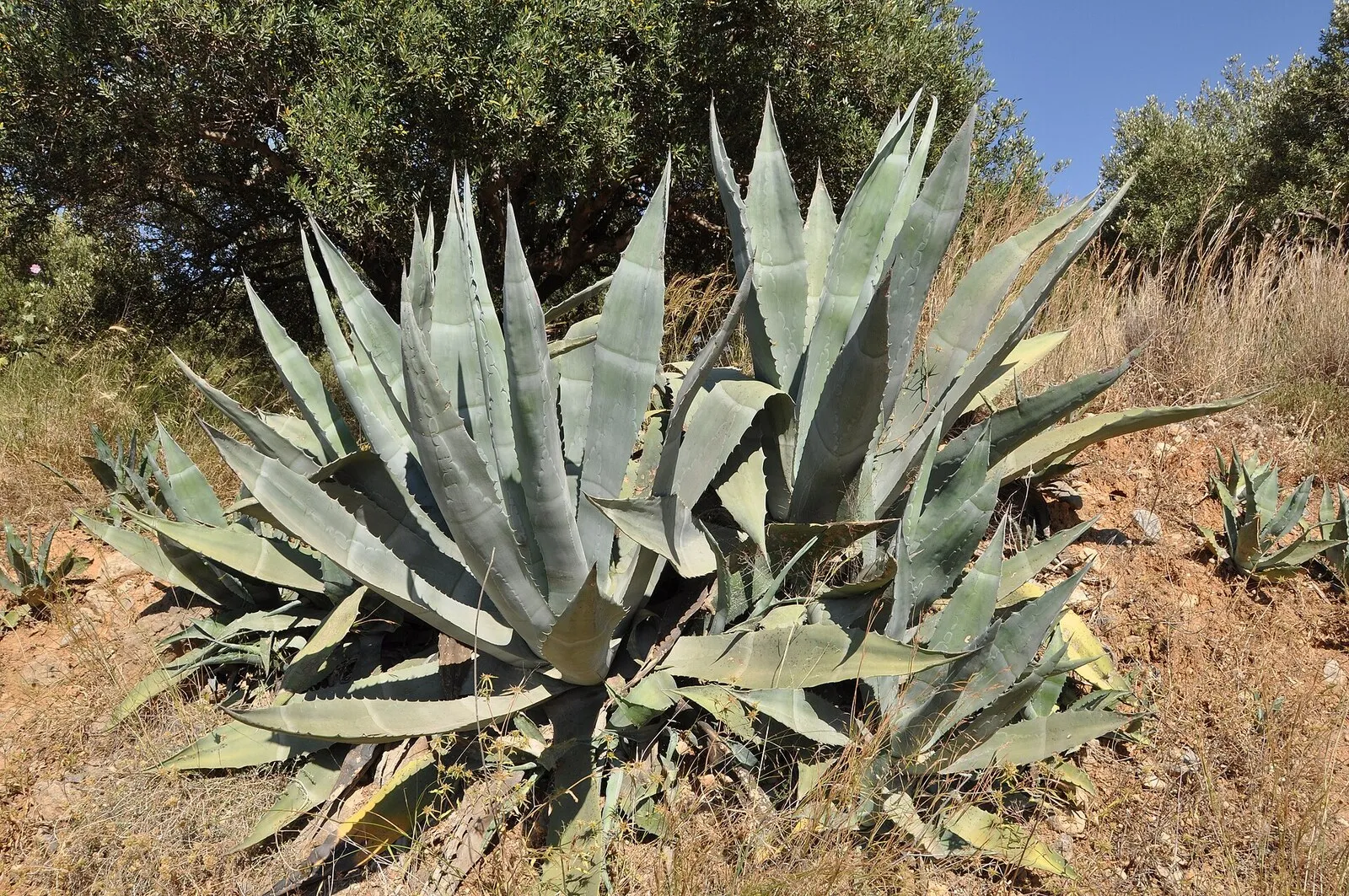
Agave
Agave americana
Also known as: Century plant, American aloe
Succulent with large spiny leaves. It's an invasive alien species: selling or transporting it is banned, and only existing plants may be kept.
- Type
- Succulent or cactus
- Where
- Outdoor
- Light
- Sun
- Water
- Little water
- Cold
- Tolerates light frost if it isn't frequent
Caution
Agave americana is listed in the Spanish Catalogue of Invasive Alien Species. This means it’s banned to keep, transport, sell or exchange live plants, as well as parts that can take root or reproduce, such as offsets. Plants that were already in a garden before the rule came in can be kept, as long as they don’t spread beyond it, but they can’t be sold, propagated or given away. That’s why this profile is for people who already have one.
If you already have one
It needs full sun and very well-drained soil. It spreads mainly through underground stems that sprout new rosettes, sometimes far from the parent plant: remove them so it doesn’t spread beyond your garden.
Watering
It’s very resistant to drought and heat, so in the ground it hardly needs watering. If you do water, let the soil dry out between waterings: too much water favours the agave weevil.
Care
It flowers at around 10 years old, with a flower stalk 5 to 8 metres tall, and then the rosette dies. The leaves have very sharp spines along the edges and at the tip: wear gloves and protection when handling it.
In our climate
It has become naturalised in all three Valencian provinces. In the Valencian Community it grows in degraded scrubland, along path edges, on cliffs and on coastal dunes, where it crowds out native vegetation. If you’d like to remove one from your garden, we can help with the maintenance.
Common problems
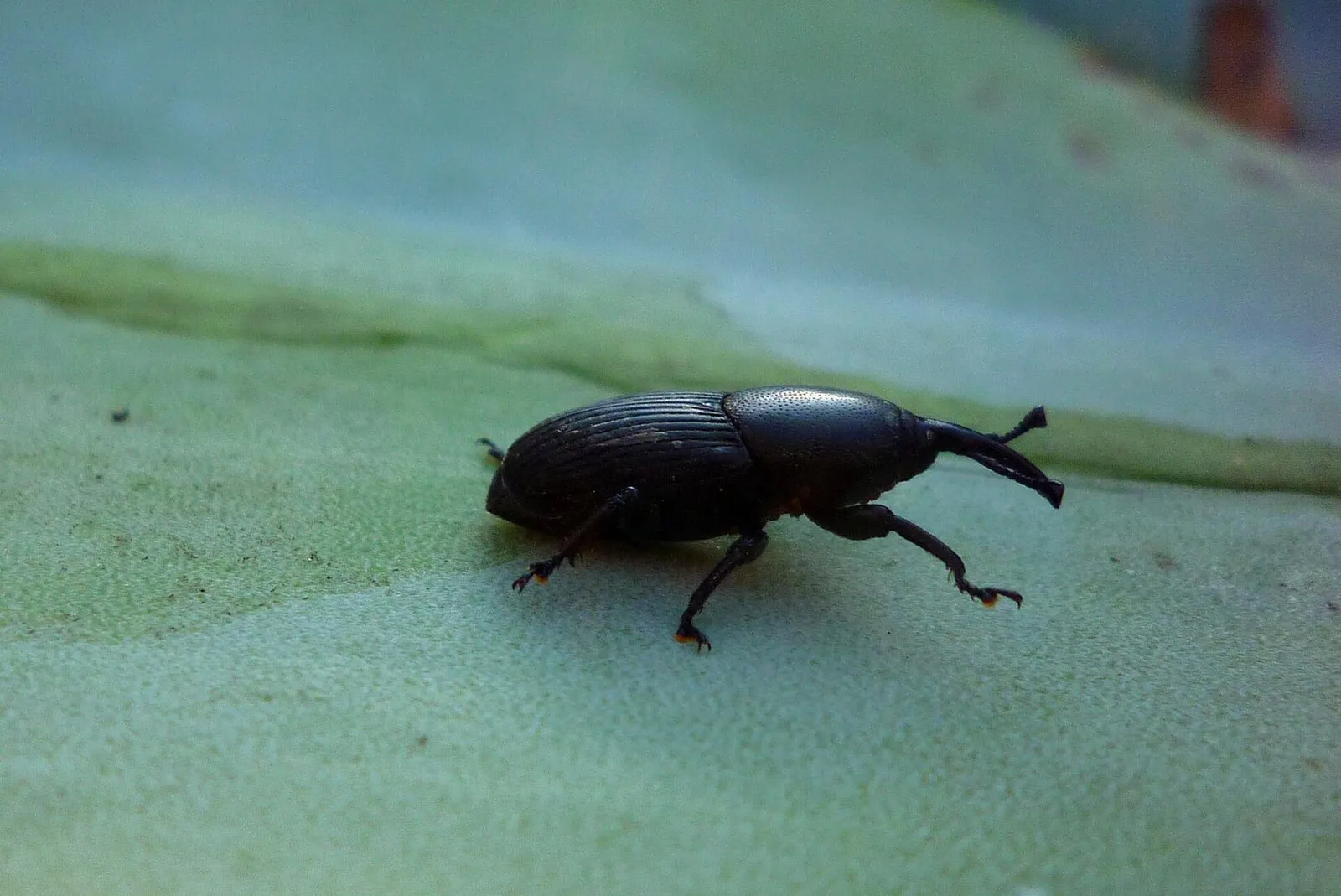
Agave weevil
Scyphophorus acupunctatus
How to spot it
The larvae feed inside the base of the plant and help it rot, so the agave declines, collapses and usually dies. The adults are black weevils with a long, narrow snout, and they often aren't seen until the plant starts to fall apart.
What to do
It's already present in the provinces of Valencia, Alicante and Castellón. Remove affected plants together with the surrounding soil, where there may be larvae turning into adults, and don't leave the remains where the insects can get out. Don't overwater. If you're not sure, ask us.