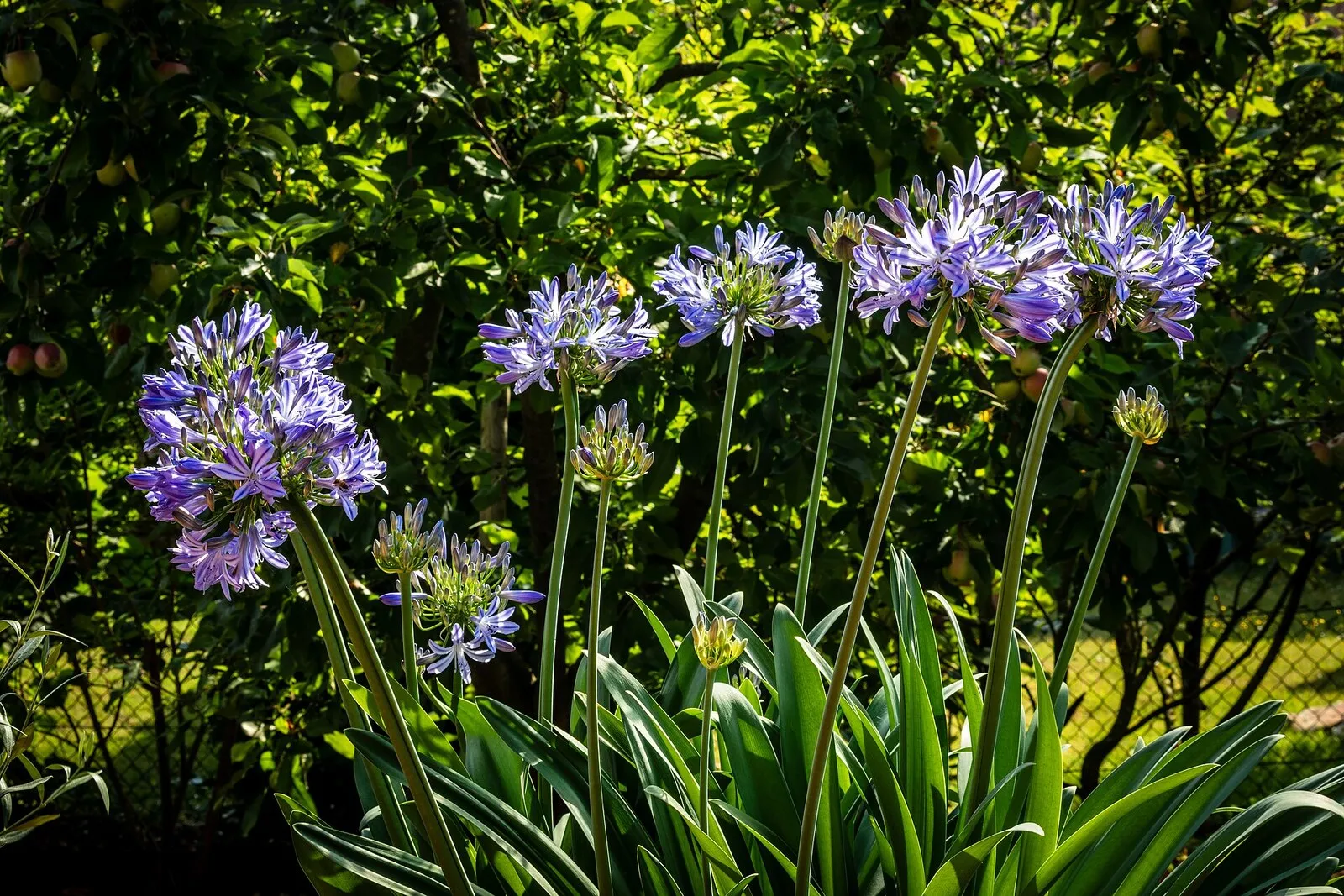
Agapanthus
Agapanthus
Also known as: African lily, Lily of the Nile
Perennial with long strap-shaped leaves and blue or white flowers clustered in balls on tall stems. It flowers in summer and does well in pots.
- Type
- Perennial
- Where
- Outdoor
- Light
- Sun · Part shade
- Water
- Moderate water
- Cold
- Tolerates light frost
Where to plant it
In full sun or part shade, in soil that drains well; avoid corners where the soil stays damp. In a pot it flowers better when the roots fill the container, so there’s no need to move it to a bigger one too soon.
Watering
Water during the growing and flowering season, without waterlogging. Too much moisture rots the roots.
Care
There’s no need to cut it back in autumn: the dry flower heads look pretty in winter. Every 3 or 4 years, in spring, you can divide the clump to get new plants; divisions sometimes don’t flower in the first year.
Feeding
In a pot, a liquid feed once a month from spring until flowering.
Caution
It’s harmful if eaten, both for people and for dogs and cats, and its sap can irritate the mouth. Wear gloves when handling it.
In our climate
It flowers in summer and, where there’s no frost, it can keep flowering into autumn. There are evergreen and deciduous agapanthus; deciduous ones shouldn’t be planted where the soil stays wet. If you’d like to include it in your garden design, we can help.
Common problems
Snails and slugs
How to spot it
They eat the leaves and leave holes and chewed edges.
What to do
Pick them off by hand when you see them. If the problem is serious, ask us.
Root rot
How to spot it
The plant weakens and the roots rot when the soil stays wet.
What to do
Plant it in soil that drains well, avoid corners where water collects and don't overwater.