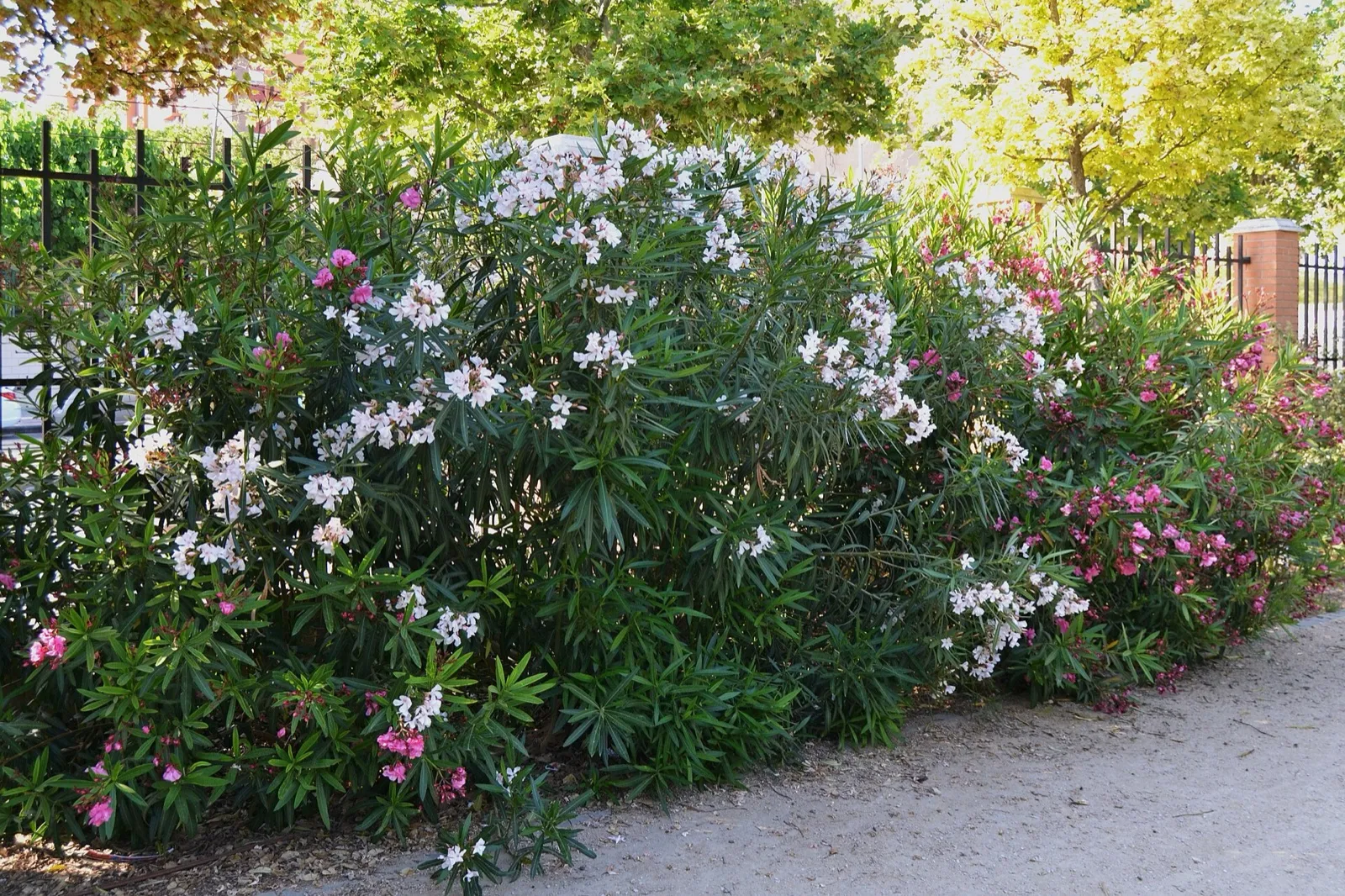
Oleander
Nerium oleander
Also known as: Rose bay
Mediterranean shrub with pink or white flowers that blooms from April to October. It copes with drought, heat and wind, but it's toxic if swallowed.
- Type
- Shrub
- Where
- Outdoor
- Light
- Sun
- Water
- Little water
- Cold
- Can withstand frost
Where to plant it
In full sun. It adapts to any type of soil and copes with wind and sea air, but it doesn’t like waterlogging. It grows fast and can reach 5 metres, so plan for its size. Planted in a row, oleanders make very dense hedges.
Watering
It needs little water and withstands drought and the strong summer heat. In the wild it grows along rivers and dry riverbeds where it hardly rains in summer.
Pruning
Prune it after the last flowering, in autumn. That way the new shoots have time to form their flower buds over the winter and the spring flowering is more abundant. It regrows very easily. Wear gloves: its branches contain a toxic latex.
Caution
All parts of the oleander are toxic if swallowed. Bear this in mind if there are small children or animals at home.
In our climate
It’s a very hardy plant that copes well with the dry summer, and it’s common in dry riverbeds and valley floors.
Common problems
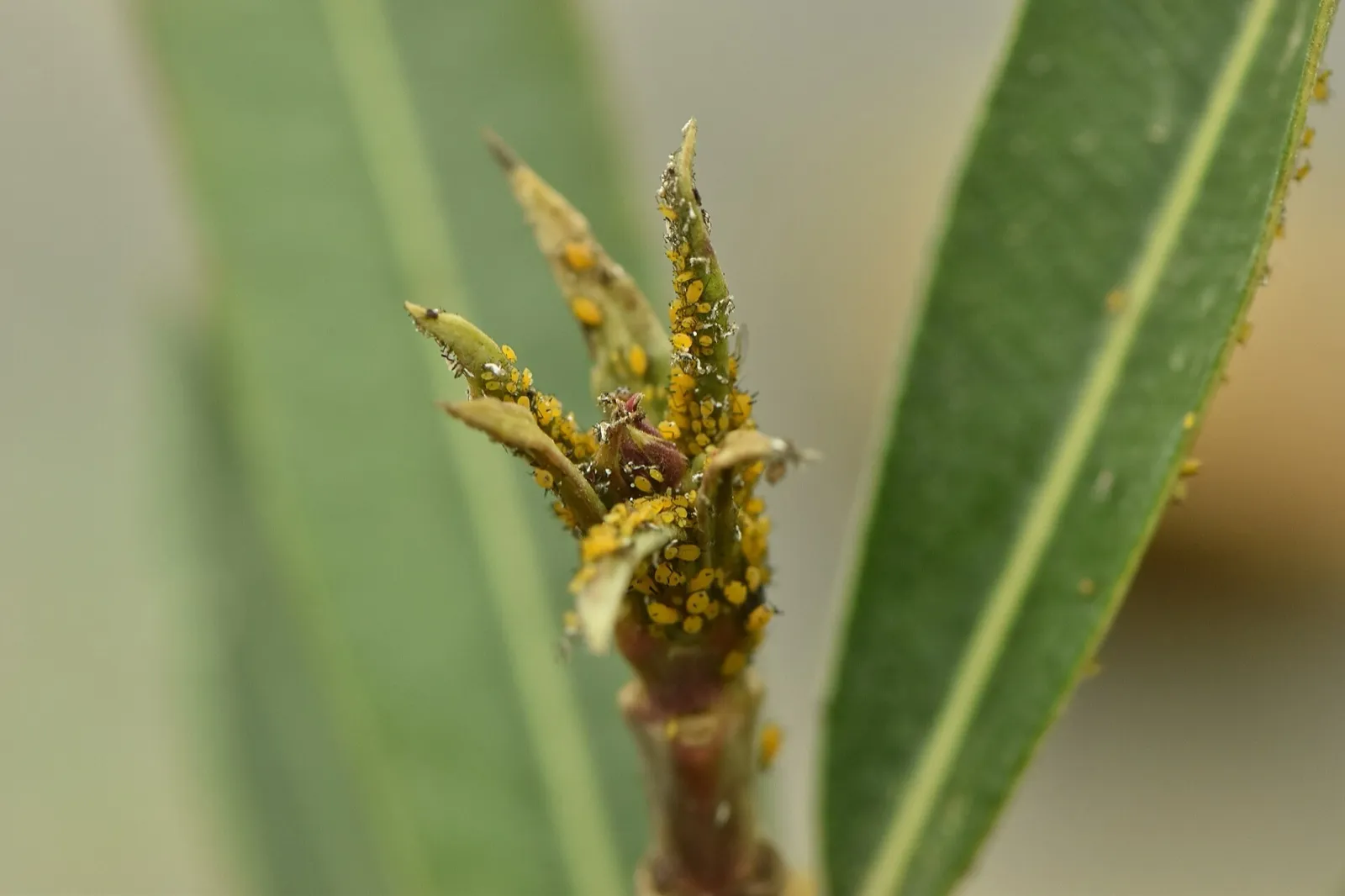
Oleander aphid
Aphis nerii
How to spot it
Colonies of bright yellow aphids, with black legs and antennae, on the tender shoots. They release a lot of honeydew, on which a black fungus (sooty mould) grows, and they can distort the tips of the shoots.
What to do
It likes tender shoots, so pruning and overwatering, which force new growth, encourage it. If the infestation is heavy, ask us.